


Table of Contents
- What You’ll Need Before Starting a Dock Electrical Installation
- NEC Article 555 Requirements for Docks and Marinas
- Step 1: Plan the Circuit and Pull the Permit
- Step 2: Choose Marine Grade Electrical Cable Types
- Step 3: Install GFCI Protection for Boat Docks
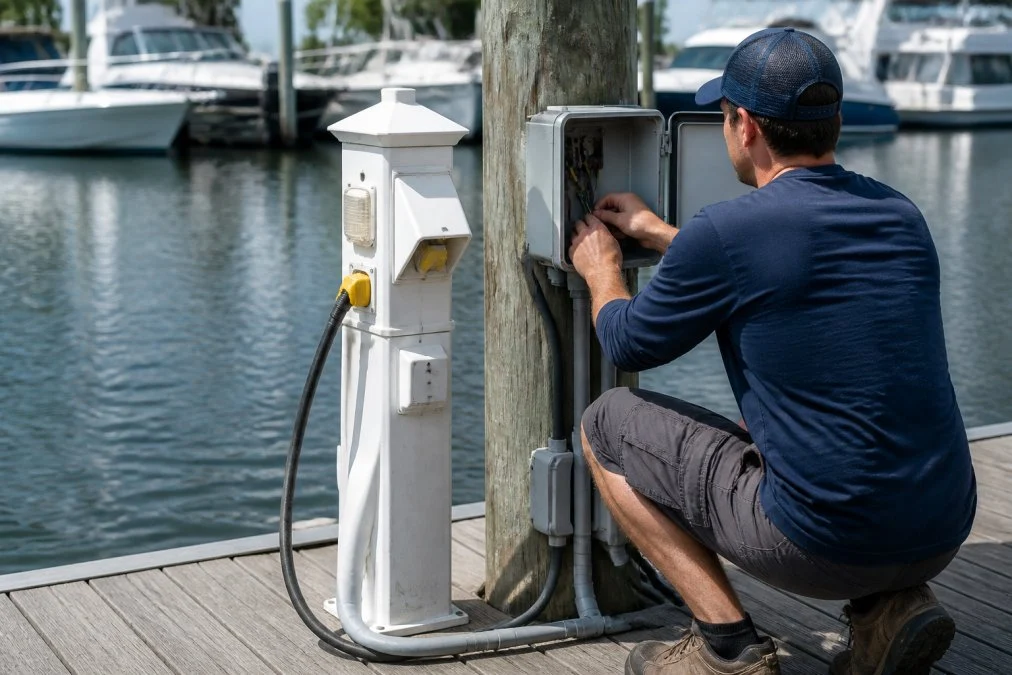
- Step 4: Mount and Wire the Dock Power Pedestal
- Step 5: Ground, Bond, and Test the System
- Common Mistakes to Avoid During Dock Electrical Installation
- Frequently Asked Questions
Last Updated: September 13, 2026
What You’ll Need Before Starting a Dock Electrical Installation
A safe marine grade electrical dock installation starts with preparation, not wiring. This guide from Accurate Electric LLC walks through the tools, materials, and code requirements that separate a compliant dock power system from a dangerous one.
Water and electricity are a combination that punishes shortcuts. Docks sit in one of the harshest environments any electrical system will ever face: constant moisture, salt air, UV exposure, and vibration from waves and foot traffic. Standard residential wiring methods that work fine inside a house fail quickly at the water’s edge. That is why the National Electrical Code devotes an entire article, Article 555, to marinas, boatyards, and docking facilities (Electrical Tips for Preparing Marinas for Summer).
Before you pull a single permit, gather these materials:
- Marine-grade cable rated for wet locations, such as type SOOW or listed marine cable
- GFCI circuit breakers rated for the circuit’s amperage
- Marine-grade power pedestal with individual breakers per receptacle
- Corrosion-resistant hardware: stainless steel or bronze, never plain steel
- Ground fault sensing and grounding conductors sized per code
- Weatherproof junction boxes and strain relief fittings
NFPA 70 National Electrical Code overview
The tools matter too. You need a torque screwdriver for terminations, a clamp meter for load testing, an insulation resistance tester, and a ground resistance tester. Rushing the material list is where most failures begin.
NEC Article 555 Requirements for Docks and Marinas
NEC Article 555 governs the installation of wiring and equipment on docks, piers, and marinas. It exists because standard wiring methods do not survive or protect people in a wet, corrosive marine environment.
The article covers several requirements that directly shape how you build the system:
- Ground-fault protection is required for receptacles and feeders serving the dock
- Equipment must be listed for wet locations and rated for the environment
- Bonding of metal parts prevents dangerous voltage differences between the water, the dock structure, and the boat
- Disconnecting means must be readily accessible at the dock
What most guides miss is that Article 555 continues to evolve. Recent code cycles tightened requirements around ground-fault sensing and equipment grounding for boat feeders, driven by electric shock drowning incidents at marinas. If you are working from an older code book or a summary written years ago, verify against the current edition your local authority enforces.
Skipping the bonding and grounding requirements is the single most dangerous shortcut on a dock project. An improperly bonded dock can energize the surrounding water, creating a lethal shock hazard for anyone swimming nearby. This is not a code technicality; it is a life-safety requirement.
Step 1: Plan the Circuit and Pull the Permit
Planning comes before any trenching or wiring. Map the circuit load, decide where the pedestal goes, and confirm the run length from the panel to the dock.
Start by calculating the total load. A typical dock pedestal serves shore power for a boat plus lighting and possibly a boat lift. Add up the connected loads, apply the demand factors your code allows, and size the feeder accordingly. Undersizing the feeder is a common mistake that shows up later as nuisance breaker trips.
Next, determine your permit path. Most jurisdictions require an electrical permit for any new dock power circuit, and waterfront work often triggers additional review. Call the local building department early and ask three questions:
- Does this project need a separate electrical permit?
- Are there waterfront or shoreline construction restrictions?
- What inspections are required, and at what stages?
The permit process is not a formality. It forces you to document your plan, and the inspection protects you if something goes wrong later. Skipping it can void insurance coverage and create problems when you sell the property.
Step 2: Choose Marine Grade Electrical Cable Types
Cable selection is where docks and houses diverge most sharply. Marine grade electrical cable must resist moisture, salt, UV, oil, and abrasion simultaneously.
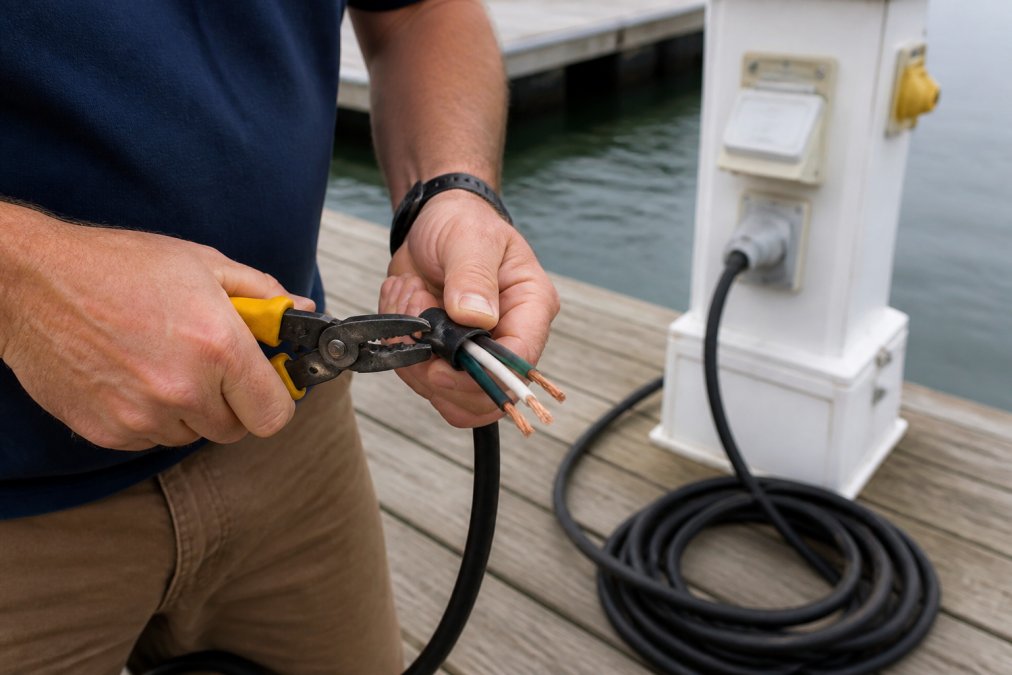
The cable types you will encounter on dock work include:
- SOOW / SEOOW cord: flexible, oil-resistant, rated for wet locations, common for temporary or movable connections
- Type TC (Tray Cable): permitted in some dock applications when listed for the environment
- Underground feeder (UF) cable: acceptable for direct burial runs to the dock, but not for the exposed dock portion
- Listed marine cable: purpose-built for marine environments with tinned copper conductors
Tinned copper conductors matter more than most people realize. Plain copper corrodes quickly in salt air, and corrosion raises resistance at every termination. Tinned strands resist that corrosion and hold a stable connection for years longer.
Match the cable to its location, not just the load. The run from the house to the dock is different from the run along the dock itself. Use the right cable for each segment and never substitute a cheaper interior-rated cable for a marine-rated one.
Step 3: Install GFCI Protection for Boat Docks
GFCI protection for boat docks is mandatory, not optional. It is the primary defense against electric shock drowning, a hazard unique to water environments.
GFCI devices continuously compare current on the hot and neutral conductors. When current leaks to ground, even a tiny amount, the device trips within milliseconds. On a dock, that leaked current would otherwise travel through the water and through anyone in it.
Install GFCI protection at two levels:
- At the source: a GFCI breaker in the panel feeding the dock circuit
- At the point of use: GFCI receptacles or breakers in the pedestal itself
Some code cycles and jurisdictions require ground-fault protection for personnel on the feeder, and additional protection at the pedestal. Verify the exact requirement with your local authority, because enforcement varies and the code has tightened here in recent years.
Electrical Safety Foundation guidance on ground fault protection
Test every GFCI after installation using the test button, then verify with a plug-in tester. A GFCI that does not trip on test is a failed device, not a minor issue.
Step 4: Mount and Wire the Dock Power Pedestal
The pedestal is the visible heart of the system. Mount it above expected flood and wave height, secure it against movement, and wire it so every connection stays dry.
Mounting height matters. Water levels change, storms push water higher, and a pedestal mounted too low will flood. Follow the code’s minimum height above the deck and give yourself margin. Bolt the pedestal to a stable, corrosion-resistant base; a loose pedestal stresses every conductor inside it.
Wiring steps inside the pedestal:
- Bring the feeder in through a weatherproof fitting with strain relief
- Terminate conductors on the line side of the pedestal breaker
- Connect the equipment grounding conductor to the pedestal’s grounding terminal
- Torque every termination to the manufacturer’s specification
- Seal all openings so moisture cannot enter
Torque specifications are not suggestions. Loose terminations heat up under load and are a leading cause of dock fires. Use a calibrated torque screwdriver and record the values.
Photograph every termination before you close up the pedestal. When an inspector or a future technician opens it, the photo proves the work was done correctly and speeds up any troubleshooting.
Step 5: Ground, Bond, and Test the System
Grounding and bonding are what make the system safe, and they are the steps most often rushed. Bonding connects all metal parts, the dock structure, and the equipment grounding conductor so they stay at the same electrical potential.
The goal is to eliminate voltage differences. If the boat’s metal parts, the dock frame, and the water are all at the same potential, there is no path for dangerous current to flow through a person. Grounding provides the fault path back to the source so breakers trip.
After bonding and grounding, test the completed system:
- Insulation resistance test on the feeder and branch circuits
- Ground resistance test at the grounding electrode
- GFCI trip test at every device
- Voltage and polarity check at every receptacle
- Load test with the expected connected equipment
Document every reading. A baseline record of test results makes future troubleshooting faster and gives you proof of a properly commissioned system.
Common Mistakes to Avoid During Dock Electrical Installation
Most dock electrical failures trace back to a handful of recurring mistakes. Avoiding them is cheaper than repairing them.
Using interior-rated materials outdoors. Standard NM cable and interior boxes fail fast in marine environments. Every component on the dock must be rated for wet locations.
Skipping the bonding conductor. Omitting or undersizing the bonding conductor creates voltage differences that cause shock hazards and corrosion.
Mounting equipment too low. Pedestals and boxes mounted below expected flood height will eventually flood, and flooded electrical equipment is dangerous.
Ignoring torque specifications. Loose terminations overheat. Always torque to spec and recheck after the first load cycle.
Testing only at installation. GFCI devices fail over time. Test them regularly, especially before boating season, and replace any device that does not trip.
A marine grade electrical dock installation done right is not complicated, but it is unforgiving of shortcuts. The code requirements exist because people have been hurt when they were skipped. If any part of the plan, the cable selection, or the grounding gives you pause, that is the moment to bring in a licensed electrician rather than push forward. For waterfront property owners in the Tampa Bay area, Accurate Electric LLC provides code-compliant dock power and marine electrical installations backed by over 31 years of combined industry experience, with licensed and insured electricians who understand the marine codes and corrosion demands these systems face.
Dock power systems fail quietly and dangerously when they are built without the right materials, protection, and testing. If you are planning a dock installation and want it done to code the first time, Accurate Electric LLC offers specialized marine and dock power installations, licensed and insured electricians, and code-compliant solutions built for long-term reliability in saltwater environments. Contact us to schedule an assessment and get your waterfront power system designed, permitted, and installed with confidence.
Frequently Asked Questions
What are the NEC requirements for dock electrical installations?
NEC Article 555 governs dock electrical installation. It requires a main disconnecting means at the dock, ground-fault protection on all receptacles, an equipment grounding conductor run with the feeder, and bonding of all metal parts. Wiring methods must resist water and corrosion, and receptacles near the water need covers rated for wet locations. Check with your local building department for amendments before you start.
Why is marine grade cable required for dock wiring?
Standard cable insulation breaks down faster around salt water, UV exposure, and constant moisture. Marine grade electrical cable types use tinned copper conductors and tougher jackets that resist corrosion and flexing. That combination extends service life and reduces the chance of a ground fault that could energize the water. For any dock electrical installation, use cable listed for wet locations and rated for the load and voltage of your circuit.
Do I need GFCI protection for my boat dock electrical system?
Yes. The NEC requires ground-fault circuit interrupter protection for receptacles at docks and marinas. GFCI protection for boat docks trips the circuit within milliseconds when it senses a small current leak, which is the main defense against electrical shock drowning. Test each device monthly using its test button, and replace any GFCI that fails to trip.
Can I do a marine grade electrical dock installation myself?
Most jurisdictions require a licensed electrician and a permit for dock electrical installation, and inspections are common. DIY work on dock power is risky because mistakes can energize the water and endanger swimmers. A licensed contractor handles the permit, the load calculations, the bonding and grounding, and the final inspection. If you want to save money, handle trenching or materials pickup and leave the wiring to a professional.












continue reading
Related Posts

Lights dim when AC starts: Learn why your lights dim when the air conditioner starts, what causes voltage drop, and when to call an electrician for help.
Compare top electrical panel brands for 2026. Find reliable options for residential upgrades, smart integration, and safety compliance.
Understand electrical panel upgrade timelines, costs, and what to expect. Learn permitting, inspection, and factors that affect duration.
Get Social