


Table of Contents
- What to Look for in an Electrical Panel Brand
- Top Electrical Panel Brands Compared
- Square D: Industry Standard for Reliability
- Siemens and Eaton: Engineering-First Alternatives
- Smart Panels for Modern Homes: SPAN, Leviton, and Schneider Home
- Is It Safe to Keep a Zinsco Panel?
- Signs You Need a New Electrical Panel
- Electrical Panel Replacement Cost 2026
- Frequently Asked Questions
Last Updated: October 2, 2026
What to Look for in an Electrical Panel Brand
Choosing the right electrical panel brand matters more than most homeowners realize. Your panel is the backbone of your home’s electrical system, it distributes power safely, protects against overloads, and increasingly, enables modern upgrades like EV chargers and solar integration. The difference between a reliable brand and a problematic one often determines whether your home stays safe and future-proof.
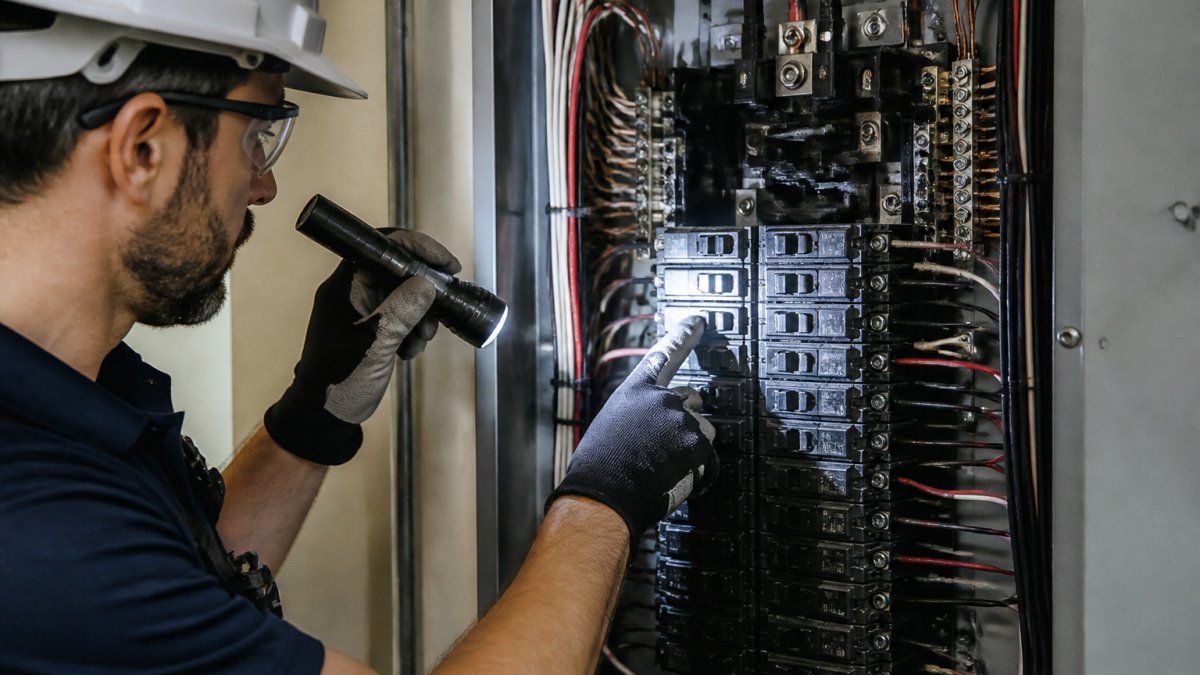
When evaluating electrical panel brands, three factors separate the best from the rest: safety certifications, amperage capacity, and circuit breaker technology. A quality panel meets or exceeds code requirements, handles your home’s actual power demands, and includes protection mechanisms that prevent electrical hazards before they start.
Safety Certifications and Code Compliance
The electrical panel you choose must comply with the National Electrical Code (NEC) and carry UL certification. These aren’t optional, they’re legal requirements that protect your home and family. UL 3141 certification specifically covers load centers and ensures the panel has been tested for safety under real-world conditions.
When a panel carries these certifications, it means independent testing has verified that the bus bar conducts electricity safely, the main breaker functions properly under fault conditions, and the enclosure protects against electrical hazards. This is non-negotiable. A panel without UL certification or NEC compliance creates fire risk and insurance liability.
Amperage Capacity and Load Calculation
Your electrical panel’s amperage capacity determines how much power your home can draw simultaneously. Most homes built before 2000 have 100-amp service. Homes built after 2000 typically have 200 amps. Modern homes with EV chargers, heat pumps, or electric ranges often need 200 amps or more.
Understanding your load requirements prevents the frustration of constant breaker trips. If your panel maxes out during peak usage, running the AC, dishwasher, and EV charger at once, you’re operating at dangerous capacity. A proper load calculation accounts for your home’s actual electrical demands, not just what the panel is rated for.
Circuit Breaker Technology and Protection
Modern circuit breakers offer more than basic on-off protection. Thermal magnetic breakers handle standard loads. Arc fault circuit interrupters (AFCIs) detect dangerous electrical arcs that can cause fires. Ground fault circuit interrupters (GFCIs) protect against shock hazards in wet areas.
The best electrical panel brands integrate these protections seamlessly. You want a panel where breakers are easy to replace, where the design accommodates modern protective devices, and where the bus bar design minimizes voltage drop across circuits.
Top Electrical Panel Brands Compared
| Brand | Best For | Key Strength | Consideration |
|---|---|---|---|
| Square D QO | Long-term reliability | Industry-standard reputation | Higher price point |
| Siemens PN | Standard residential upgrades | Balance of quality and cost | Limited smart features |
| Eaton CH | Warranty coverage | Lifetime breaker warranty | Premium pricing |
| SPAN Smart Panel | Modern homes with solar/EV | Circuit-level monitoring and control | Significant investment |
| Leviton Load Center | Smart home integration | Modern aesthetics and diagnostics | Requires Leviton-compatible breakers |
Square D: Industry Standard for Reliability
Square D, manufactured by Schneider Electric, dominates residential electrical panels for good reason. The QO Series represents the premium option, it’s what electricians specify when they want a panel that will outlast the house itself.
The QO’s plug-on neutral design speeds installation, while the VISI-TRIP indicator makes identifying tripped breakers obvious even from across the room. The high-density circuit capacity means you can fit more circuits in a compact footprint, which matters in tight spaces. Square D breakers are available everywhere, and compatibility is never a concern.
What most reviews miss: the QO Series costs more upfront. If you’re planning to stay in your home long-term or considering future resale, the Square D investment pays dividends.
The drawback is straightforward, it’s the premium option. For a basic 200-amp panel replacement without smart features, you’re paying more than alternatives.
Siemens and Eaton: Engineering-First Alternatives
Siemens PN Series panels deliver solid engineering at a more accessible price point than Square D. The Insta-wire neutral system simplifies wiring for licensed electricians, reducing installation time. Copper bus bar options enhance conductivity for homes with long wire runs or voltage-sensitive equipment.
Eaton CH Series panels take a different approach, they emphasize warranty coverage. The lifetime warranty on CH breakers is genuine protection. Eaton’s in-box neutral and ground bars produce cleaner installations, and the sturdy metal enclosure holds up in diverse climates, including humid environments like those in coastal areas.
Where these brands differ: Siemens excels at flexibility and customization. Eaton prioritizes long-term warranty protection. Neither offers the smart features of newer platforms, but both are rock-solid choices for standard residential upgrades.
Smart Panels for Modern Homes: SPAN, Leviton, and Schneider Home
If your home includes solar panels, an EV charger, or battery backup, smart panel technology changes the equation. These aren’t just load centers, they’re energy management systems.
SPAN Smart Panel provides circuit-level monitoring and remote control via mobile app. You can see real-time energy consumption per circuit, shed non-essential loads during grid events, and prioritize power for critical systems. Integration with solar and battery storage is seamless. The tradeoff is significant investment and installation complexity.
Leviton Load Center brings smart circuit breakers and advanced diagnostics to a more aesthetically refined package. The white enclosure design fits visible installations better than traditional gray panels. Remote monitoring and diagnostic alerts help catch problems early. The limitation: you’re locked into Leviton-compatible breakers, which reduces flexibility.
Schneider Home represents the most integrated approach, it combines the electrical panel with centralized home energy management. Automated optimization, solar and EV integration, and comprehensive mobile dashboards create a complete ecosystem. The complexity of installation and the subscription model aren’t for everyone.
Is It Safe to Keep a Zinsco Panel?
This question comes up frequently, and the answer is direct: no. Zinsco panels, manufactured in the 1980s and 1990s, have a documented history of breaker failures and fire risk. The breakers don’t trip reliably when they should, leaving the home unprotected against overloads and short circuits.
Insurance companies have recognized the hazard. Many insurers now require Zinsco panel replacement as a condition of coverage. If your home has a Zinsco panel, replacement isn’t optional, it’s a safety imperative and often an insurance requirement.
The same applies to Federal Pacific Electric (FPE) panels from the same era.
Signs You Need a New Electrical Panel
Several warning signs indicate your panel needs replacement. But before jumping to a full panel swap, it’s important to distinguish between problems that require component replacement versus those that demand a new panel entirely, a distinction that saves homeowners thousands of dollars and months of project delays.
Immediate Replacement Triggers
Documented unsafe panel models: Zinsco and Federal Pacific Electric (FPE) panels from the 1980s-1990s have a documented history of breaker failures and fire risk. The breakers do not trip reliably when they should, leaving the home unprotected against overloads and short circuits. Insurance companies have recognized the hazard; many insurers now require Zinsco or FPE panel replacement as a condition of coverage.
Retrofit-Eligible Problems (Breaker or Component Replacement)
Not every electrical problem requires a new panel. Understanding which issues can be solved with targeted repairs saves money and time.
When Retrofit Is No Longer Viable
Retrofitting reaches its limit when the panel itself is failing or when your electrical demands exceed what the existing panel can safely deliver.
The Retrofit vs. Replacement Decision Framework
Use this framework to decide:
- Is the panel model known to be unsafe? (Zinsco, FPE, or similar) → Replace
- Is there visible internal damage, burning, or moisture? → Replace
- Is the problem isolated to one or two circuits? → Retrofit (replace breaker or diagnose overload)
- Are you planning EV, solar, or heat pump installation? → Evaluate available capacity; if <40 amps spare, Replace; if >40 amps spare, Retrofit may work with load management
- Is the panel older than 40 years and you’re planning upgrades? → Replace
- Are replacement breakers still available for your panel model? → Retrofit is viable if the panel itself is sound
Most homeowners discover this decision point during a pre-upgrade inspection. A licensed electrician can assess your panel’s condition, calculate your available capacity, and recommend retrofit versus replacement based on your specific situation and plans. This assessment can help prevent costly mid-project surprises.
Electrical Panel Replacement Cost 2026
Panel replacement costs depend on multiple variables: your home’s amperage requirements, your region’s labor rates, whether the replacement is a straightforward swap or requires upgrading from 100 to 200 amps, and whether your home’s wiring and service entrance need updates.
Frequently Asked Questions
Which electrical panel brand is the most reliable for residential use?
Square D, Siemens, and Eaton are the most reliable electrical panel brands for residential applications. Square D’s QO Series is the industry standard, known for durability and wide breaker availability. Siemens PN Series offers strong engineering quality, while Eaton CH Series provides a lifetime warranty on breakers. All three carry UL certification and meet National Electrical Code requirements. Your choice depends on whether you prioritize cost, warranty coverage, or smart features.
Is it safe to keep a Zinsco panel in my home?
Zinsco panels are not recommended for continued use. These panels, manufactured primarily in the 1970s-1980s, have documented issues with breaker failure and increased fire risk. Many insurance companies refuse to insure homes with Zinsco panels still in service. If your home has a Zinsco panel, replacement with a modern UL-certified load center from brands like Square D, Siemens, or Eaton is strongly advised for safety and insurability.
What are the main signs you need a new electrical panel?
Key indicators include: frequent breaker tripping, flickering or dimming lights, burning smells near the panel, a panel that’s over 25 years old, visible rust or corrosion, or inability to handle new electrical loads (EV chargers, heat pumps, solar systems). Older panel types like Federal Pacific, Zinsco, or Pushmatic are safety concerns regardless of current symptoms. If you’re planning major home upgrades, a professional inspection can confirm whether replacement is necessary.
Are smart electrical panels worth the investment in 2026?
Smart panels like SPAN, Leviton, and Schneider Home are worth considering if you’re installing solar, an EV charger, or battery backup. They provide real-time circuit monitoring, remote load management, and automated energy optimization. However, they cost significantly more than traditional panels. For homes without renewable energy plans, a standard panel from Square D, Siemens, or Eaton offers reliable performance at a lower price point.












continue reading
Related Posts
Understand electrical panel upgrade timelines, costs, and what to expect. Learn permitting, inspection, and factors that affect duration.
Commercial electrical alternatives: Compare commercial electrical contractors in the Tampa Bay area. Find licensed alternatives for panel upgrades.
Find top residential electrical safety inspection services. Compare licensed contractors, learn what inspections cover, and discover red flags. Get expert.
Get Social