


Table of Contents
- Why Federal Pacific Panels Are Considered Dangerous
- How to Identify a Federal Pacific Panel in Your Home
- Signs of a Faulty Electrical Panel and When to Act
- Electrical Panel Upgrade Requirements and Code Compliance
- Step-by-Step Process for Replacing Federal Pacific Electrical Panels
- Cost to Replace Electrical Panel and Budget Factors
- Insurance Implications and Coverage for Federal Pacific Panels
- Federal Pacific Panels and Real Estate Transactions
- Frequently Asked Questions
Last Updated: September 19, 2026
Why Federal Pacific Panels Are Considered Dangerous
Federal Pacific Electric (FPE) manufactured electrical panels that pose serious fire and safety risks to homes, making replacing federal pacific electrical panels a critical safety priority for homeowners. These panels, commonly called Stab-Lok panels, were installed in millions of homes built between the 1950s and 1980s. The core issue is that the circuit breakers inside these panels fail to trip properly when they should, leaving electrical circuits unprotected during overload or short-circuit conditions (Commission Closes Investigation Of FPE Circuit Breakers And Provides Safety Information…).
When a circuit breaker fails to trip, electricity continues flowing through an overloaded wire. This causes the wire to overheat. Overheating wires can ignite nearby insulation, wood framing, and other combustible materials inside your walls. The fire develops hidden behind walls where you cannot see it or respond quickly.
Insurance companies and electrical inspectors treat Federal Pacific panels as a latent defect. Many homeowners discover the problem only when applying for a mortgage, refinancing, or filing an insurance claim. The panel’s age and documented failure history make it a liability that lenders and insurers take seriously.
Federal Pacific panels have been linked to house fires across the country. If your home has one, do not ignore it. The risk increases with time and electrical demand.
How to Identify a Federal Pacific Panel in Your Home
A Federal Pacific panel is identifiable by its distinctive appearance and labeling. Look for the words “Federal Pacific Electric” or “FPE” printed on the main panel door. The breakers inside have a unique design called Stab-Lok breakers, which snap vertically into the bus bar rather than sliding in horizontally like modern breakers.
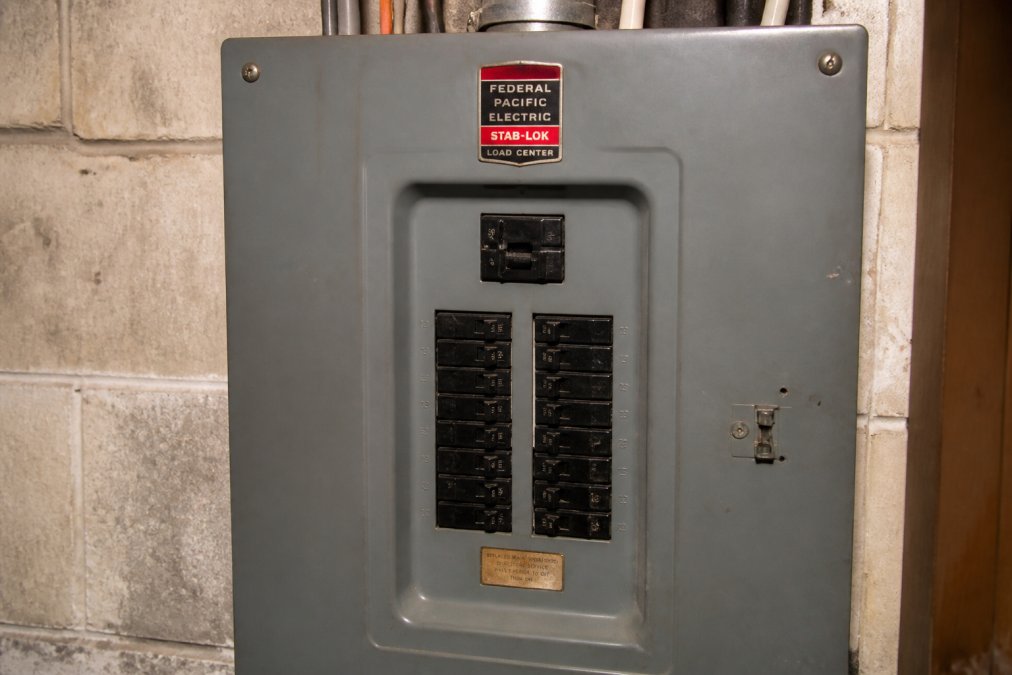
The panel door itself is typically gray or tan colored metal. Inside, you’ll see two columns of breakers arranged vertically. Each breaker has a distinctive shape that looks different from standard breakers you might see in newer homes. The main breaker switch sits at the top of the panel and controls power to the entire home.
Federal Pacific panels come in different sizes, typically rated at 100, 150, or 200 amps. The amperage rating appears on the main breaker and on the panel door. Older homes often have 100-amp service, while homes built in the 1970s and 1980s may have 150 or 200 amps.
Check your electrical panel during daylight hours when you can see clearly. Take a photo of the panel door with the label visible. This documentation helps when you consult with a licensed electrician about replacement options. Do not attempt to open the panel yourself or touch any breakers inside.
Signs of a Faulty Electrical Panel and When to Act
A faulty electrical panel shows warning signs that demand immediate attention. Flickering lights throughout your home suggest breakers are not maintaining steady power delivery. Lights that dim when you turn on major appliances like air conditioning or electric dryers indicate the panel cannot distribute power reliably.
Burning smells near the electrical panel are a red flag. This smell suggests internal arcing or overheating inside the breaker box. Shut off power at the main breaker and call a licensed electrician immediately. Do not delay.
Breakers that trip frequently mean the panel is working overtime to protect your circuits. While breaker trips are a safety feature, constant trips indicate an underlying problem. The panel may be undersized for your home’s electrical demand, or breakers may be failing to function properly.
Warm or hot spots on the panel door suggest internal heat buildup. Touch the panel door carefully with the back of your hand. If it feels hot, this is abnormal and dangerous. Turn off major appliances and contact an electrician right away.
Any combination of flickering lights, burning smells, frequent breaker trips, or a hot panel door means you need professional evaluation. Do not wait for a home inspection or insurance review to prompt action.
Electrical Panel Upgrade Requirements and Code Compliance
Replacing a Federal Pacific panel requires compliance with the National Electrical Code (NEC) and local electrical codes. These codes exist to protect your home and family from electrical hazards. A licensed electrician knows current code requirements and ensures the replacement meets all standards.
The NEC specifies how electrical service should be sized, installed, and protected. Code requirements cover the main service entrance, grounding, bonding, load calculations, and breaker placement. Your local jurisdiction may have additional requirements beyond the NEC baseline.
Load calculation determines the correct amperage for your home’s electrical service. An electrician calculates total electrical demand based on square footage, appliances, heating system, and other factors. Undersized service cannot support modern electrical loads. Oversized service wastes money and creates safety issues.
Grounding and bonding protect you from electrical shock and lightning damage. The replacement panel must connect properly to your home’s grounding system. This includes a grounding rod driven into the earth and proper bonding of metal components throughout your electrical system.
A licensed electrician handles all code compliance issues.
Step-by-Step Process for Replacing Federal Pacific Electrical Panels
Replacing a Federal Pacific panel involves several distinct steps. Each step requires specific expertise and adherence to safety protocols. Understanding the process helps you know what to expect and why each step matters.
Step 1: Get a Professional Inspection and Assessment
A licensed electrician inspects your panel and electrical system to determine the scope of work needed. They identify the current amperage rating, assess whether your service should be upgraded, and check for any hazardous conditions like aluminum wiring or improper grounding.
Step 2: Obtain Electrical Permits
Electrical permits are required before any work begins. Your electrician files the permit application with your local building department. The permit process ensures that a licensed inspector will verify the work meets code.
Step 3: Schedule the Replacement with a Licensed Electrician
Once permits are approved, schedule the replacement work. Coordinate timing that works for your household. The electrician will turn off power during the work, so plan accordingly.
Step 4: Panel Removal and Installation
The electrician removes the old Federal Pacific panel and installs a new modern panel in its place. This work involves disconnecting all breakers and wiring from the old panel, removing the old box from the wall, installing the new panel, and reconnecting all circuits to the new breakers.
Step 5: Final Inspection and Approval
After installation is complete, the building inspector schedules a final inspection. The inspector verifies that the new panel meets all code requirements. They check grounding, bonding, breaker sizing, load calculations, and overall workmanship.
Save all permits, inspection reports, and certificates. These documents prove the work was done properly and increase your home’s resale value. Buyers and lenders want to see that electrical work was permitted and inspected.
Cost to Replace Electrical Panel and Budget Factors
The cost to replace an electrical panel depends on several factors including the amperage upgrade, local labor rates, permit fees, and any additional work needed. Panel replacement is a significant investment, but it eliminates a serious fire hazard and often improves your home’s electrical capacity.
Insurance Implications and Coverage for Federal Pacific Panels
Insurance companies view Federal Pacific panels as a significant liability. Many insurers require panel replacement as a condition of coverage. Some insurers deny claims for electrical fires in homes with Federal Pacific panels, even if the fire started elsewhere.
Delaying Federal Pacific panel replacement can result in insurance denial, mortgage denial, or policy non-renewal. Act proactively rather than waiting for a problem to force your hand.
Federal Pacific Panels and Real Estate Transactions
Selling a home with a Federal Pacific panel creates significant obstacles. Most buyers’ lenders require panel replacement before closing. This means the seller must either replace the panel before sale or negotiate with the buyer to handle the replacement.
Frequently Asked Questions
Why are Federal Pacific electrical panels considered a fire hazard?
Federal Pacific panels, particularly the Stab-Lok design, have a documented history of breaker failures that prevent proper overcurrent protection. The breakers can fail to trip when they should, allowing dangerous arcing and overheating inside the electrical box. This thermal buildup creates a significant fire risk, especially in older homes where the panel has been in service for decades. The thermal magnetic mechanism in these breakers is prone to degradation over time.
How do I know if I have a Federal Pacific panel in my home?
Look for the Federal Pacific Electric (FPE) or Stab-Lok brand name on your main electrical panel door. The breakers inside have a distinctive design where they stab directly into the bus bar rather than using the clip-on method found in modern panels. If your home was built between the 1950s and 1980s, and you see these characteristics, you likely have a Federal Pacific panel. A licensed electrician can confirm the panel type and assess its condition during a home inspection.
Will my insurance company deny coverage if I have a Federal Pacific panel?
Many insurance companies now require Federal Pacific panel replacement as a condition of coverage or will deny claims related to electrical fires if the panel is present. Some insurers impose higher premiums for homes with these panels, while others may refuse to renew policies entirely. Before purchasing or maintaining a home with a Federal Pacific panel, contact your insurance provider directly to understand their specific requirements and whether they will cover electrical damage with this panel type in place.
What factors affect the cost to replace electrical panel?
Replacement costs depend on several variables: the amperage upgrade needed (100-amp to 200-amp panels cost differently), local electrical code requirements, permit fees, the complexity of rewiring inside the panel, and whether additional work like grounding or bonding upgrades is required. Labor rates vary by region and electrician experience. For an accurate quote, contact a licensed electrician who can assess your specific situation and provide a detailed estimate based on your home’s electrical needs and local requirements.
Replacing a Federal Pacific electrical panel protects your home from fire risk and ensures your electrical system meets current safety standards. The replacement process requires permits, inspections, and a licensed electrician, but the investment eliminates a documented hazard. Contact Accurate Electric LLC today for a professional assessment of your panel and a detailed replacement plan tailored to your home’s needs.












continue reading
Related Posts
Compare top electrical panel brands for 2026. Find reliable options for residential upgrades, smart integration, and safety compliance.
Understand electrical panel upgrade timelines, costs, and what to expect. Learn permitting, inspection, and factors that affect duration.
Commercial electrical alternatives: Compare commercial electrical contractors in the Tampa Bay area. Find licensed alternatives for panel upgrades.
Get Social