


Table of Contents
- Signs of an Outdated Electrical Panel
- Why Residential Panel Upgrades Matter for Safety and Capacity
- Electrical Panel Replacement Cost Breakdown
- 100 Amp vs 200 Amp Panel Upgrade: Which Do You Need?
- Electrical Panel Upgrade Permit Requirements and Code Compliance
- The Residential Panel Upgrade Process: What to Expect
- How to Choose a Licensed Electrician for Your Panel Upgrade
- Smart Home Integration and Modern Electrical Demands
- Frequently Asked Questions
Last Updated: September 21, 2026
Signs of an Outdated Electrical Panel
An outdated electrical panel is a serious safety risk in older homes. If your house was built before the 1990s, your panel likely can’t handle modern electrical loads. Warning signs include frequently tripping breakers, flickering lights, burning smells near the panel, or visible corrosion on the metal casing.
Federal Pacific and Zinsco panels, installed from the 1960s through 1980s, are notorious fire hazards that fail to trip during overloads. If you have one of these brands, replacement should be a priority.
A fuse box instead of a circuit breaker panel is another red flag. Fuses can’t handle modern electrical demands and lack the automated safety mechanism of circuit breakers.
Aluminum wiring, common in 1970s homes, expands and contracts differently than copper, creating loose connections that generate heat and increase fire risk.
A panel that frequently trips breakers isn’t just inconvenient, it’s a sign your electrical system is being overloaded. Ignoring this can lead to electrical fires, damaged appliances, or worse. Professional inspection is essential.
Why Residential Panel Upgrades Matter for Safety and Capacity
A residential panel upgrade addresses two critical problems: safety and capacity. Your electrical panel distributes all power through your home; when undersized or deteriorating, it can’t safely handle modern electrical demands.
Most homes built before 2000 have 100-amp service, adequate for older electrical demands. Today, a single EV charger demands 30-50 amps alone, and adding central air, electric range, and water heater makes a 100-amp panel a bottleneck.
Beyond capacity, safety is paramount. Aging panels with deteriorating components create fire hazards as connections corrode and breakers fail to trip properly. Insurance companies increasingly require panel upgrades for outdated systems.
A modern panel upgrade typically means moving to 200-amp service, providing ample headroom for today’s needs and enabling AFCI and GFCI protection to prevent electrical fires and shocks.
If you’re planning to install an EV charger, solar panels, or other high-demand systems, upgrading your panel now prevents costly rewiring later. Plan ahead rather than discovering capacity limits when you’re ready to install new equipment.
Electrical Panel Replacement Cost Breakdown
Labor represents the largest cost factor, typically 40-60% of the total. Licensed electricians must safely disconnect the old panel, install the new one, transfer circuits, and test for code compliance. Time varies based on panel complexity, wiring condition, and whether the service entrance needs upgrading.
Permits and inspections add cost but are mandatory. Unpermitted electrical work can void insurance coverage and create liability issues.
Materials beyond the main panel include new breakers, service entrance cable, and meter base components. Upgrading to 200-amp service often requires upgrading the service entrance cable and meter base.
Site conditions matter significantly. Accessible panels with straightforward wiring cost less; basement panels with complex routing or deteriorated wiring cost more. Grounding and bonding work adds additional labor.
Getting multiple estimates from licensed contractors helps you understand typical costs for your specific situation.
100 Amp vs 200 Amp Panel Upgrade: Which Do You Need?
The choice between 100-amp and 200-amp service depends on your current usage, future plans, and what your home’s infrastructure supports.
A 100-amp panel is rarely sufficient for modern households. Running air conditioning, electric water heater, and clothes dryer simultaneously maxes capacity; adding an EV charger causes constant breaker trips.
200-amp service is the standard for new construction and recommended upgrade for most existing homes. It provides ample capacity for current and future additions, future-proofing your home for solar panels, EV chargers, or other high-demand systems.
Your utility company’s infrastructure also influences the decision. If your home’s service entrance is already sized for 200-amp service, upgrading the panel alone is straightforward. If the service entrance, meter base, or utility lines need upgrading, costs increase but the upgrade becomes more comprehensive.
Consider your lifestyle and plans. If you’re planning to stay in the home long-term and want modern electrical capacity, 200-amp is the smart choice. If you’re in a smaller home with minimal electrical needs and no plans for additions, 100-amp might suffice, but this is increasingly rare.
Homeowners planning EV charger installation, solar systems, or modern home automation should upgrade to 200-amp service. The additional capacity prevents future bottlenecks and provides safety margin for peak demand periods.
Electrical Panel Upgrade Permit Requirements and Code Compliance
Electrical panel work is one of the most heavily regulated home improvement projects because the consequences of improper installation are serious. Permits exist to protect your home and ensure work meets National Electrical Code (NEC) standards.
Before any panel work begins, a permit must be obtained from your local building department. The permit process involves submitting plans and specifications for the proposed work. The contractor typically handles this, though you’re ultimately responsible for ensuring it happens. Unpermitted electrical work can void homeowner’s insurance and create liability if an accident occurs.
Inspections happen at multiple stages. The initial inspection occurs after the old panel is disconnected but before new installation. A final inspection happens after the new panel is installed, all circuits are connected, and the system is energized. The inspector verifies that the work meets code, breakers are properly sized for the wiring they protect, grounding is correct, and all connections are secure.
Code compliance involves specific requirements for breaker sizing, wire gauge, grounding and bonding, and safety devices. A 200-amp main breaker requires specific wire gauge for the service entrance. AFCI and GFCI protection must be installed on certain circuits. Neutral and ground bars must be properly bonded. These aren’t cosmetic details, they’re safety-critical specifications.
Licensed electricians understand these requirements and build them into their work. Attempting panel work without proper licensing and permits creates serious risks. The cost of permits and inspections is modest compared to the liability of non-compliant work.
The Residential Panel Upgrade Process: What to Expect
A residential panel upgrade typically takes one to three days, depending on complexity and whether additional work is needed.
The process begins with a site assessment. The electrician evaluates your current panel, service entrance, and overall electrical system. They determine whether the service entrance cable and meter base can support 200-amp service or if those need upgrading too. They identify any existing hazards, like aluminum wiring or deteriorated connections, that need attention.
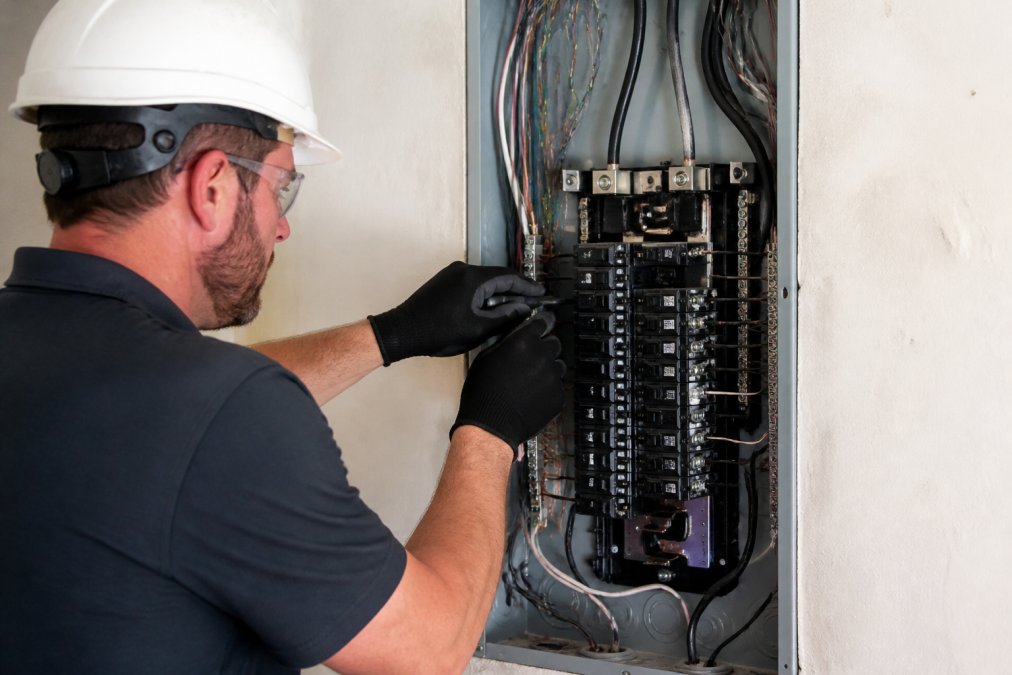
Once the permit is obtained, work begins with safely disconnecting the existing panel. This is critical, the electrician must de-energize the system safely and verify that power is off before touching any live components. They disconnect all circuit wires from the old breakers and remove the old panel.
Installing the new panel involves mounting it securely, installing the main breaker, and connecting the service entrance cable. Each circuit wire is then connected to its corresponding breaker in the new panel. The electrician ensures proper wire gauges match breaker ratings, installs AFCI and GFCI protection where required, and verifies grounding and bonding connections.
Testing and inspection come next. The electrician uses specialized equipment to verify proper voltage, grounding resistance, and circuit operation. Once testing is complete, the local inspector performs the final inspection. If everything passes, the utility company is notified and the system is energized.
Throughout this process, your home will lose power temporarily. Most upgrades involve 2-4 hours of downtime while the new panel is installed and tested. Plan accordingly, refrigerators stay cool for several hours, but prolonged outages can spoil food.
Before work begins, ask your electrician to explain what will happen, how long it will take, and what you should do to prepare. Understanding the timeline helps you plan around the power outage and avoid unnecessary stress.
How to Choose a Licensed Electrician for Your Panel Upgrade
Selecting the right electrician determines whether your panel upgrade is done safely, efficiently, and at a fair price. This isn’t the place to cut corners or choose based solely on lowest bid.
Verify licensing first. Your electrician must be licensed by the state of Florida. You can check license status through the Florida Department of Business and Professional Regulation.
Smart Home Integration and Modern Electrical Demands
Modern electrical panels can support smart home systems and emerging technologies that older panels simply can’t handle. If you’re planning to add EV charging, solar panels, home automation, or other modern systems, your panel upgrade is the foundation for those additions.
| Factor | 100-Amp Panel | 200-Amp Panel |
|---|---|---|
| Modern appliance support | Limited | Excellent |
| EV charger capability | Not recommended | Supported |
| Solar system compatibility | Difficult | Straightforward |
| Future-proof rating | Poor | Excellent |
| Typical home size | Older, smaller homes | Modern homes, all sizes |
Frequently Asked Questions
What are the main signs that I need a residential panel upgrade?
Common signs include frequently tripping breakers, flickering lights, outlets that don’t work reliably, a fuse box instead of a circuit breaker panel, aluminum wiring, or an older 100-amp service struggling to handle modern electrical demands. Federal Pacific and Zinsco panels are known fire hazards and should be replaced immediately. If your home was built before 1990 and you’re adding major appliances like EV chargers or heat pumps, an upgrade is likely necessary.
How much does an electrical panel upgrade typically cost?
Costs vary based on your home’s specific conditions, local permit fees, and whether hazardous panels need replacement. Factors include the distance from the meter base, existing wiring condition, and code requirements in your area. Rather than guessing at a price range, contact a licensed electrician for a site evaluation and upfront quote. This ensures you understand exactly what work is needed and what you’ll pay.
Do I need a permit for an electrical panel upgrade?
Yes. Electrical panel upgrades are required by the National Electrical Code (NEC) to be permitted and inspected by local authorities. Permitted work ensures your installation meets safety standards and protects your home’s electrical system. Licensed electricians handle the permit process, including submitting plans and scheduling inspections. Unpermitted work can affect your home’s resale value and void insurance coverage.
What’s the difference between a 100-amp and 200-amp panel upgrade?
A 100-amp panel supplies 100 amperes of electrical current to your home; a 200-amp panel supplies double that capacity. Most modern homes need 200-amp service to safely handle multiple high-demand appliances running simultaneously, such as air conditioning, electric ranges, water heaters, and EV chargers. Older homes built with 100-amp service often experience breaker trips and voltage drop when demand increases. A licensed electrician can calculate your actual electrical load to recommend the right capacity.












continue reading
Related Posts
Commercial electrical alternatives: Compare commercial electrical contractors in the Tampa Bay area. Find licensed alternatives for panel upgrades.
Find top residential electrical safety inspection services. Compare licensed contractors, learn what inspections cover, and discover red flags. Get expert.
Preventing electrical surges: Learn how to prevent electrical surges in commercial buildings with layered protection strategies, NEC compliance.
Get Social