


Table of Contents
- What Is a Federal Pacific Panel and Why It Matters
- How to Identify Federal Pacific Panels Safely: A Step-by-Step Guide
- Signs of an Outdated Electrical Panel You Should Not Ignore
- Zinsco vs Federal Pacific Panels: How to Tell Them Apart
- The Cost to Replace a Federal Pacific Panel and What Affects It
- Insurance, Home Inspections, and What Happens When You Sell
- Frequently Asked Questions
Last Updated: September 17, 2026
What Is a Federal Pacific Panel and Why It Matters
A Federal Pacific panel is a residential electrical service panel made by Federal Pacific Electric, most commonly the Stab-Lok line, installed in hundreds of thousands of homes between the 1950s and 1980s. These panels are widely considered a fire hazard because their breakers can fail to trip during an overload or short circuit, leaving current flowing through wiring never meant to carry it.
The single biggest mistake homeowners make is pulling the dead-front cover off to “get a better look.” The cover is what separates you from the bus bar and the main lugs, which remain energized even when the main breaker is off. Visual identification never requires removing it.
The Stab-Lok Breaker Design
Stab-Lok is the breaker design Federal Pacific used in these panels: it stabs onto the bus bar rather than bolting or clipping in with a secure mechanical connection. That friction-fit contact is central to the panel’s reputation. A loose or corroded stab connection increases resistance, which generates heat, and heat turns an electrical problem into a fire. The breakers have also been scrutinized over whether they trip reliably at their rated amperage.
How to Identify Federal Pacific Panels Safely: A Step-by-Step Guide
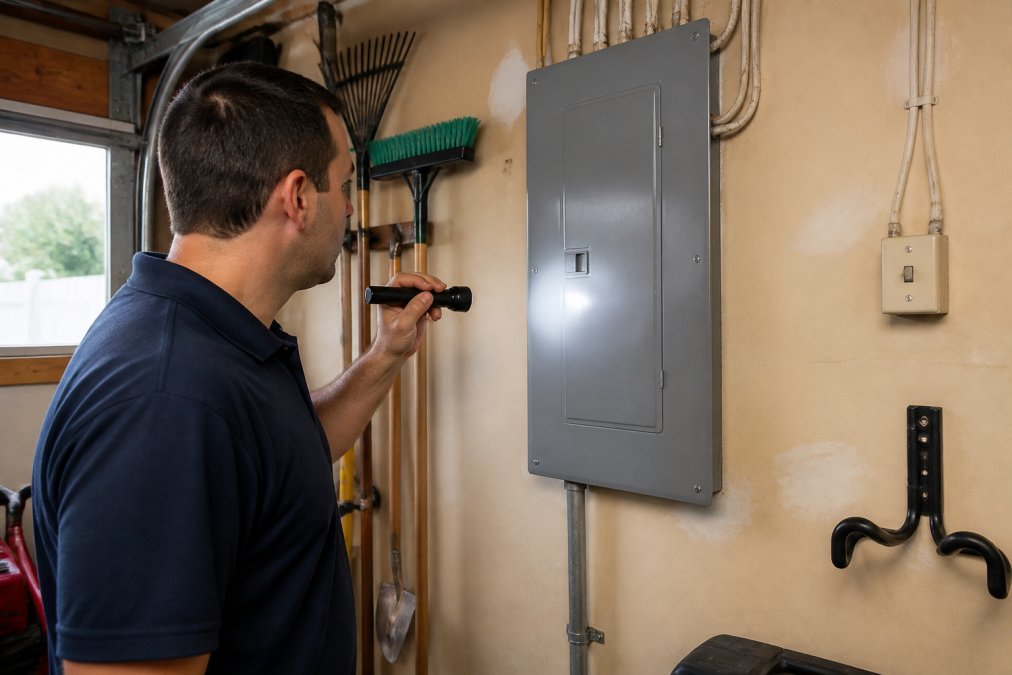
You can identify a Federal Pacific panel in about five minutes using only your eyes and a flashlight, with the cover left in place. The checks below move from easiest to most definitive, and you can stop as soon as you have a confident answer. The one rule: do not remove the dead-front cover. It is the barrier between you and the energized bus bar and main lugs, which stay live even when the main breaker is off.
Before You Start: Find Every Panel, Not Just the Main One
Most homeowners check the main service panel and stop, which is the most common reason a Federal Pacific panel goes unnoticed. A home can have a main panel plus sub-panels feeding a garage, addition, workshop, or outbuilding, and any of them can be a Stab-Lok. Walk the property and locate every gray metal box with a door or dead-front cover, garage wall, utility closet, basement, exterior wall near the meter, outbuildings, and check each against the steps below.
Step 1: Check the Dead-Front Cover Without Removing It
Start with the label on the outside of the panel box. Federal Pacific panels typically carry the manufacturer’s name printed or embossed on the dead-front cover, often near the main disconnect or along the top edge. Look for “Federal Pacific Electric,” “FPE,” or “Stab-Lok.” If the cover was painted over, check the edges and around the breaker openings, where stamped or printed text often survives.
Step 2: Look for the Logo and Stamped Metal Markings
The Federal Pacific logo is a distinctive circular or shield-shaped emblem, frequently stamped directly into the metal of the panel box rather than printed on a sticker. Check the inside lip of the cover, the door if there is one, and the box around the breaker rows. Stamped markings are permanent, making them the most reliable indicator on a painted or relabeled panel.
Step 3: Match the Breaker Style and Bus Bar Layout
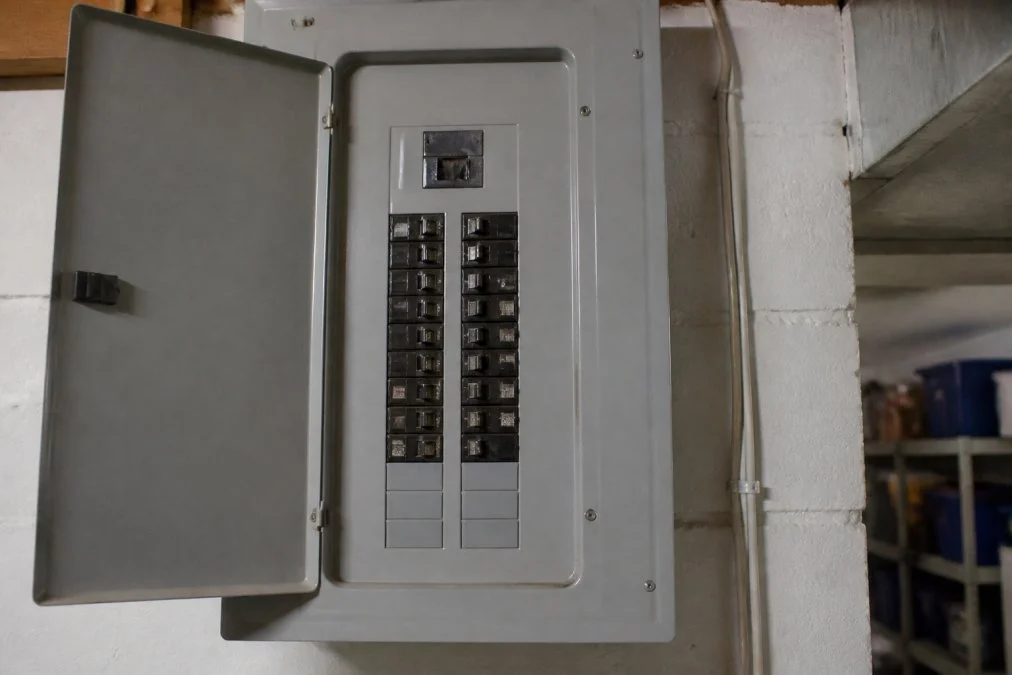
Federal Pacific Stab-Lok breakers have a thin, flat profile with a narrow body and a distinctive two-prong stab on the back, sitting in tightly packed rows with a slim, uniform appearance across the panel. The bus bar layout also differs from modern panels: rather than the staggered, alternating arrangement of a contemporary load center, Stab-Lok panels present breakers in a dense, uniform block.
| Check | What to Look For | Confidence Level |
|---|---|---|
| Cover label | “Federal Pacific Electric,” “FPE,” or “Stab-Lok” text | Moderate |
| Stamped logo | Circular or shield emblem pressed into metal | High |
| Breaker style | Thin, flat breakers with two-prong stabs | High |
| Bus bar layout | Dense, uniform rows rather than staggered | Moderate |
What You Should Never Do During This Check
- Do not remove the dead-front cover. The bus bar and main lugs remain energized with the main breaker off. There is no visual check that requires the cover to come off.
- Do not touch the breakers to test them. Flipping breakers on a panel of unknown condition can create the exact fault the panel is already failing to protect against.
- Do not use a metal flashlight or a screwdriver as a pointer. Keep a non-contact voltage tester and a plastic flashlight in hand if you want to be extra cautious.
- Do not stand on a wet floor or reach over a water heater or appliance. Working clearance exists for a reason.
If you cannot read the label from a safe standing position, stop and call a licensed electrician. A photo taken from a safe distance is enough for most electricians to confirm the panel type.
A Federal Pacific panel does not announce itself with a smell or a sound. The only safe identification method is visual, from a distance, with the cover in place. If you are not comfortable getting close enough to read the label, that is a normal and correct instinct, not a failure.
Take a photo of the panel label and the breaker rows with your phone before you call anyone. An electrician can often confirm the panel type from a clear photo, which saves a diagnostic visit and gets you a faster answer. Photograph every panel on the property, not just the main one.
Signs of an Outdated Electrical Panel You Should Not Ignore
Beyond the brand name, several physical symptoms point to a panel at the end of its service life. Breakers that trip repeatedly or won’t reset are the most common warning. Warmth on the cover, a faint burning smell, scorch marks around breaker openings, and flickering lights that persist after ruling out the fixture all warrant a professional look. Rust or corrosion inside the box is another red flag, particularly in humid coastal climates.
Zinsco vs Federal Pacific Panels: How to Tell Them Apart
Zinsco and Federal Pacific panels share a reputation problem, but they are different products from different manufacturers, and telling them apart matters when reading a home inspection report or talking to an electrician. Zinsco panels carry the Zinsco or Sylvania name and use breakers with a distinctive colored handle, often blue or red, and a different mounting style. Federal Pacific panels carry the FPE or Stab-Lok branding and use the thin, flat breakers described above.
The Cost to Replace a Federal Pacific Panel and What Affects It
A panel replacement is not a single line item. It bundles the panel itself, labor, the permit, the inspection, and often code-required upgrades that only surface once the old panel is out. Understanding those components lets you read a quote intelligently instead of comparing two numbers that never measured the same scope.
What Is Actually in the Quote
A typical residential panel replacement quote breaks down into four buckets:
- The panel and breakers. A 200-amp main breaker load center with a full complement of branch breakers is the core material cost. The brand and the number of circuits move this number more than anything else.
- Labor. A straight swap at the same amperage in an accessible location is a one-day job for a two-person crew in most cases. Anything that requires moving the panel, extending branch circuits, or working in a tight crawlspace adds hours.
- Permit and inspection fees. These are set by your local jurisdiction and are not negotiable. They are also not optional. A permitted job is the only kind that protects you at resale.
- Code-required upgrades. This is the bucket homeowners underestimate. See below.
The Code-Required Upgrades That Move the Number
The National Electrical Code (NEC), published by the National Fire Protection Association (NFPA), is the model code most jurisdictions adopt, sometimes with local amendments. Three requirements routinely apply to a panel replacement:
- Arc-fault circuit interrupter (AFCI) protection. AFCI breakers are required on most branch circuits serving dwelling unit rooms. If your old panel used standard breakers on those circuits, the replacement will need AFCI breakers, which cost meaningfully more per pole than a standard breaker.
- Ground-fault circuit interrupter (GFCI) protection. Required in kitchens, bathrooms, garages, outdoors, and other wet or damp locations. If those circuits were never GFCI-protected, they will need to be brought up to current requirements.
- Working clearance. The NEC specifies a clear working space in front of the panel. If a water heater, shelving, or a finished wall sits inside that space, it has to be addressed before the job can pass inspection.
Why No One Will Give You a Firm Number Over the Phone
A responsible electrician cannot quote a panel replacement sight-unseen because the two biggest variables are invisible until the cover comes off: the condition of the branch wiring and the service entrance. Aluminum branch wiring, undersized feeders, a rusted meter base, or a service mast that no longer meets code can each turn a one-day swap into a multi-day project. Any contractor who gives a firm number without looking is guessing or planning to change-order you later.
The Right Way to Compare Quotes
Ask every contractor for the same three things in writing:
- The amperage and brand of the proposed panel
- Whether the permit and inspection are included
- An itemized list of any code upgrades included in the price
Ask the electrician to note on the invoice whether the new panel includes AFCI and GFCI breakers where required. That single line is the clearest signal of whether the quote is a true code-compliant replacement or a cosmetic swap.
Insurance, Home Inspections, and What Happens When You Sell
Home insurers and home inspectors both treat Federal Pacific panels as a known concern. Many carriers will decline to write a new policy, or require a panel replacement before binding coverage, when a Stab-Lok panel is present. That matters most when you buy or sell a home. A home inspection report that flags a Federal Pacific panel gives the buyer leverage, and an insurer’s refusal to cover the home can stall a closing outright.
A Federal Pacific panel doesn’t fail on a schedule. It fails when a fault occurs and the breaker doesn’t trip. That’s why the risk is described as a hazard rather than a certainty, and why the recommendation is always to replace rather than wait.
Frequently Asked Questions
Can you sell a house with a Federal Pacific panel?
You can list the home, but a Federal Pacific panel often complicates the sale. Home inspectors flag Stab-Lok panels, and many buyers ask for replacement before closing. Some insurers refuse to cover a home with one, which can stall financing. If you plan to sell, getting a licensed electrician to assess the panel and document its condition gives you leverage in negotiations. A pre-listing inspection also prevents last-minute surprises.
Do all Federal Pacific panels need to be replaced?
Most electrical professionals recommend replacement because the Stab-Lok breakers inside these panels have a documented history of failing to trip during overloads and short circuits. That failure defeats the breaker’s main job: cutting power before overheating starts a fire. Even if your panel looks fine today, the internal mechanism can fail without warning. A licensed electrician can confirm whether yours is a Stab-Lok model and discuss replacement options.
How do I tell what breaker panel I have without opening it?
Stand back and read the label on the dead-front cover. Look for the manufacturer name, the word Stab-Lok, and the amperage rating stamped on the metal. Federal Pacific panels typically show a red or blue logo and thin, flat breakers that sit flush with the cover. If the label is painted over or missing, check the breaker handles for the FPE script. Never remove the cover yourself; that exposes live bus bars and creates a shock hazard.
What are the signs of a faulty Federal Pacific panel?
Warning signs include breakers that feel warm to the touch, a burning smell near the panel, breakers that trip repeatedly or never trip at all, flickering lights when appliances cycle on, and scorch marks around breaker slots. Thermal imaging during an electrical inspection can reveal overheating connections that are invisible to the eye. Any of these signs warrants an immediate call to a licensed electrician rather than a DIY check.












continue reading
Related Posts
Commercial electrical alternatives: Compare commercial electrical contractors in the Tampa Bay area. Find licensed alternatives for panel upgrades.
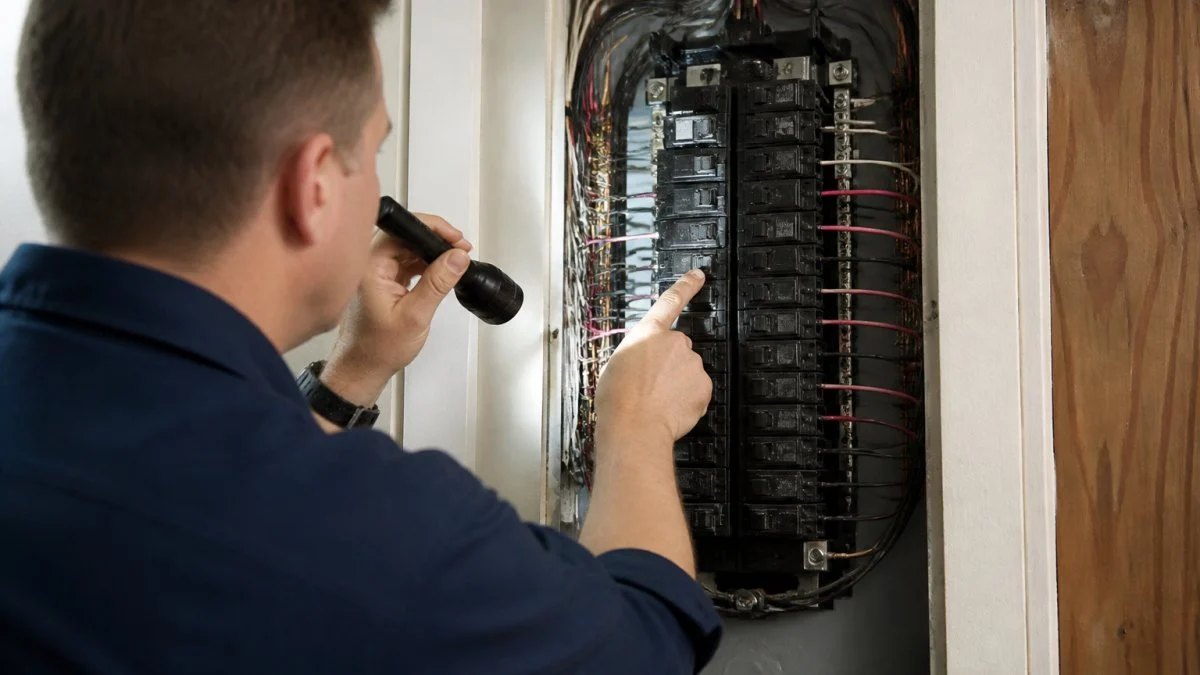
Find top residential electrical safety inspection services. Compare licensed contractors, learn what inspections cover, and discover red flags. Get expert.
Preventing electrical surges: Learn how to prevent electrical surges in commercial buildings with layered protection strategies, NEC compliance.
Get Social