


Last Updated: November 7, 2026
Quick Summary
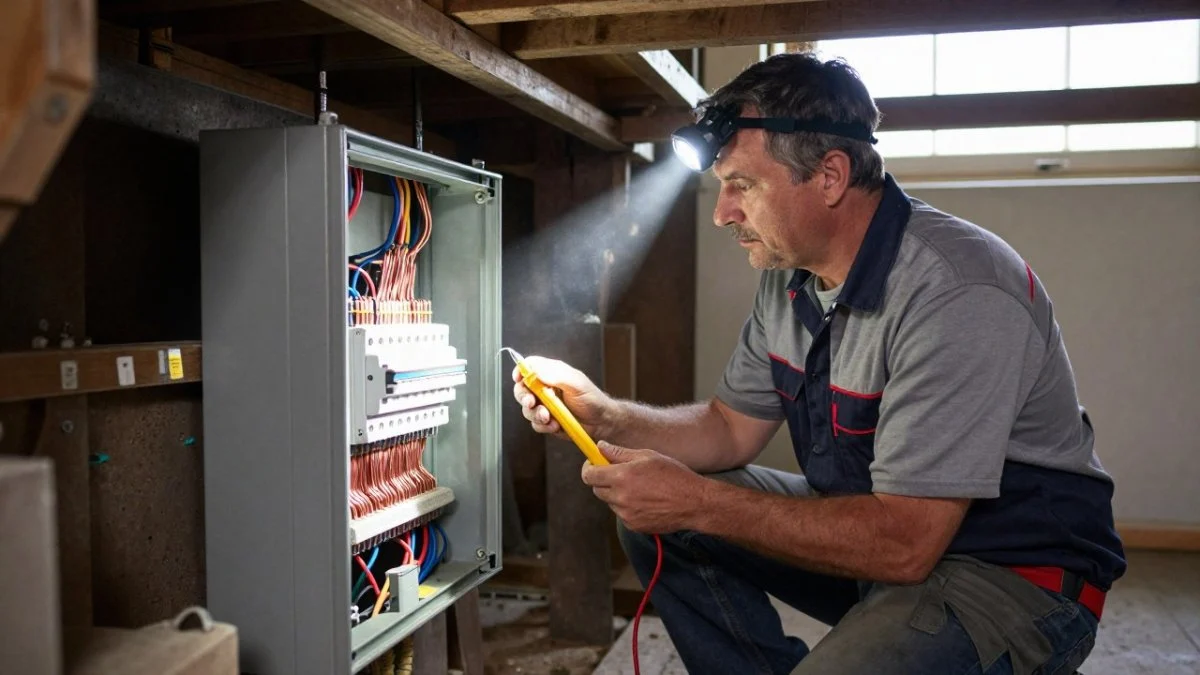
Hiring a professional for electrical safety inspections means verifying the electrician’s license on the state database, confirming current insurance, and checking independence before booking. An inspection is a documented evaluation of your wiring, panel, and grounding that flags hazards and code issues, not a repair job or pass/fail grade.
- Verify the individual’s license status, expiration, class, and discipline history on the state database.
- Ask for a certificate of insurance with current dates and a named insured matching the company.
- Ask whether the company performs the repairs it recommends to surface conflicts of interest.
- Clear at least 3 feet of working space around the main panel before the electrician arrives.
- Sort report findings into fix now, fix soon, and monitor, ranked by risk rather than cost.
Table of Contents
- What Does an Electrical Inspection Include
- How to Verify Licensing, Insurance, and Independence
- Electrical Safety Inspection Cost and What Drives It
- Your Residential Electrical Inspection Checklist
- How Long Does an Electrical Inspection Take
- Reading the Report and Prioritizing Repairs
- Booking Your Electrical Safety Inspection
- Frequently Asked Questions
What Does an Electrical Inspection Include
Hiring a professional for electrical safety inspections starts with knowing what you’re paying for.
An inspection covers the parts of your system that fail silently: loose connections, overloaded circuits, missing grounding, and hidden heat damage. It is not a repair job or a pass/fail grade.
Panel, Wiring, and Grounding Checks
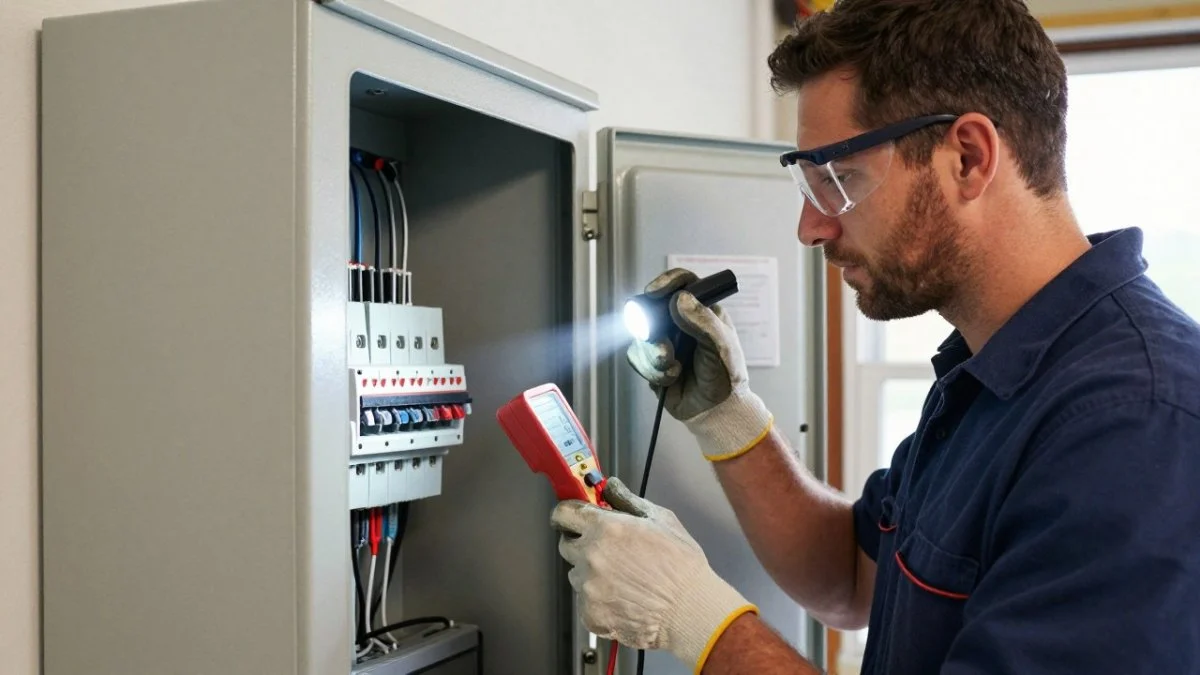
The panel is where most serious problems live.
Wiring gets checked by age and type. Aluminum branch wiring, cloth insulation, and ungrounded outlets all get flagged because they behave differently under load than modern copper.
Grounding and bonding get tested directly. A proper ground path is what makes a breaker trip instead of a person getting shocked, so this is not a step anyone should skip.
Where the Scope Ends
A standard safety inspection does not include opening walls, pulling buried conduit, or repairing anything it finds. It also does not cover low-voltage systems, appliances, or utility-side equipment.
Ask upfront whether the inspection includes thermal imaging, a load calculation, or a written report. Those items change the price and the usefulness of what you get.
How to Verify Licensing, Insurance, and Independence
Ask three questions before anyone walks through your door: are you licensed, are you insured, and do you profit from the repairs you recommend? Verifying the answers takes ten minutes and prevents costly mistakes.
Verify the License the Right Way
Licensing is verifiable, and you should verify it yourself. Most states run an online license lookup through the electrical or contractor licensing board; search by the individual’s name or license number, not just the company name, because a company can hold a license while the person sent to your home is an unlicensed helper.
Confirm four things on the record: the status is active, the expiration date is in the future, the license class covers the work being done, and there is no public discipline history tied to unsafe work. A legitimate contractor will hand you the number without hesitation. If the license is listed under a different name than the person who shows up, ask who is supervising the work.
State electrical contractor license lookup is one example of the kind of database you will use; the equivalent board in your state will show the same fields.
Read the Insurance Certificate, Not the Sticker
General liability covers damage to your property if a ladder goes through a ceiling or a panel gets dropped; workers’ compensation covers the person on your ladder if they are injured.
Ask for a certificate of insurance and confirm the dates are current and the named insured matches the company you hired. A certificate listing only the company’s auto policy or showing a past expiration date is not proof of coverage.
Test Independence Before You Book
Independence is the question nobody asks. An inspector employed by a company that also sells panel upgrades has an incentive to find problems. That does not make every recommendation wrong, but you should know who signs the paycheck.
Ask directly: does the company perform the repairs it recommends, and are inspection findings itemized separately from repair quotes? A vague answer, or a bundled inspection-and-repair price, tells you the findings and the sales pitch are tangled together.
A Practical Hiring Checklist
Use this before you sign anything:
- License number verified on the state database, status active, expiration current
- License holder’s name matches the person or supervisor who will be on site
- Certificate of insurance received, dates current, named insured matches the company
- Written scope of inspection provided before the visit, including what is and is not covered
- Report format and delivery timeline confirmed in writing
- Repair recommendations itemized separately from inspection findings
- Clear answer on whether the company performs the repairs it recommends
- Written confirmation of who will be on site and their role
For a deeper walkthrough of what to check before signing anything, see our guide on hiring a contractor.
Watch out: a contractor who offers to “waive the inspection fee if you book the repair” has tied the inspection to the sale, which is exactly the conflict of interest the independence question is meant to surface.
Electrical Safety Inspection Cost and What Drives It
There is no single price for an electrical safety inspection, and any quote given over the phone without seeing the property is a guess. Understand the cost structure so you can compare proposals on equal terms.
Residential safety inspections are often quoted for a defined scope, with add-ons quoted separately. Ask each provider to break the quote into the same line items so you can compare them side by side.
The Line Items That Drive the Price
- Home size and circuit count. More panels and more circuits mean more time. A single-panel home is a shorter visit than a property with a main panel, a subpanel, and a detached structure.
- Access. Finished basements, attics, crawlspaces, and tight panel locations slow the work down.
- Report depth. A verbal summary costs less than a documented report with photos and severity rankings. The written report is usually the more valuable deliverable, so do not trade it away for a lower price.
- Thermal imaging. Infrared scanning of the panel and accessible wiring finds hot spots that visual checks miss. It is often quoted as an add-on.
- Load calculation. A formal load calculation takes additional time and is sometimes required before a panel upgrade or a new large appliance.
- Permit research. Pulling permit history for prior electrical work is a research task that some providers include and others charge for.
- Travel and after-hours scheduling. Remote properties and evening or weekend appointments can carry a premium.
Comparing Quotes Beyond the Bottom Line
Two quotes for the same house can differ and still not be comparable. Read the scope line by line.
| What to Compare | Why It Matters | Warning Sign |
|---|---|---|
| Scope of inspection | Determines what actually gets checked | Vague “full inspection” language |
| Report format | Written reports support negotiations and permits | Verbal-only findings |
| Thermal imaging | Finds hot spots visual checks miss | Listed as an upsell only |
| Load calculation | Needed before some upgrades and additions | Not offered or not mentioned |
| Permit research | Reveals unpermitted prior work | Dismissed as unnecessary |
| Licensing and insurance | Protects you if something goes wrong | Refuses to provide certificate |
| Repair separation | Keeps findings independent from sales | Bundled inspection-and-repair price |
The cheapest quote is often the one with the narrowest scope. Compare what is included, not just the total.
What the Fee Does Not Include
An inspection fee buys the evaluation and the report. It does not buy repairs, permit fees, or municipal reinspection charges.
Pricing for electrical work depends on scope, so request a quote through our contact page to get a figure based on your property.
Watch out: a quote that is dramatically lower than the others usually reflects a narrower scope, a verbal-only report, or no thermal imaging, not a better deal.
Your Residential Electrical Inspection Checklist
A residential electrical inspection checklist is the fastest way to prepare, and preparation is what separates a useful visit from a rushed one. Use this before the electrician arrives:
- Clear access to the main panel, at least 3 feet of working space
- Note any breakers that trip repeatedly, and what was running
- List rooms with flickering lights, dead outlets, or warm switch plates
- Write down the approximate age of the panel and any known upgrades
- Collect permits or paperwork from past electrical work
- Note any burning smell, buzzing, or discoloration around outlets
- Secure pets and unlock gates or side yards
- Have your questions written down, not memorized
That last item matters more than it sounds. Homeowners who arrive with a written list get clearer answers.
How Long Does an Electrical Inspection Take
The length of a residential electrical inspection depends on the size of the home, the number of panels, and whether the report is written on site. A small single-panel home moves fast. A larger property with a subpanel, a detached garage, and dock power takes longer.
Before, During, and After the Visit
Before: Confirm the appointment window, clear panel access, and send over any prior inspection reports.
During: The electrician will remove panel covers, test outlets and grounding, and inspect visible wiring. Ask questions as findings come up.
After: If anything is unclear, ask for it in plain language before the electrician leaves.
For a fuller picture of what a visit looks like from the homeowner’s side, read what to expect when a service technician visits your home.
Reading the Report and Prioritizing Repairs
Not every finding is urgent, and treating them all as emergencies is how homeowners end up overspending.
Fix now: exposed wiring, scorched connections, missing grounding, a panel that’s known to fail. These are fire and shock risks.
Fix soon: undersized circuits, outdated outlets without protection, aluminum branch wiring without proper remediation.
Monitor: cosmetic issues, minor code updates for unrenovated areas, recommendations tied to future projects.
Ask the electrician to rank findings by risk, not by cost. If the report flags repairs, our electrical repair and troubleshooting service covers outlets, breakers, switches, wiring, and lighting.
Booking Your Electrical Safety Inspection
Booking is the easy part, provided you’ve done the verification work first.
If you’re comparing providers, our roundup of the best residential electrical safety inspection services covers what to look for side by side.
One last thing worth saying plainly: an inspection is only useful if you act on it.
Most homeowners put off electrical inspections until something trips, flickers, or smells hot, and by then the cheap fix has usually become the expensive one.
Frequently Asked Questions
Who can perform an electrical safety inspection?
In most cases, a licensed electrician performs residential electrical safety inspections. Licensing requirements vary by state and municipality, so ask for the license number and verify it with the local authority before booking. A qualified professional should also carry general liability insurance and, where required, workers’ compensation coverage. Some jurisdictions separate inspection from repair work, so confirm whether the person inspecting your home is also allowed to quote the repairs.
What should I look for when hiring an electrician for an inspection?
Check four things: a current license you can verify, proof of insurance, a written scope of what the inspection covers, and a sample report so you know what you will receive. Ask how they handle older panel brands and aluminum wiring, since these require specific experience. Get the quote in writing with any filing fees listed separately, and confirm whether the inspector will walk you through findings on site or only send a document afterward.
How often should a home have an electrical safety inspection?
Many electricians suggest an inspection every 10 years for an established home, and sooner if the property is older, has had major additions, or shows warning signs like flickering lights, warm outlet covers, or breakers that trip repeatedly. Homes with aluminum branch wiring, older fuse boxes, or a recently purchased waterfront property with dock power benefit from a check before any renovation or new appliance installation. Your insurance carrier may also set its own interval.
What happens if an electrical inspection finds a problem?
The inspector documents the issue in the written report, rates its severity, and explains the repair options with a quote. Minor items like a missing panel cover or an unlabeled breaker are usually corrected quickly. More serious findings, such as an overheating panel or double-tapped breakers, may call for a panel replacement or dedicated circuit. Get the repair scope in writing before authorizing work, and ask whether a re-inspection or permit sign-off is included in the price.













continue reading
Related Posts
Lightning strikes nearby can fry appliances without ever hitting your home.
Learn how to test voltage drop at home with a digital multimeter. Follow safe, step-by-step checks for outlets, long wire runs, and flickering lights.
Learn what a home EV charger install really costs, from panel upgrades to wiring distance, and how to compare quotes before you commit.
Get Social