


Last Updated: November 24, 2026
Quick Summary
Hiring a licensed electrician for panel upgrades means verifying the license, insurance, and permit record before you sign anything, then comparing itemized quotes rather than one lump sum. A panel upgrade is permitted, inspected work that usually requires the utility to disconnect power, so credentials come first. Ask who pulls the permit and who calls the utility.
- Verify the license number directly with the state licensing board, not a screenshot on a business card.
- A contractor who offers to skip the permit to save money is the biggest red flag.
- Plan for power to be off a full working day, sometimes longer with separate utility visits.
- Your quote should itemize the panel make, model, amperage, permit fees, and utility coordination.
- Aluminum branch wiring from the mid-1960s to mid-1970s needs a specialist’s inspection before repair.
Table of Contents
- How do I hire a licensed electrician for a panel upgrade?
- Questions to Ask an Electrician Before Hiring
- Electrical Panel Upgrade Cost: What Drives the Price
- The Electrical Panel Upgrade Process, Step by Step
- Aluminum Wiring Inspection and Repair in Older Homes
- Choosing Panel Capacity and Planning for Future Loads
- What a Panel Upgrade Quote Should Include
- Booking Your Panel Upgrade with a Licensed Electrician
- Frequently Asked Questions
How do I hire a licensed electrician for a panel upgrade?
Hiring a licensed electrician for panel upgrades means verifying the license, insurance, and permit record before you sign anything, then comparing itemized quotes rather than one lump sum. A panel upgrade is permitted work, inspected work, and, in most cases, work that requires the utility to disconnect power. That combination makes credentials the first filter, not the last.
Homeowners who hand over deposits to unlicensed “handymen” can face failed inspections, rework, and in some cases a panel that has to be torn out and replaced.
Below, we walk through the questions to ask, what a fair quote looks like, how permits and utility coordination work, and how to spot unsafe work. The stakes are simple.
Questions to Ask an Electrician Before Hiring
Ask for the license number, the insurance certificate, and the permit history before any discussion of price. An electrician who hesitates on any of those three is telling you something important.
The questions below separate professionals from pretenders. Print them, and write down the answers.
License, Insurance, and Credential Checks
A licensed electrician holds a state-issued credential, and in most states that means a journeyman or master level license tied to a licensed electrical contractor. Ask for the license number and verify it directly with the state licensing board, not a screenshot on a business card.
- What is your license number, and what level is it?
- Who holds the contracting license for this company?
- Can you send a certificate of insurance for general liability and workers’ compensation?
- Will the person doing the work be an employee or a subcontractor?
That last question matters more than most homeowners realize. Uninsured subcontractors on your property can create liability problems if someone gets hurt. For a broader pre-hire checklist covering licenses, insurance, and estimates, our guide on common knowledge for hiring any construction trade covers the ground rules that apply across trades.
Red Flags and Unsafe or Noncompliant Work
Watch out: the biggest red flag is a contractor who offers to skip the permit to “save you money.” Unpermitted panel work can void insurance coverage and complicate a future home sale.
Other signals that should end the conversation:
- A demand for full payment upfront in cash
- No physical business address or verifiable reviews
- A quote given without anyone looking at the panel
- Pressure to decide today because “the price goes up tomorrow”
- Reluctance to name the panel brand or explain what will be replaced
If a contractor says your panel is “fine” without opening it, get a second opinion.
Electrical Panel Upgrade Cost: What Drives the Price
Panel upgrade pricing depends on service size, panel type, labor access, permit fees, and whether the utility needs to disconnect and reconnect service. Pricing depends on these factors, so request a written quote from Accurate Electric LLC’s website for current pricing.
Here is what actually moves the number up or down:
| Cost Driver | What It Means | Impact on Price |
|---|---|---|
| Service size | 100A to 200A or 200A to 400A | Larger service, higher cost |
| Panel condition | Rust, corrosion, or undersized wiring | Adds repair scope |
| Wire and feeder runs | Distance from meter to panel | Longer runs, more labor |
| Permit and inspection fees | Set by the local authority | Fixed but varies by area |
| Utility coordination | Disconnect and reconnect scheduling | Adds coordination time |
| Access and wall repair | Tight closets, finished walls | Adds finish work |
For real numbers on permits, labor, and what a job includes, see our breakdown of the cost of an electrical panel upgrade. We would rather you budget from a documented range than from a guess.
The Electrical Panel Upgrade Process, Step by Step
The upgrade process runs from assessment to final inspection in a fixed sequence, and skipping a step is how projects fail inspection. The sequence matters less than the mechanics inside each step, so here is what actually happens at each stage.
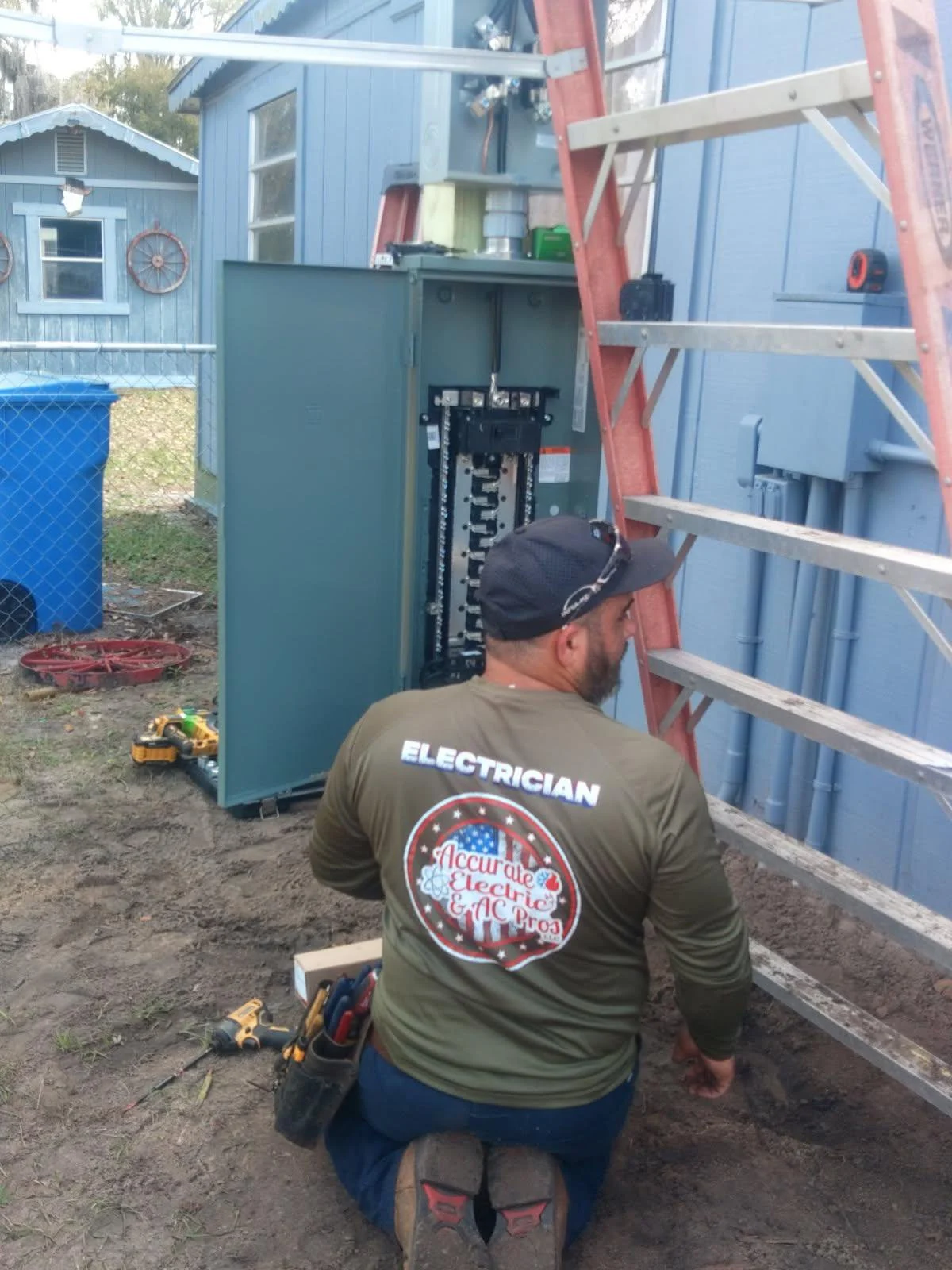
Here is the sequence we follow on a typical residential job:
- Load assessment. We calculate the existing and planned electrical load to confirm the service size you need.
- Written scope and quote. You get an itemized estimate before work begins.
- Permit application. The licensed contractor files with the local building department.
- Utility coordination. We schedule the power disconnection with the utility.
- Installation day. Old panel out, new panel and feeders in, breakers labeled.
- Inspection. The authority having jurisdiction inspects the work.
- Reconnection and documentation. Power restored, and you receive the paperwork.
Most homeowners ask how long their power will be off. Plan for a full working day, sometimes longer if the utility requires a separate disconnect and reconnect visit.
Permits, Inspections, and Utility Coordination
A permit is the building department’s record that work will be inspected, and the electrical code adopted in your area, typically a version of the NEC, is what the inspector tests against.
After the application is filed, the building department reviews it and issues the permit, sometimes the same day and sometimes after a plan review if the service size or scope triggers one.
Utility coordination is the step homeowners underestimate. The utility controls when power goes off and comes back on, and their schedule, not the electrician’s, sets the day.
Ask any contractor two questions here: who pulls the permit, and who calls the utility. If the answer is “you do,” keep looking.
Aluminum Wiring Inspection and Repair in Older Homes
Aluminum branch wiring, common in homes built roughly between the mid-1960s and mid-1970s, needs a specialist’s eye because the metal expands, contracts, and oxidizes differently than copper. Loose connections at outlets, switches, and panel terminations are where problems start.
Inspection can involve opening devices and panel terminations to look for overheating, discoloration, and loose lugs. Repair may involve approved connection methods rather than a full rewire. What most guides miss is that the repair method matters as much as the diagnosis: the wrong connector on aluminum wire recreates the exact hazard you paid to remove.
If your home has aluminum branch circuits, read our guide to safe aluminum wiring repair methods before you approve any repair scope.
Choosing Panel Capacity and Planning for Future Loads
Size the panel for what you plan to add, not just what you run today. A load calculation is the tool that answers this, and it accounts for square footage, major appliances, and any new circuits you intend to add.
Future loads to plan for now:
- EV charger. A Level 2 charger is a large continuous load and often the reason homeowners upgrade.
- Generator or transfer switch. Standby power needs dedicated capacity and a transfer mechanism.
- Marine and dock power. Waterfront properties add dock circuits and corrosion-resistant equipment.
- Additions and outbuildings. A workshop or pool pump draws real amperage.
If you are weighing whether your current service is enough, our load guide on whether a 100 amp panel is enough walks through the math before you commit to a size.
What a Panel Upgrade Quote Should Include
A legitimate quote is itemized and written, and it names the panel brand, the service size, and what is and is not included. A single number on a text message is not a quote. The harder skill is comparing two itemized quotes fairly, because the lowest total is often the one with the most work pushed outside the scope.
Your estimate should list:
- Panel make, model, and amperage
- Main breaker and branch breaker quantities
- Wire, conduit, and feeder specifications
- Permit fees, listed separately
- Utility coordination responsibility
- Labor and estimated timeline
- Inspection and any wall or drywall repair
- Warranty terms on parts and workmanship
How to Compare Two Bids Line by Line
Put the quotes side by side and compare the same line on each. A common pattern is that one bid includes the permit fee and utility coordination while the other leaves both to the homeowner, which can make a cheaper quote cost more once those items are added back.
Compare the panel itself before comparing labor. A quote that names a brand and model can be checked for breaker availability and warranty support; a quote that says only “200 amp panel” is not comparable to anything. The same applies to the main breaker, the grounding and bonding work, and whether the meter base or service mast is being replaced or reused.
Exclusions, Allowances, and Change Orders
Every quote should have an exclusions section, and you should read it before the price. Common exclusions include drywall repair, painting, replacement of damaged feeders found during the job, and remediation of aluminum branch wiring.
Ask what happens if the inspector requires changes. A fair contractor explains how change orders are priced before the job starts, not after, and puts the hourly rate or flat fee for additional work in the quote.
For real numbers on permits, labor, and what a job includes, see our breakdown of the cost of an electrical panel upgrade. We would rather you budget from a documented range than from a guess.
Booking Your Panel Upgrade with a Licensed Electrician
Booking starts with a site visit, because no one can size a panel or quote a job from a photo. Expect the electrician to open the panel, check the meter and grounding, and ask what you plan to add.
At Accurate Electric LLC, our licensed and insured electricians bring over 31 years of combined industry experience to every panel job, from essential upgrades to marine and dock power. You can review what our residential panel upgrade service includes and how scheduling works before you commit.
The real test of a panel upgrade is not the day the power comes back on. It is the inspection, the labeled breakers, and the paperwork you can hand a buyer or an insurer years later.
Frequently Asked Questions
How do I verify an electrician’s license and insurance before hiring?
Ask for the license number and check it against your state’s electrical contractor database, then request a certificate of insurance showing general liability and workers’ compensation coverage. Confirm the policy is current and names the company you’re hiring, not an individual subcontractor. A licensed electrician should provide these without hesitation, and any delay or excuse is a reason to keep looking.
Do I need a permit for an electrical panel upgrade?
Yes. A panel replacement is permitted work in nearly every jurisdiction, and the permit triggers the inspection that confirms the installation meets the National Electrical Code and local amendments. A licensed electrical contractor should pull the permit in their name and schedule the inspection. If a company suggests skipping the permit to save time or money, walk away; unpermitted work can complicate insurance claims and resale.
Can an electrician upgrade a panel in a home with aluminum wiring?
Yes, but the aluminum wiring inspection and repair work has to be part of the scope. Aluminum branch circuits need proper remediation, such as copper pigtails with approved connectors, before new panel terminations are made. Ask the electrician how they handle aluminum-to-copper connections and whether the repair is included in the written estimate. Skipping this step leaves a known fire risk in place.
How long does an electrical panel upgrade take, and will my power be off?
Most residential panel replacements take one full day, though older homes with wiring issues or a service capacity change can run longer. Power is shut off for most of the install, so plan for several hours without electricity and clear the area around the panel. The electrician should give you a realistic timeline in the written estimate and confirm when the utility disconnect and reconnect are scheduled.













continue reading
Related Posts
Lightning strikes nearby can fry appliances without ever hitting your home.
Learn how to test voltage drop at home with a digital multimeter. Follow safe, step-by-step checks for outlets, long wire runs, and flickering lights.
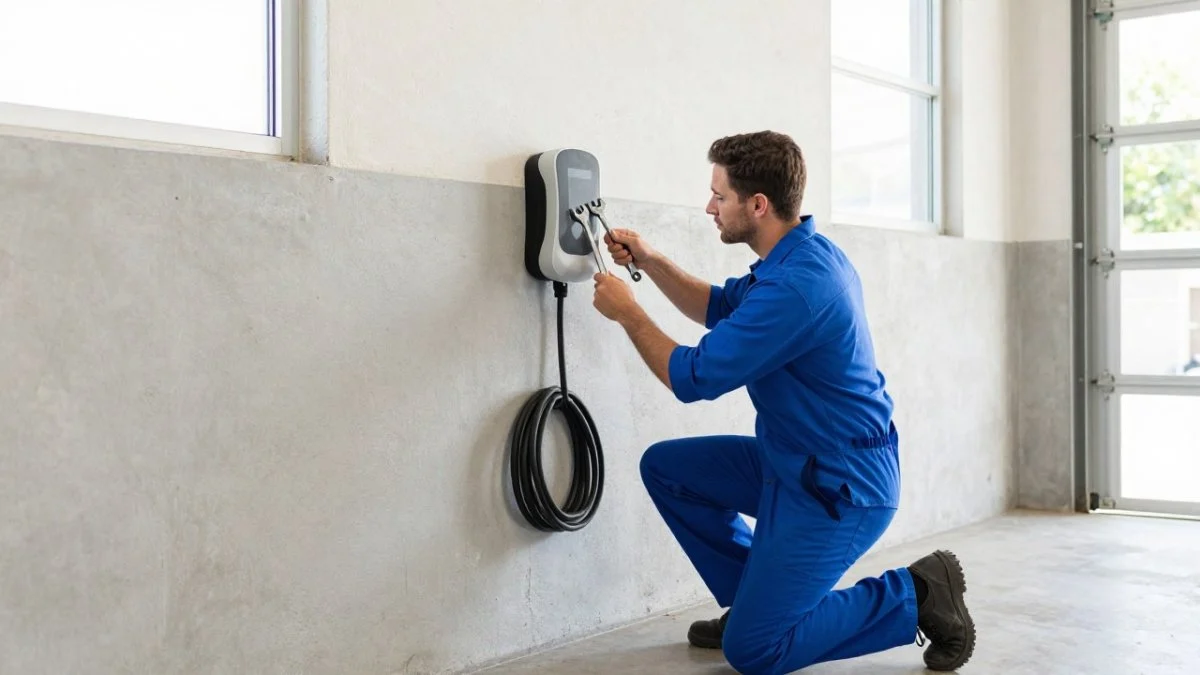
Learn what a home EV charger install really costs, from panel upgrades to wiring distance, and how to compare quotes before you commit.
Get Social