


Table of Contents
- Why Hiring a Licensed Electrician for EV Charger Installation Matters
- How to Verify Electrician Credentials and Licensing
- Understanding Electrical Panel Upgrade for EV Charger Requirements
- EV Charger Installation Cost: What to Expect
- EV Charger Permit Requirements and NEC Compliance
- Scope of Work: What a Professional Installation Includes
- Safety Standards, Grounding, and Bonding Requirements
- Questions to Ask Before Hiring Your Electrician
- Frequently Asked Questions
Last Updated: October 4, 2026
Why Hiring a Licensed Electrician for EV Charger Installation Matters
Installing an EV charger isn’t a DIY project. Hiring electrician EV charger professionals is essential because it involves high-voltage electrical systems that require specialized knowledge and proper permitting.
Most Level 2 chargers pull 30-50 amps of power, far beyond standard household circuits. A licensed electrician assesses your panel capacity, determines if upgrades are needed, and ensures every connection meets code. Without this expertise, you risk fire hazards, equipment damage, and voided warranties.
Beyond safety, there’s the legal side. Most jurisdictions require a permit for EV charger installation, and inspectors won’t sign off unless a licensed professional did the work. Hiring a qualified electrician protects you from liability and ensures your installation is recognized by insurance companies and future home buyers.
How to Verify Electrician Credentials and Licensing
Before hiring anyone, confirm they’re licensed and properly insured. A single mistake during high-voltage EV charger installation can cause fires, electrocution, or equipment damage.
Verifying License and Certification
Call your state’s licensing board or check their online database to verify the electrician’s license number. Confirm:
- The license is currently active (not expired or suspended)
- The license type matches the work being performed (journeyman or master electrician)
- There are no disciplinary actions or complaints on record
Ask for specialized certifications in EVSE (electric vehicle supply equipment) installation through NABCEP or manufacturer programs. While not always required, these signal deeper expertise in EV technology.
Insurance and Liability Verification, The Critical Step Most Homeowners Skip
You must verify the electrician carries adequate insurance before work begins. Request proof of two types of coverage:
General Liability Insurance protects you if the electrician damages your home during installation. Request a Certificate of Insurance with at least $1 million coverage for residential work.
Workers’ Compensation Insurance is required by law in most states if the electrician has employees. Verify this coverage is active before work begins.
Ask for a Certificate of Insurance (COI) listing you as “additional insured.” The COI should show the insurance company name, policy number, coverage types and limits, expiration dates, and your address. Contact the insurance company directly to verify the policy is active.
Bonding and Background Verification
Bonding means the contractor has posted a financial guarantee backing their work. Ask if the electrician is bonded and request proof.
Request references from recent EV charger installations. Call at least two previous customers to confirm professionalism, quality, insurance coverage, and warranty.
Creating Your Verification Checklist
Before hiring, complete this verification checklist:
☐ License number verified through state licensing board
☐ License is active and in good standing
☐ No disciplinary actions or complaints on record
☐ Certificate of Insurance received and verified
☐ General liability coverage at least $1 million
☐ Workers’ compensation insurance confirmed (if applicable)
☐ You are listed as additional insured on their policy
☐ Insurance expiration dates are current
☐ At least two references from recent EV charger installations contacted
☐ References confirmed professionalism, quality, and insurance coverage
☐ Bonding information provided (if applicable)
☐ Written estimate provided before work begins
If an electrician cannot or will not provide this documentation, do not hire them. The few minutes spent verifying credentials and insurance protect you from catastrophic liability on high-voltage electrical work.
Understanding Electrical Panel Upgrade for EV Charger Requirements
Your electrical panel distributes power throughout your home. An EV charger installation requires evaluating whether your panel can handle the additional load, especially in older homes with lower-capacity panels.
A licensed electrician performs a load calculation to determine your home’s total electrical capacity and whether an upgrade is necessary.
Load Calculation and Amperage Capacity Assessment
A load calculation adds up amperage from your water heater, HVAC, appliances, and other major loads. Most modern homes have 100-200 amp service; a Level 2 charger requires 30-50 amps. If your panel is already at 80-90% capacity, an upgrade is needed. The NEC recommends not exceeding 80% of panel capacity. A qualified electrician identifies outdated wiring, problematic panels, or service entrance issues.
When a Subpanel or Service Entrance Upgrade Is Necessary
A subpanel is a secondary panel that draws power from your main panel. If your main panel is full but has adequate capacity, a subpanel dedicated to the EV charger may work. A full service entrance upgrade becomes necessary when your entire electrical service is undersized, which is common in homes built before 1990.
EV Charger Installation Cost: What to Expect
Cost varies based on your home’s electrical situation and charger type. The electrician’s assessment determines the scope and price.
How Charger Type Drives Electrical Requirements and Cost
Level 1 Chargers use standard 120-volt outlets, draw 12-16 amps, and add 3 miles of range per hour. Installation is minimal; most don’t require hiring an electrician.
Level 2 Chargers operate on 240 volts, draw 30-50 amps, and add 25-30 miles of range per hour. Installation requires a dedicated 240-volt circuit from your panel.
DC Fast Chargers operate at 480 volts and are almost never installed in residential settings. They’re found at public charging stations and require three-phase power that residential homes don’t have. Skip this category unless you’re planning a commercial installation.
Cost Factors and Pricing Breakdown
Distance from your panel to the charging location significantly affects cost. Running conduit 50 feet costs more than 10 feet. New circuits, existing wiring reuse, and subpanel requirements all affect pricing, as do local labor rates and permit fees.
If your panel can handle the charger without upgrades, installation is simpler and cheaper.
| Cost Factor | Impact on Installation | Typical Cost Range |
|---|---|---|
| Level 2 charger installation (no panel upgrade) | Lower cost, simpler install | $500-$1,500 |
| Panel upgrade (100A to 200A service) | Moderate to high cost increase | $3,000-$5,000+ |
| Service entrance upgrade (utility involvement) | Highest cost, most complex | $5,000-$10,000+ |
| Distance from panel to charger (per 10 feet) | Longer runs increase cost | $100-$300 per 10 feet |
| Existing conduit available | Can reduce material costs | $200-$500 savings |
| Permit and inspection fees | Varies by location | $100-$500 |
| Subpanel installation (if needed) | Alternative to main panel upgrade | $1,500-$3,000 |
For accurate pricing, get quotes from multiple licensed electricians. They’ll assess your specific situation, determine which charger type works best for your panel, and provide estimates. A detailed quote should break down labor, materials, permitting costs, and any panel upgrades so you understand what you’re paying for and why.
EV Charger Permit Requirements and NEC Compliance
Most jurisdictions require a permit for EV charger installations. The NEC specifies circuit breaker sizing, wire gauge, grounding, bonding, conduit, and disconnecting means. When you hire a licensed electrician, permit handling is usually included. Skipping permits risks insurance claim denials, home sale complications, and building department fines.
Scope of Work: What a Professional Installation Includes
A complete EV charger installation includes several distinct steps. Understanding what’s involved helps you know what to expect and ensures nothing is missed.
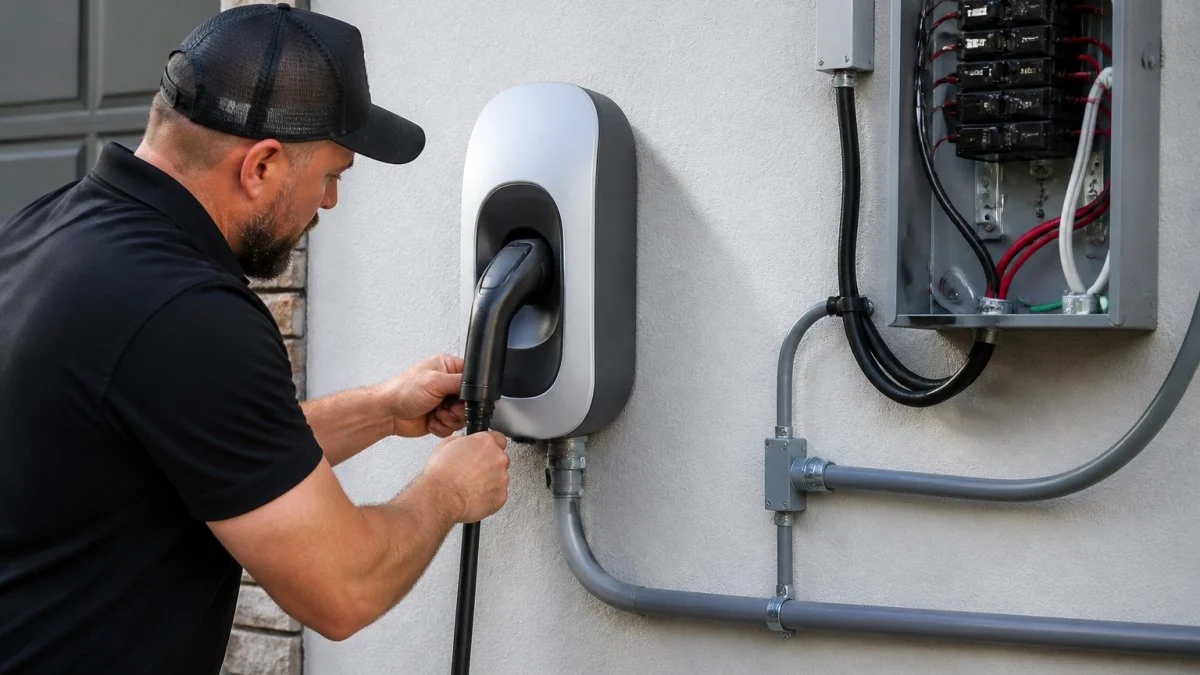
The electrician starts with a site inspection and assessment. They examine your electrical panel, measure the distance to the charging location, check for obstacles, and evaluate existing wiring. This determines whether new circuits are needed and what materials are required.
Next comes the actual installation. For a hardwired charger, this means running conduit from the panel to the charger location, pulling the appropriate gauge wire through the conduit, installing the disconnect switch and circuit breaker, and making all connections. The work must follow NEC specifications for every connection and component.
Grounding and bonding are critical safety steps. The electrician ensures proper grounding to protect against electrical faults. The charger mounting, conduit installation, and all connections must be secure and properly supported. Loose connections or improper installation can cause fires.
Finally, the electrician tests the installation before the inspection. They verify voltage levels, check that the circuit breaker works correctly, and confirm the charger powers on and charges properly. Once testing passes, the inspector verifies everything meets code.
Safety Standards, Grounding, and Bonding Requirements
Grounding and bonding protect you from electrical shock and equipment damage. Grounding provides a safe path for electrical current to flow to the earth if a fault occurs. Bonding connects metal parts to ensure they’re at the same electrical potential, preventing dangerous voltage differences.
The NEC requires specific grounding methods for EV chargers. Equipment grounding uses a ground wire in the same conduit as the power wires. This wire provides a direct path back to the panel’s ground bus if a fault occurs. The charger must also be bonded to any metal raceways or enclosures.
Proper installation of the NEMA 14-50 outlet (or hardwired connection) includes correct grounding and bonding. The electrician ensures the ground wire is the correct gauge, properly connected, and not damaged. They verify that all metal components in the circuit are bonded together.
These aren’t theoretical requirements. Proper grounding and bonding prevent electrocution hazards and equipment fires. A licensed electrician knows exactly how to implement these safety measures because they’ve been trained and tested on electrical codes.
Questions to Ask Before Hiring Your Electrician
Before hiring electrician EV charger services, ask these important questions:
- Are you licensed and insured? Request their license number and proof of insurance.
- Have you installed EV chargers before? Ask how many and request references.
- Will you handle permitting and inspection? Confirm they manage the permit process.
- What’s your warranty on the work? Understand what they guarantee.
- Do you provide a written estimate? Get everything in writing before work starts.
- How long will the installation take? Understand the timeline and any power outages.
- What happens if the inspector finds issues? Know how they handle corrections.
- Can you assess whether my panel needs upgrading? Ensure they perform a load calculation.
The right electrician answers these questions clearly and provides documentation. They’re transparent about costs, timeline, and what the installation includes. If an electrician seems evasive or unwilling to explain their work, that’s a red flag.
At Accurate Electric LLC, we answer these questions upfront because we want you confident in your decision. Our licensed electricians have over 31 years of combined experience with residential electrical systems, including EV charger installations. We handle permits, manage inspections, and stand behind our work with proper warranties and insurance protection.
Hiring a licensed electrician for your EV charger installation ensures the job is done safely, legally, and right the first time. Your home’s electrical system deserves expertise, not guesswork. Accurate Electric LLC brings the knowledge and experience to handle everything from load calculations to final inspection, giving you peace of mind that your EV charger installation meets all code requirements and safety standards. Contact us for a detailed assessment and quote tailored to your home’s specific needs.
Frequently Asked Questions
Can any electrician install an EV charger?
No. EV charger installation requires a licensed electrician familiar with EVSE systems, NEC compliance, and local electrical codes. Not all electricians have experience with Level 2 chargers or the load calculation and grounding requirements they demand. Verify your electrician holds an active Florida electrical license and has documented experience with EV charger installations before hiring.
Do I need a permit to install an EV charger at home?
Yes. Most jurisdictions require electrical permits for hardwired EV charger installations. Permits ensure the work meets NEC standards and local safety codes. Your electrician should handle permit acquisition as part of the scope of work. Skipping permits can void insurance coverage and create liability issues if problems arise later.
How much does EV charger installation cost?
EV charger installation cost depends on your home’s electrical infrastructure. If your panel has available capacity, installation may be straightforward. If you need a panel upgrade, subpanel, or service entrance work, costs increase significantly. Get quotes from multiple licensed electricians that include site inspection findings. Contact Accurate Electric LLC for a detailed estimate based on your specific situation.
How do I know if my electrical panel can handle an EV charger?
A licensed electrician performs a load calculation to determine available amperage capacity. Level 2 chargers typically require 30-50 amps at 240 volts. Your electrician inspects your service entrance, circuit breaker configuration, and existing load to confirm compatibility. If capacity is insufficient, a panel upgrade or subpanel installation may be necessary.












continue reading
Related Posts
Licensed electrician tampa bay: Find licensed electricians in Tampa Bay with verified credentials, emergency services, and transparent pricing.
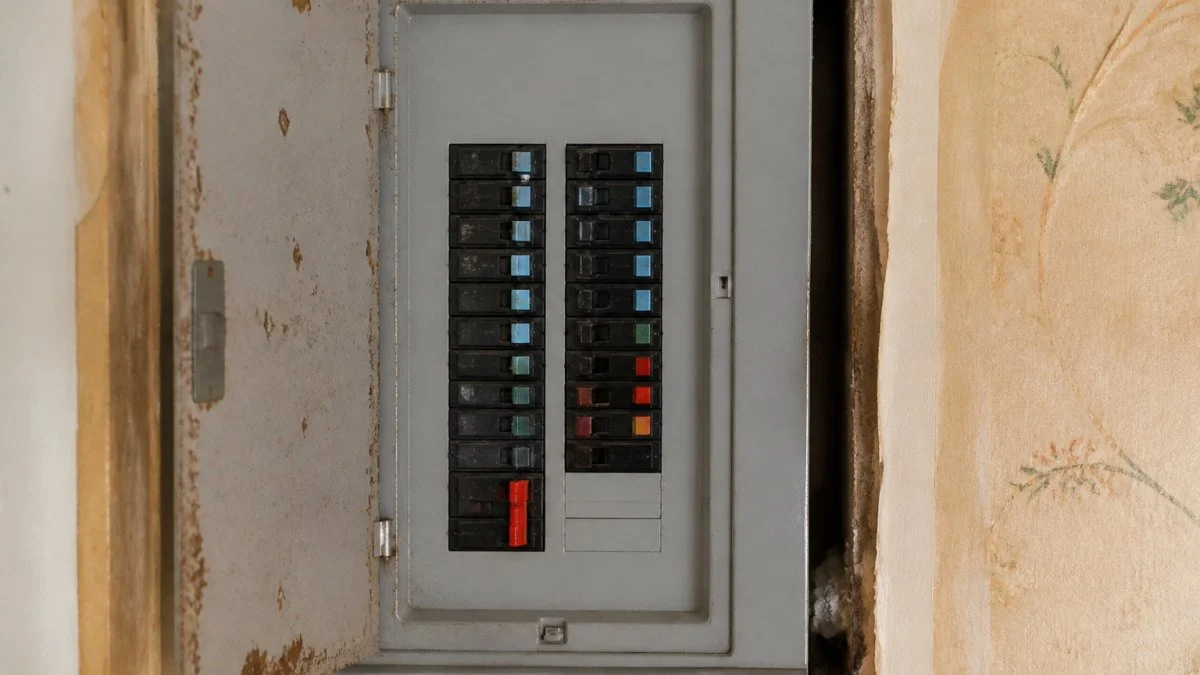
Federal pacific panels dangerous: Federal Pacific panels pose serious fire and safety risks. Learn why FPE Stab-Lok breakers fail, how to identify them.
Electrical panel upgrade benefits: Learn the key benefits of upgrading your electrical panel, from increased capacity to safety improvements and tax.
Get Social