


Table of Contents
- Why Electrical Panel Upgrade Benefits Matter for Your Home
- Increased Electrical Capacity and Load Handling
- Safety Improvements and Fire Hazard Mitigation
- Signs You Need a New Electrical Panel
- Federal Tax Credits for Electrical Upgrades
- EV Charger Compatibility and Smart Home Integration
- Energy Efficiency and Long-Term Savings
- Property Value and Insurance Benefits
- Frequently Asked Questions
Last Updated: September 28, 2026
Why Electrical Panel Upgrade Benefits Matter for Your Home
Understanding electrical panel upgrade benefits, enhanced capacity, safety, and support for modern appliances and technology, is essential for homeowners. Your electrical panel receives electricity from the utility company and directs it to circuits throughout your house. Homes built decades ago were designed for far lower electrical demand, a single television, a few lights, and basic appliances. Today, multiple devices run simultaneously: air conditioning, electric vehicle chargers, smart home systems, and high-powered kitchen equipment. An outdated panel can’t handle this load safely.
At Accurate Electric LLC, we’ve seen homeowners face flickering lights, tripped breakers during normal use, or fire hazards from aging components due to delayed panel upgrades. For many homes, upgrading is a critical safety and functionality investment.
Increased Electrical Capacity and Load Handling
Your home’s electrical capacity is measured in amperage, typically 100, 150, or 200 amps. Homes built in the 1980s or earlier often have 100-amp panels that struggle with modern demands like electric vehicle chargers, heat pump systems, or generators.
An upgraded panel with higher amperage capacity lets you run multiple high-demand appliances simultaneously. A 200-amp panel provides roughly double the capacity of a 100-amp system, eliminating breaker trips when you use the dishwasher and dryer together, matching your electrical infrastructure to your actual lifestyle.
Modern electrical panel upgrades also support sub-panels for specific areas like garage workshops or detached sheds. The load calculation process, determining how much amperage your home actually needs, follows National Electrical Code (NEC) standards and ensures your new panel handles your actual electrical load safely.
Safety Improvements and Fire Hazard Mitigation
Outdated electrical panels pose genuine fire risks. Federal Pacific Electric (FPE) and Zinsco panels from the 1970s-1980s have documented failure rates and can fail to trip breakers during overcurrent conditions. Aluminum wiring from that era corrodes over time, increasing fire risk at connection points.
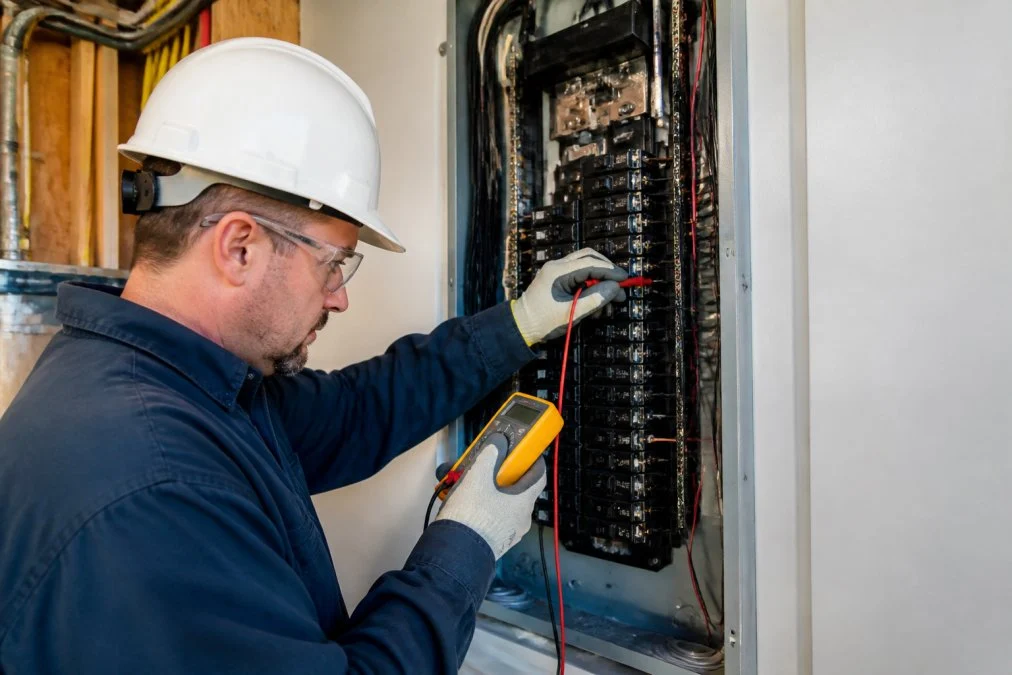
A new electrical panel with modern circuit breakers provides arc fault circuit interrupter (AFCI) and ground fault circuit interrupter (GFCI) protection. AFCI breakers detect dangerous electrical arcs that can ignite fires inside walls. GFCI protection detects ground faults that could cause electrocution. These safety features are a direct result of decades of electrical fire investigation and code improvements.
Upgrading means replacing corroded components, outdated wiring connections, and failed breakers with code-compliant equipment. A licensed electrician will inspect your entire electrical infrastructure, identifying hazards like loose connections, improper grounding, and deteriorated conduit.
Is It Safe to Keep a Zinsco Panel?
No. Zinsco panels have a well-documented history of breaker failure and can fail to trip during overcurrent conditions. Many insurance companies refuse to insure homes with Zinsco panels, and some lenders won’t finance properties with them. Internal components degrade over time, and professional inspections often reveal signs of burning, corrosion, or loose connections indicating imminent failure.
Signs You Need a New Electrical Panel
Frequent breaker trips during normal use, flickering lights when high-demand devices activate, or a main breaker tripping during single-appliance use all indicate your panel is undersized or failing.
Burning smells, visible scorch marks, warmth to the touch, corrosion around breaker connections, or rust inside the panel box are emergency signals requiring immediate professional inspection.
Homes built before the mid-1980s rarely have sufficient capacity for modern living. Adding an EV charger to a 100-amp panel is often impossible without upgrading the main service first.
Federal Tax Credits for Electrical Upgrades
Federal tax incentives support electrical panel upgrades as part of home electrification and energy efficiency improvements. The Inflation Reduction Act (2022) significantly expanded available credits for homeowners upgrading electrical infrastructure.
Energy Efficient Home Improvement Credit (Section 30C)
This credit covers 30% of the cost of qualified electrical panel upgrades, up to a lifetime limit of $3,200 per taxpayer. To qualify, the upgrade must be paired with a heat pump, electric vehicle charger, or renewable energy system. The credit applies to labor and materials, including the new panel, circuit breakers, wiring, and professional installation.
Eligibility requires that you own and occupy the home as your primary residence. There is no income limit. The credit is nonrefundable but can be carried forward to future tax years if unused.
Heat Pump and Electric Vehicle Charger Integration
Panel upgrades supporting heat pump installations or Level 2 EV chargers may qualify for additional credits. The Residential Clean Energy Credit allows up to $3,500 for EV charging stations, and heat pump installations can qualify for credits up to $2,000.
The electrical upgrade must be necessary to support a primary efficiency improvement. Bundling the panel upgrade with a heat pump or EV charger installation in the same tax year typically qualifies the entire electrical work for credits.
Income Limits and Bonus Credit Opportunities
Documentation and Claiming the Credit
To claim the credit, keep receipts and invoices from your licensed electrician itemizing the panel upgrade separately. Report the credit on IRS Form 5695 (Residential Energy Credits) and retain documentation for at least three years.
Check the IRS guidance on home energy credits and Form 5695 for current details on available incentives, income thresholds, and any updates to credit amounts. These credits are designed to reduce the financial barrier to upgrading outdated electrical infrastructure, particularly when those upgrades enable cleaner energy adoption. The credits are set to phase down after 2032, so upgrading sooner rather than later maximizes your benefit.
EV Charger Compatibility and Smart Home Integration
Electric Vehicle Charger Amperage and Circuit Requirements
Electric vehicle chargers are among the most demanding appliances a home can add and are the primary driver for modern panel upgrades.
A Level 2 home charger typically requires a dedicated 40-60 amp circuit at 240 volts, drawing 30-48 amps continuously. This single appliance consumes a significant portion of a 100-amp panel’s total capacity. Combined with simultaneous use of air conditioning, electric water heaters, or ovens, a 100-amp panel cannot safely support both the charger and normal household loads.
A 200-amp panel upgrade is the standard solution for homes adding EV chargers, providing sufficient capacity to run the charger at full power while maintaining safe operation of all other circuits. Some chargers offer reduced-amperage modes (16-24 amps) for undersized panels, but these reduce charging speed by 4-6 hours.
The National Electrical Code (NEC) requires EV charger circuits be sized at 125% of the charger’s maximum current draw. A 48-amp charger requires a 60-amp circuit breaker and 6 AWG or larger copper wire. The charger must have its own dedicated circuit and cannot share a breaker with other appliances.
Load Calculation and Simultaneous-Use Scenarios
During the panel upgrade assessment, a licensed electrician performs a load calculation following NEC Article 220 standards, determining maximum electrical demand when multiple high-load appliances operate simultaneously. The calculation accounts for general lighting, major appliances, EV charger at full amperage, and any planned future additions like heat pumps or generators.
For example, a 2,500 sq. ft. home with a 5-ton air conditioning system, electric water heater, and a 48-amp EV charger might have a calculated demand of 180-200 amps, justifying a 200-amp upgrade. Without the charger, the same home might only require 150 amps.
Smart Home Integration and Demand Response
Smart home systems require stable, reliable power. Voltage fluctuations from an overloaded or aging panel can damage sensitive electronics, cause unexpected device resets, and create compatibility issues.
A properly sized modern panel ensures smart home devices operate reliably and supports smart meter compatibility and real-time energy monitoring. This enables demand response programs where homeowners can shift high-demand activities to off-peak hours, reducing EV charging costs by 20-40% depending on your utility’s time-of-use rates.
Some advanced panels include built-in load management features that automatically prioritize circuits during peak demand periods, temporarily reducing power to lower-priority circuits to prevent main breaker trips.
Planning for Future EV Adoption
Energy Efficiency and Long-Term Savings
A new electrical panel doesn’t directly reduce energy consumption, but it enables efficiency upgrades that do. Heat pump systems, induction cooktops, and high-efficiency electric water heaters all require modern electrical infrastructure. These appliances use less energy than their gas or traditional electric counterparts, lowering your utility bills over time.
Property Value and Insurance Benefits
A modern electrical panel is a significant selling point for potential buyers. Homes with outdated panels, particularly those with known hazards like Zinsco or FPE units, face buyer skepticism and inspection contingencies. A new panel demonstrates that the home’s electrical infrastructure is safe and capable of supporting modern living. Real estate appraisers recognize panel upgrades as value-adding improvements.
| Benefit | Impact | Timeline |
|---|---|---|
| Safety improvements | Eliminates fire hazards from outdated panels | Immediate upon completion |
| Increased capacity | Supports modern appliances and EV chargers | Immediate upon completion |
| Federal tax credits | Reduces upgrade costs | Applied at tax filing |
| Insurance benefits | Lower premiums, better coverage | Within 30-60 days of completion |
| Property value | Increases home resale appeal | Reflects in appraisals and buyer interest |
| Energy efficiency | Enables high-efficiency appliance upgrades | Depends on additional upgrades |
Frequently Asked Questions
Is it worth upgrading an electrical panel?
Yes, an electrical panel upgrade is worth the investment for most homeowners. It increases your home’s amperage capacity, reduces fire hazards from outdated systems, enables you to power modern appliances and EV chargers, and may qualify you for federal tax credits. Homes with aging panels, frequent breaker trips, or plans to add major electrical loads benefit most from an upgrade.
Can I get a federal tax credit for upgrading my electrical panel?
Yes. The Inflation Reduction Act provides federal tax credits for electrical panel upgrades that support renewable energy integration or improve energy efficiency. Homeowners can claim up to 30% of qualifying costs. The upgrade must meet specific criteria and be installed by a licensed contractor. Check with a tax professional and verify current eligibility requirements with the IRS before planning your upgrade.
What are the signs that I need an electrical panel upgrade?
Common signs include frequent circuit breaker trips, flickering lights, a panel that’s more than 25-30 years old, aluminum wiring, outdated panel types like Federal Pacific or Zinsco, and insufficient capacity for modern appliances or EV chargers. If you’re planning to add major electrical loads or have experienced electrical fires, an upgrade is critical for safety.
Will upgrading my electrical panel lower my electric bill?
An electrical panel upgrade itself doesn’t directly reduce energy consumption or lower your bill. However, it enables you to install energy-efficient appliances, smart meters, and renewable energy systems like solar panels, which can significantly reduce your electricity costs over time. The upgrade provides the electrical infrastructure needed to support these money-saving technologies.












continue reading
Related Posts
Learn NEC Article 555 requirements for dock and marina electrical installations, GFCI/GFEP protection, shore power, and safety compliance standards.
Learn how to hire a qualified electrician for EV charger installation. Find credentials, costs, permits, and safety standards you need to know.
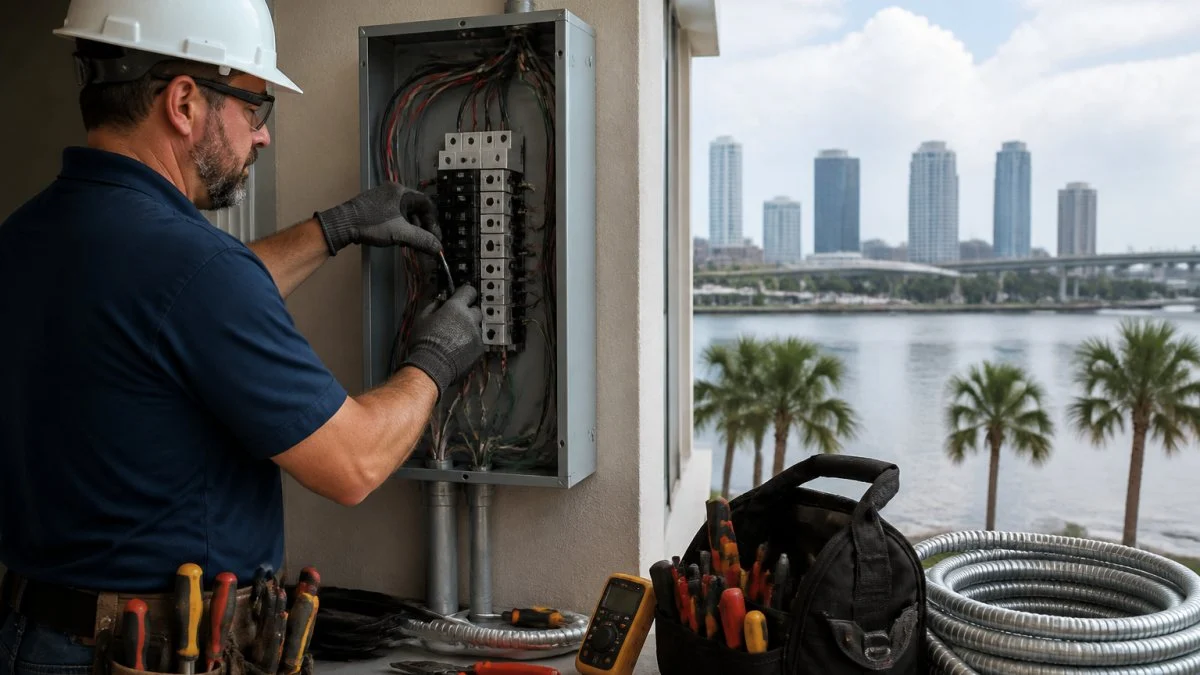
Licensed electrician tampa bay: Find licensed electricians in Tampa Bay with verified credentials, emergency services, and transparent pricing.
Get Social