


Table of Contents
- Signs of Aluminum Wiring Hazards Every Homeowner Should Know
- CPSC Aluminum Wiring Repair Guidelines: What the Government Recommends
- AlumiConn vs Copalum Connectors: Which Repair Method Is Right for You?
- Safe Aluminum Wiring Repair Methods: A Step-by-Step Comparison
- Insurance and Resale: How Aluminum Wiring Repairs Affect Your Home’s Value
- Maintenance Schedules and Regional Code Variations for Repairs
- Conclusion: Choosing the Safest Path Forward
- Frequently Asked Questions
Last Updated: September 12, 2026
Signs of Aluminum Wiring Hazards Every Homeowner Should Know
Safe aluminum wiring repair starts with recognizing warning signs before they become emergencies. Aluminum branch circuit wiring, common in homes built between the mid-1960s and late 1970s, deteriorates differently than copper (cpsc.gov). At Accurate Electric LLC, we’ve seen small connection failures escalate into serious fire risks when homeowners ignore early indicators.
The core problem is metallurgical: aluminum expands and contracts more than copper under load and oxidizes into a less conductive surface, loosening connections over time.
Visual Identification: What Aluminum Wiring Looks Like
Aluminum wiring is silver-colored, softer than copper, and often marked “AL” or “aluminum” on the cable jacket. Check an electrical panel or exposed wiring in an unfinished basement: copper is reddish-brown, aluminum dull silver.
Don’t assume newer-looking silver wire is safe, age matters less than the connection points. Check the cable sheathing for “ALUMINUM” or “AL” printed at intervals; a licensed electrician can confirm in minutes.
Warning Signs: Flickering Lights, Warm Outlets, and Burning Smells
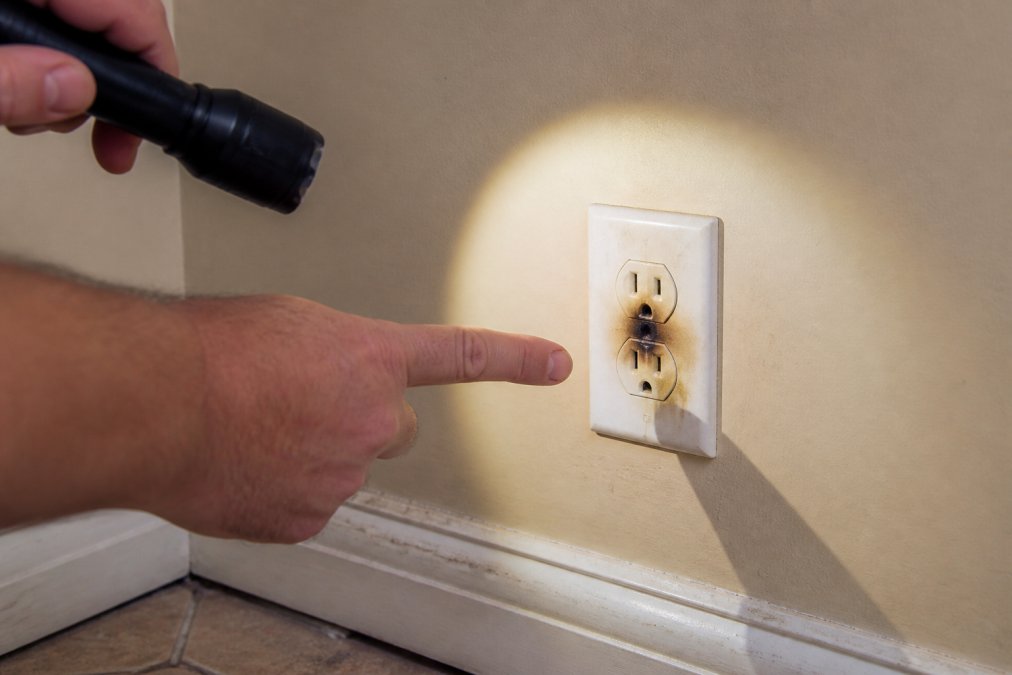
Flickering lights, warm receptacle covers, and a faint burning smell near outlets or switches are the three loudest alarms. Any one warrants immediate inspection, these point to a loose or overheating connection, the mechanism behind most aluminum wiring fires.
Other signs include:
- Discolored or scorched receptacle faceplates
- Buzzing sounds from switches or outlets
- Breakers that trip without an obvious cause
- A burning smell that appears and fades with electrical use
Never ignore a warm outlet cover. Heat at the terminal device means the connection is already degrading. Continued use accelerates oxidation and raises the arc fault risk at that point.
CPSC Aluminum Wiring Repair Guidelines: What the Government Recommends
The U.S. Consumer Product Safety Commission (CPSC) has studied aluminum wiring hazards since the 1970s and identifies it as a genuine fire hazard in older homes. Its guidance is clear: repairs must address the connection points, not just the wire.
The CPSC recognizes two acceptable permanent repairs: the COPALUM crimp connector system and, where permitted, the AlumiConn connector retrofit. It cautions against pigtailing with standard wire nuts, which don’t resolve thermal expansion and oxidation.
For the current list of accepted remediation methods and product-specific guidance, consult the CPSC aluminum wiring repair guidance directly. Local code adoption can vary, so verification with a licensed electrician matters.
AlumiConn vs Copalum Connectors: Which Repair Method Is Right for You?
Choosing between Copalum and AlumiConn comes down to permanence versus accessibility. Both address the aluminum-to-copper transition at the terminal point but differ in how the connection is made and who can install it.
COPALUM Crimp Connectors: The Permanent Fix
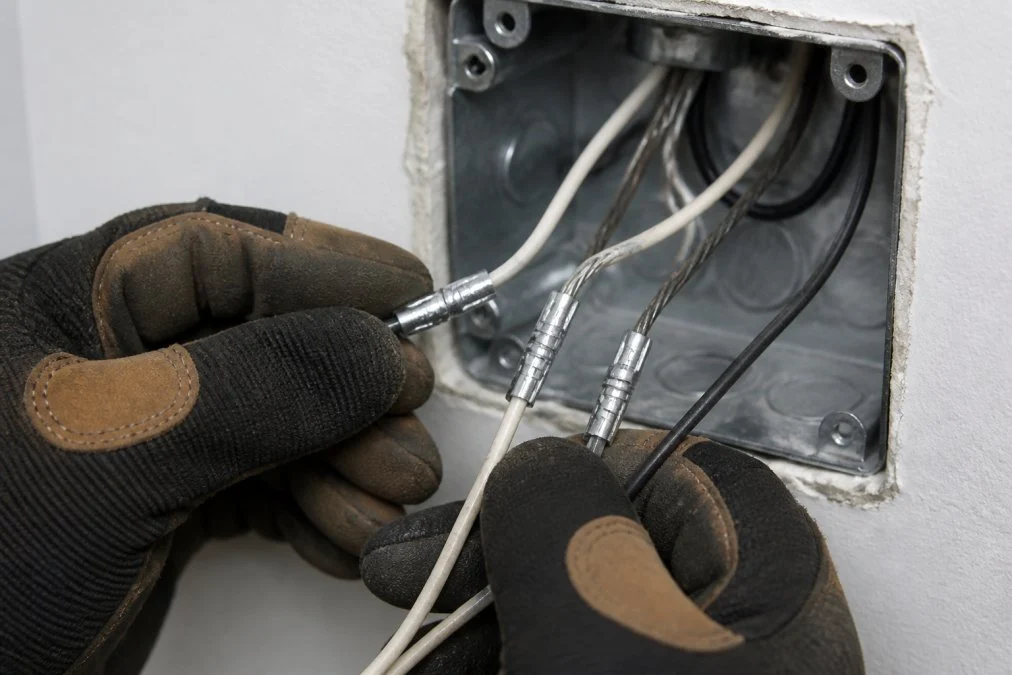
COPALUM is a crimp-based system that cold-welds aluminum and copper into a single solid connection using a specialized tool. The CPSC considers it the most thoroughly tested permanent repair, eliminating oxidation and thermal expansion at the joint.
The catch: only certified electricians with the proprietary tooling can install COPALUM. That limits availability, and the work is more invasive because it requires opening every affected box.
AlumiConn Connectors: The DIY-Friendly Retrofit
AlumiConn is a UL-listed connector that uses set screws to join aluminum and copper in a sealed, plated housing. It’s more accessible than COPALUM because it doesn’t require proprietary crimping equipment, and many electricians use it for pigtailing at receptacles and switches.
What most guides miss: AlumiConn is not a blanket substitute for COPALUM. It works well at individual device connections but isn’t designed for every application, and installation still requires care to reach proper torque.
| Connector | Method | Who Installs It | Best For |
|---|---|---|---|
| COPALUM | Crimp / cold weld | Certified electricians | Whole-home permanent remediation |
| AlumiConn | Set-screw retrofit | Licensed electricians | Pigtailing at receptacles and switches |
Safe Aluminum Wiring Repair Methods: A Step-by-Step Comparison
Three approaches dominate safe aluminum wiring repair methods, each with a different scope, cost, and long-term outcome.
Method 1: Complete Copper Rewiring
Full rewiring replaces every aluminum branch circuit with copper, the most thorough permanent fix. The trade-off is disruption: walls get opened and the project runs longer than any retrofit. Best for major renovations or extensive aluminum wiring.
Pros: Eliminates the hazard at the source; no future aluminum-related maintenance.
Cons: Highest upfront cost; significant disruption to living space.
Method 2: Pigtailing with COPALUM or AlumiConn
Pigtailing connects a short copper wire to the aluminum conductor with an approved connector, then terminates the copper at the device. It’s the most common remediation for homes not being gutted; COPALUM pigtails are crimped, AlumiConn pigtails use set screws.
Pros: Far less invasive than rewiring; addresses the failure point directly.
Cons: Requires access to every receptacle and switch; quality depends on installer technique.
Method 3: Specialized Receptacles and Switches
CO/ALR-rated receptacles and switches accept aluminum conductors directly. This is the least expensive option, but it only works at replaced devices and doesn’t fix connections elsewhere in the circuit.
Pros: Low cost per device; simple to install.
Cons: Partial solution only; does not address connections at junctions or the panel.
A common mistake is replacing only the outlets that look damaged. The hazard exists at every aluminum connection, including ones behind furniture and inside junction boxes. A proper repair is systematic, not spot-treatment.
Insurance and Resale: How Aluminum Wiring Repairs Affect Your Home’s Value
Most guides stop at the repair method. The financial consequences, underwriting, disclosure, and resale, are where aluminum wiring actually costs homeowners money.
How Underwriters View Aluminum Branch Circuits
Insurance carriers treat aluminum branch circuit wiring as a material risk factor, not a cosmetic defect. Underwriting may ask the home’s age, branch wiring type, and whether remediation was performed. Agents and inspectors commonly report that an unremediated aluminum-wired home is declined, surcharged, or bound only with an electrical fire exclusion. Outcomes vary by carrier, state, and loss history, there is no single national rule.
What changes the underwriting conversation is documentation. A carrier is far more likely to bind a policy when the file shows:
- The remediation method used (COPALUM crimp, AlumiConn retrofit, or full copper rewiring)
- The licensed electrician or electrical contractor who performed the work
- The permit number and the inspection sign-off from the local authority having jurisdiction (AHJ)
- The date of completion and any post-repair inspection report
An undocumented or unpermitted repair is often treated the same as no repair. Worse, if a claim traces to a non-compliant connection, the carrier can cite the undisclosed condition during investigation.
Disclosure During a Sale
Nearly every state requires sellers to complete a property condition disclosure statement, and electrical wiring type and known hazards commonly fall within its scope, though exact wording is set by state statute. A seller who knows the home has aluminum branch circuits and doesn’t disclose creates misrepresentation exposure that survives closing in most jurisdictions.
Buyers’ inspectors routinely identify aluminum branch wiring during a standard home inspection. When they do, the finding typically converts into one of three outcomes at the negotiating table:
- Credit or price reduction, the buyer requests an allowance sized to the remediation method a licensed electrician quotes.
- Seller-performed repair, the seller completes an approved remediation before closing and provides the documentation.
- Walk-away or re-trade, the buyer treats the wiring as a structural-level concern and either exits or demands a larger concession.
A documented, permitted remediation performed before listing defuses most of this. Keep the electrician’s invoice, permit record, inspection sign-off, and manufacturer documentation for the connectors used.
What to Gather Before You List or Switch Carriers
- The permit and final inspection record for the remediation
- The installing contractor’s license number and scope of work
- The specific connector system used and its listing (for example, a UL-listed connector)
- Any post-remediation inspection report, including torque verification if AlumiConn set screws were used
- Photographs of the completed connections inside boxes and at the panel
A repaired home with clean paperwork is a different insurance and resale asset than a repaired home with no record. The repair protects the occupants; the documentation protects the transaction.
If you’re planning a sale or policy change, a professional safety inspection documenting the remediation method is worth the cost, it converts an open question into a closed one, which is what underwriters and buyers pay for.
Maintenance Schedules and Regional Code Variations for Repairs
A completed repair is the start of a maintenance obligation, not the end. This is where repaired aluminum wiring either stays safe or quietly degrades back toward the original hazard.
Why Repaired Connections Still Need Periodic Inspection
Every approved repair method, COPALUM crimp, AlumiConn set-screw retrofit, or full copper rewiring, addresses the aluminum-to-copper transition at the point of connection. None eliminates thermal cycling at device terminations, panel terminations, or junction boxes not opened during the original scope.
Practitioners commonly report partial remediations, visible receptacles and switches only, leaving connections inside junction boxes, ceiling boxes, and the panel untouched. Those remain original aluminum terminations, oxidizing and loosening on the same timeline as before.
A reasonable inspection cadence after remediation:
- Every 3 to 5 years, a professional inspection of all remediated connections, including boxes that were not part of the original scope.
- Immediately, after any flickering lights, warm receptacle or switch covers, buzzing, a burning smell, or a breaker that trips without an obvious cause.
- After any major electrical load change, a new HVAC system, EV charger, or large appliance on a circuit that was previously lightly loaded.
- Before a sale or a policy change, a documented inspection that confirms the remediation is still intact.
What a Post-Repair Inspection Should Actually Verify
A meaningful inspection is not a visual glance at the panel. It should confirm:
- Torque on AlumiConn set screws. Set-screw connectors depend on correct torque to maintain a low-resistance joint. A screw that has loosened since installation is a failure point. Verification requires the manufacturer’s specified torque value and a calibrated torque screwdriver.
- Crimp integrity on COPALUM connections. Crimped connections are permanent by design, but the inspector should confirm the crimp is intact and the connection has not been disturbed by later work in the box.
- No aluminum-to-copper contact outside an approved connector. A common failure mode is a later repair or device swap that reintroduces a direct aluminum-to-copper splice with a standard wire nut.
- Device ratings. Receptacles and switches on aluminum circuits should be rated for the conductor. CO/ALR-rated devices are designed for direct aluminum termination; standard devices are not.
- Panel terminations. The main and branch terminations at the panel are frequently outside the original remediation scope and should be inspected on the same schedule.
A repair that is not re-inspected is not a permanent repair. Thermal cycling continues after remediation, and the connections most likely to fail are the ones nobody opened.
How Code and Local Authority Requirements Vary
The National Electrical Code (NEC) sets the baseline for electrical installation and updates on a three-year cycle. It is not self-enforcing, each state, and often the local authority having jurisdiction (AHJ), adopts, amends, and enforces it.
That produces real variation in what is required for aluminum wiring repair:
- Permit triggers. Some jurisdictions require a permit and inspection for any pigtailing work at receptacles and switches. Others treat device-level work as a minor repair that does not require a permit. The threshold is set locally.
- Accepted methods. The CPSC recognizes COPALUM and, where permitted, AlumiConn as acceptable permanent repairs. A local AHJ may have its own list of accepted connectors or may require the manufacturer’s installation instructions to be followed exactly, including torque values.
- Inspection requirements. Some AHJs require a rough-in inspection before boxes are closed and a final inspection after. Others require only a final. The sequence affects scheduling and cost.
- Licensing. Most states license electrical contractors and require the work to be performed or supervised by a licensed electrician. A handful of states allow homeowner permits for work on a primary residence, but the scope is usually limited.
Because adoption lags the NEC by one or more cycles in many jurisdictions, the code in force where you live may not be the latest edition. Confirm with your local AHJ before work begins, not after.
Quick Maintenance Checklist
- Inspect all remediated connections every 3-5 years
- Test receptacles and switches for warmth under load
- Verify torque on AlumiConn set screws during inspection
- Confirm no aluminum-to-copper contact outside an approved connector
- Confirm devices are rated for the conductor (CO/ALR where applicable)
- Inspect panel terminations on the same schedule
- Re-check any circuit that has tripped unexpectedly
- Keep remediation documentation with your home records
The National Fire Protection Association overview of electrical safety publishes guidance that supports scheduled electrical inspections as a fire prevention measure.
Conclusion: Choosing the Safest Path Forward
Aluminum wiring isn’t a problem you can defer. The failure mode is thermal, and thermal failures don’t announce themselves until they do.
If your home has aluminum branch circuits, the safe path is a professional assessment followed by an approved repair method, whether that’s COPALUM pigtailing, AlumiConn retrofits, or full copper rewiring. Accurate Electric LLC brings over 31 years of combined industry experience to that decision, with licensed and insured electricians who deliver code-compliant solutions and specialize in the kind of diagnostic work aluminum wiring demands. We handle everything from safety inspections and panel work to the marine and dock electrical services waterfront properties require.
Contact Us to schedule an inspection and get a clear, documented plan for your home’s wiring.
Frequently Asked Questions
How to make aluminum wiring safer?
The safest method is to have a licensed electrician evaluate your home. The CPSC recommends pigtailing with COPALUM crimp connectors or AlumiConn connectors as a permanent fix. Complete copper rewiring is the most thorough option. Never use standard wire nuts on aluminum wiring, as they can loosen over time and create a fire hazard. Regular safety inspections every 3-5 years help catch connection failures early.
Is AlumiConn considered a permanent fix for aluminum wiring?
Yes, AlumiConn connectors are UL listed and recognized as a permanent repair method for aluminum wiring. Unlike twist-on wire nuts, they use a set screw mechanism to create a secure connection between aluminum and copper wires, reducing oxidation and thermal expansion issues. However, proper installation by a qualified electrician is critical. Many insurance companies accept AlumiConn repairs when documented by a licensed professional.
What are the CPSC-recommended methods for repairing aluminum wiring?
The CPSC recommends two primary repair methods: COPALUM crimp connectors and AlumiConn connectors. COPALUM uses a specialized crimping tool to cold-weld the wires, creating a permanent connection. AlumiConn uses a set screw design to join aluminum and copper. Both methods address the root causes of aluminum wiring hazards: oxidation, thermal expansion, and galvanic corrosion. Complete copper rewiring is also acceptable but more invasive and costly.
Can I use standard wire nuts for aluminum wiring repairs?
No. Standard wire nuts are not safe for aluminum wiring. Aluminum expands and contracts more than copper, causing wire nuts to loosen over time. This leads to overheating, arcing, and potential electrical fires. The CPSC explicitly warns against using twist-on connectors on aluminum branch circuits. Only use UL listed connectors designed for aluminum-to-copper connections, such as AlumiConn or COPALUM, installed by a licensed electrician.












continue reading
Related Posts
Commercial electrical alternatives: Compare commercial electrical contractors in the Tampa Bay area. Find licensed alternatives for panel upgrades.
Find top residential electrical safety inspection services. Compare licensed contractors, learn what inspections cover, and discover red flags. Get expert.
Preventing electrical surges: Learn how to prevent electrical surges in commercial buildings with layered protection strategies, NEC compliance.
Get Social