


Last Updated: November 26, 2026
Quick Summary
To protect appliances from lightning strikes, use layers: a whole-house surge protector at the electrical panel, point-of-use protectors at key outlets, and proper grounding. Indirect surges from nearby strikes cause most damage, so the panel device matters most.
- Install a whole-house surge protective device at the main electrical panel, ideally with a licensed electrician.
- Add point-of-use protectors for computers, TVs, networking gear, and other sensitive electronics.
- Look for joule ratings of at least 1,000 for sensitive electronics and 2,000 or more for major appliances.
- Confirm the electrical system is properly grounded and bonded, since poor grounding can defeat a good device.
- Unplug sensitive equipment during storms, and photograph and document any damage before repairing it.
Table of Contents
- How to Protect Appliances from Lightning Strikes
- How Lightning Causes Electrical Surges in Your Home
- Whole House Surge Protector: Where Layered Protection Starts
- Best Surge Protector for Lightning Strikes at Each Outlet
- Lightning Surge Protector for Electrical Panel Installation and Grounding
- Can an RCCB Protect Appliances from Lightning?
- What to Do Before, During and After a Thunderstorm
- Booking a Surge Protection Assessment with Accurate Electric
- Frequently Asked Questions
Lightning can damage a refrigerator, a computer, or a home theater in a single flash, and homeowners often don’t discover the damage until later. Lightning can damage appliances across the Tampa Bay area, and the same question comes up again and again: how do you protect appliances from lightning strikes? The short answer is layers. A whole-house surge protector at the electrical panel, point-of-use protectors at key outlets, and a few simple habits during storms can work together to reduce risk.
How to Protect Appliances from Lightning Strikes
Protecting appliances means limiting the surges that reach them. Start at the service panel, add protection at the outlets for your most sensitive electronics, and make sure the whole system is properly grounded.
Plan the work in this order:
- Install a whole-house surge protective device at the main panel.
- Add point-of-use protectors for computers, TVs, and networking gear.
- Confirm the electrical system is properly grounded and bonded.
Watch out: a power strip with a surge rating is not the same as a surge protector. Many plug-in strips offer no real surge protection at all.
How Lightning Causes Electrical Surges in Your Home
Lightning does not have to hit your house to damage your appliances. A strike can send a surge through the power lines, the phone line, or the cable line that feeds your home, and that surge travels inside your walls to every outlet.
A surge is a brief spike in voltage far above the normal 120 volts that most U.S. homes use. Electrical equipment is built to handle a steady voltage, so a sudden spike can break down the circuits inside a device.
Direct Strikes Versus Indirect Surges
A direct strike hits the structure, a tree near the house, or the utility line itself. The energy is enormous, and no home-based device can absorb all of it. Direct strikes often cause fires, damaged wiring, and burned-out panels.
Indirect surges are far more common. A strike several miles away can induce a voltage spike on nearby lines, and that spike travels to your home.
Whole House Surge Protector: Where Layered Protection Starts
A whole-house surge protector is installed at or near the main electrical panel, so it stops surges before they reach the wiring throughout the home. It protects every circuit at once, including outlets you haven’t thought about.
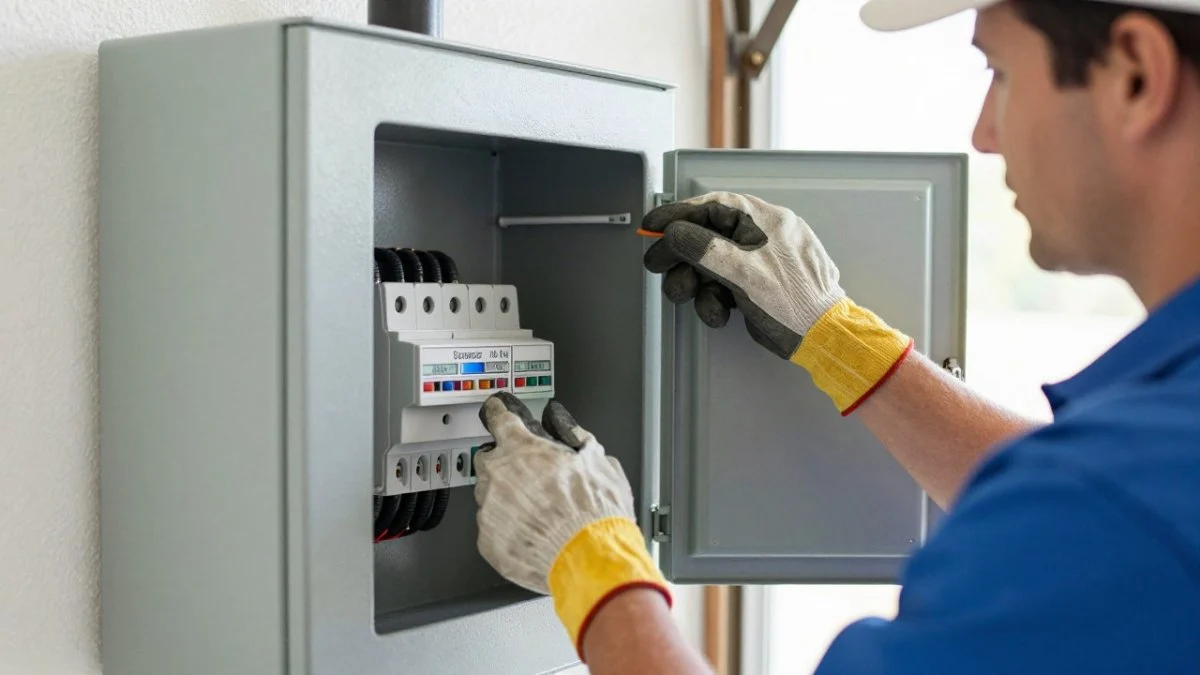
Whole-house protection covers the big picture. It can’t always catch the smaller surges that develop inside the home, which is why point-of-use protectors still matter for electronics.
Choosing the Right Surge Protective Device Type and Rating
Surge protective devices (SPDs) are grouped by where they are installed:
- Type 1: Installed between the utility meter and the main panel, or at the service entrance. These handle the largest surges.
- Type 2: Installed at the main panel or distribution panel. This is the most common choice for homes.
- Type 3: Installed at the outlet or device level, similar to a point-of-use protector.
When reading specifications, look for these numbers:
- Joule rating: How much energy the device can absorb. Higher is generally better for whole-house units.
- Clamping voltage: The voltage at which the device starts diverting surge energy. Lower clamping voltage means tighter protection.
- Response time: How quickly the device reacts. Faster is better.
A Type 2 device at the main panel is a common choice for homes, with point-of-use protectors added for critical equipment.
Best Surge Protector for Lightning Strikes at Each Outlet
Point-of-use protectors plug into an outlet and shield the devices connected to them. They are the right tool for a computer, a gaming console, a home theater, or a router, but the right unit for a router is not the right unit for a refrigerator. Treating every appliance the same is the most common mistake homeowners make.
Match the Protector to the Appliance
Major appliances draw different loads and have different vulnerabilities:
- Refrigerators and freezers: Compressors are sensitive to voltage spikes and restart surges. Look for a protector rated for motor loads with a clamping voltage of 330 volts or lower and a joule rating in the 1,000-2,000 range. Avoid plugging a refrigerator into a standard computer surge strip; the compressor’s inrush current can wear out the strip’s components.
- HVAC systems and heat pumps: These are usually hardwired and need protection at the disconnect box or a dedicated whole-house circuit, not a plug-in strip. A licensed electrician should install a Type 2 device on the HVAC circuit.
- Washers, dryers, and dishwashers: Motors and control boards are both at risk. Use a point-of-use protector rated for the appliance’s amperage (typically 15 or 20 amps) and check that it has an indicator light so you know protection is active.
How to Read Surge Protector Specifications
Specifications on the package tell you what the device can actually do:
- Joule rating: The total energy the device can absorb before it fails. Higher is better, but a 4,000-joule strip that is not properly grounded offers less real protection than a 1,000-joule unit on a good ground. For sensitive electronics, look for at least 1,000 joules; for major appliances, 2,000 or more.
- Clamping voltage: The voltage at which the device starts diverting surge energy. Lower is better, 330 volts is tighter protection than 500 volts. A device with a high clamping voltage may let damaging spikes through before it reacts.
- Response time: How fast the device reacts to a surge, measured in nanoseconds. Faster is better; look for 1 nanosecond or less.
Watch out: a power strip with a surge rating is not the same as a surge protector. Many cheap strips have no surge components at all, and even real protectors lose effectiveness after a few large surges. Replace any unit whose indicator light shows protection has failed, and don’t rely on a single strip to protect an entire entertainment center.
Where Point-of-Use Protection Fits in a Layered Plan
Point-of-use protectors are the last line of defense, not the first. They catch residual surges that get past the whole-house device at the panel and small surges generated inside the home by motors and appliances switching on and off. Without a whole-house protector and proper grounding, a plug-in strip has to absorb the full surge, and most will fail.
Point-of-use protectors need different specifications depending on the appliance they serve. The article’s key figures are summarised below.
| Appliance | Recommended joule rating | Clamping voltage |
|---|---|---|
| Refrigerator or freezer | 1,000-2,000 joules | 330 volts or lower |
| Computers and networking gear | 1,000 joules or more | Lower is better |
| Televisions and home theater | 2,000 joules or higher | Under 400 volts |
| Washers, dryers, dishwashers | Rated for 15 or 20 amps | Check indicator light |
| HVAC systems | Type 2 device at disconnect | Installed by electrician |
Lightning Surge Protector for Electrical Panel Installation and Grounding
Installing a surge protector at the electrical panel is work for a licensed electrician. Before committing, you can read a guide to what a residential panel upgrade involves.
Grounding is the foundation. The surge needs a low-resistance path to the earth so it can drain away instead of traveling through your appliances. Poor grounding, loose connections, or corroded ground rods can defeat even a high-quality device.
Can an RCCB Protect Appliances from Lightning?
An RCCB (residual current circuit breaker) detects leakage current, the small current that escapes to ground, and shuts off power to prevent shock. It does not limit voltage spikes. That means an RCCB cannot protect appliances from a lightning surge.
RCCBs and surge protectors do different jobs and work well together. The RCCB protects people from electric shock, while the surge protector shields equipment from voltage spikes.
What to Do Before, During and After a Thunderstorm
Preparation and follow-through matter as much as the hardware. Most guides stop at ‘unplug your electronics,’ but the steps after a strike often determine whether you get reimbursed and whether your protection is still intact.
Before the Storm
- Unplug sensitive electronics and small appliances if you can. A protector helps, but unplugging removes the path entirely.
- Keep an inventory of your appliances and electronics, including model numbers, purchase dates, and photos. This list is what your insurance company will ask for.
- Check that your surge protectors show a working indicator light. Replace any unit that shows protection has failed.
- Confirm your homeowners insurance covers surge damage. Many policies cover lightning damage to appliances, but coverage and deductibles vary.
During the Storm
- Stay off corded phones and avoid using electronics connected to outside lines.
- Keep appliances unplugged, especially computers, televisions, and anything with a motor.
- Don’t touch electrical panels, outlets, or wiring if they look damaged or if you smell burning.
- Avoid running water or using plumbing fixtures during a close storm; metal plumbing can conduct current.
After the Storm: Document, Inspect, and Decide
This is where most guides stop, and where the real work begins.
Test appliances carefully. Don’t assume a device is fine because it powers on.
Check your surge protectors. A protector that took a hit may still pass power but no longer protect anything.
File the insurance claim promptly. Most policies require prompt notice of damage. Provide your inventory, photos, and receipts.
Watch out: don’t reset a tripped breaker repeatedly after a storm.
Booking a Surge Protection Assessment with Accurate Electric
A layered plan works best when it is designed for your specific home.
Protecting appliances is about reducing risk, not eliminating it. No device stops every surge. Pricing depends on the scope of work and your equipment, so contact Accurate Electric LLC for current pricing or a quote.
Contact Accurate Electric LLC to talk through protecting the appliances your household depends on.
Frequently Asked Questions
Can a whole house surge protector protect appliances from a lightning strike?
A whole house surge protector installed at the electrical service panel limits the voltage spikes that travel into your home’s wiring from both direct strikes and nearby indirect surges. It does not guarantee that every appliance survives a direct hit, because no device can absorb unlimited energy. For the best results, pair it with point-of-use protectors on sensitive electronics and make sure the device is properly bonded to a solid grounding electrode. Results depend on the strike, the wiring, and the equipment, so treat it as risk reduction rather than a guarantee.
Can an RCCB protect appliances from lightning?
An RCCB, or residual current circuit breaker, is designed to detect current leakage to ground and cut power to protect people from electric shock and reduce some fire risk. It is not designed to clamp lightning surges, so it does not protect appliances from voltage spikes. A surge protective device is the correct tool for surge protection. In the United States, residual current devices are generally discussed in terms of ground fault and arc fault protection, so check with a licensed electrician about which devices your panel needs.
Do surge protectors actually work against lightning?
Surge protectors can reduce the damage from voltage spikes caused by lightning, but they are not a complete shield. A plug-in strip with a low joule rating may fail quietly after a single large surge, while a properly installed Type 2 device at the service panel handles spikes that enter the home’s wiring. Look for a clamping voltage and joule rating appropriate to your needs, and replace protectors that show indicator lights or damage. Unplugging sensitive equipment during a storm adds protection that no device fully replaces.
What should you do with electronics during a thunderstorm?
Unplug sensitive electronics such as computers, televisions, and gaming consoles before a storm arrives, and disconnect telephone and cable lines if they are not needed. Avoid using corded devices during active lightning and stay away from plumbing and wired fixtures. After a strike, have a licensed electrician inspect your service panel and outlets before restoring power to equipment, since damage is not always visible.













continue reading
Related Posts
Learn how to test voltage drop at home with a digital multimeter. Follow safe, step-by-step checks for outlets, long wire runs, and flickering lights.
Learn what a home EV charger install really costs, from panel upgrades to wiring distance, and how to compare quotes before you commit.
Hiring a licensed electrician for panel upgrades starts with the right questions. Learn what a quote should include, how permits work, and what to verify.
Get Social