


Table of Contents
- Why Commercial Electrical Maintenance Is Non-Negotiable for Business Continuity
- Commercial Electrical Inspection Checklist: What to Review Every Quarter
- OSHA Electrical Safety Requirements for Businesses: What You Must Document
- Hiring a Commercial Electrical Contractor: Licensing, Insurance, and Red Flags
- Maintenance Checklists by Industry: Retail, Restaurant, Warehouse, and Office
- The ROI of Preventative Maintenance: Calculating Cost Avoidance for Your Facility
- Smart Building Integration and Green Energy Compliance in Electrical Maintenance
- Conclusion: Building a Maintenance Plan That Protects Your Business
- Frequently Asked Questions
Last Updated: September 15, 2026
Why Commercial Electrical Maintenance Is Non-Negotiable for Business Continuity
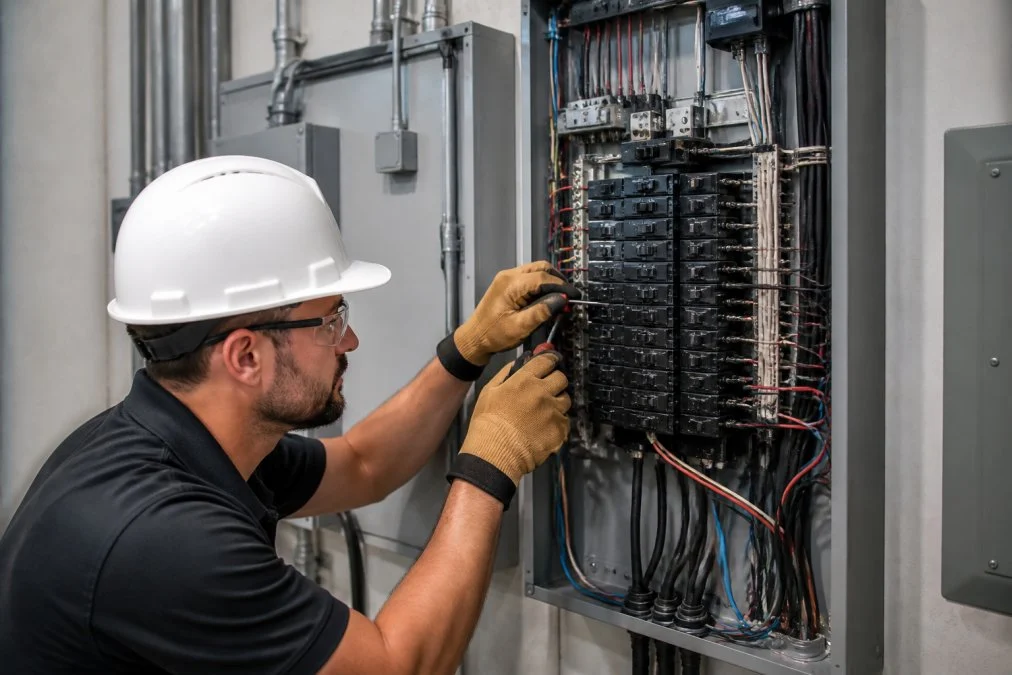
Commercial electrical maintenance for businesses is the practice of scheduling regular inspections, testing, and repairs of a facility’s electrical infrastructure before failures occur. At Accurate Electric LLC, we’ve seen how one neglected panel can darken a retail floor for a full business day. The stakes go beyond repair bills: refrigeration fails, registers go down, and employees stand idle.
That’s why maintenance belongs in your operating budget, not your emergency fund.
How Neglected Electrical Systems Drive Up Downtime and Repair Costs
Deferred maintenance rarely saves money. It moves the cost from a scheduled line item to an unplanned emergency, usually at a higher total.
A common mistake is treating electrical work as reactive: call someone when something breaks. In practice, small issues compound quietly. A loose connection heats up cycle after cycle. Dust builds inside a panel. A breaker that trips occasionally becomes a breaker that trips constantly.
- Unplanned downtime: Lost sales, idle staff, spoiled inventory
- Emergency rates: After-hours calls cost more than scheduled visits
- Cascading damage: A failed component can take connected equipment with it
- Compliance exposure: Unaddressed hazards invite citations and liability
Scheduled maintenance flips that equation. You pay predictable amounts to prevent failures instead of unpredictable amounts to recover from them.
Commercial Electrical Inspection Checklist: What to Review Every Quarter
A quarterly walkthrough catches most developing problems before they escalate. This commercial electrical inspection checklist covers the core systems a licensed electrician should review.
| Check | Frequency | Watch For |
|---|---|---|
| Panel and breaker inspection | Quarterly | Heat, corrosion, tripping |
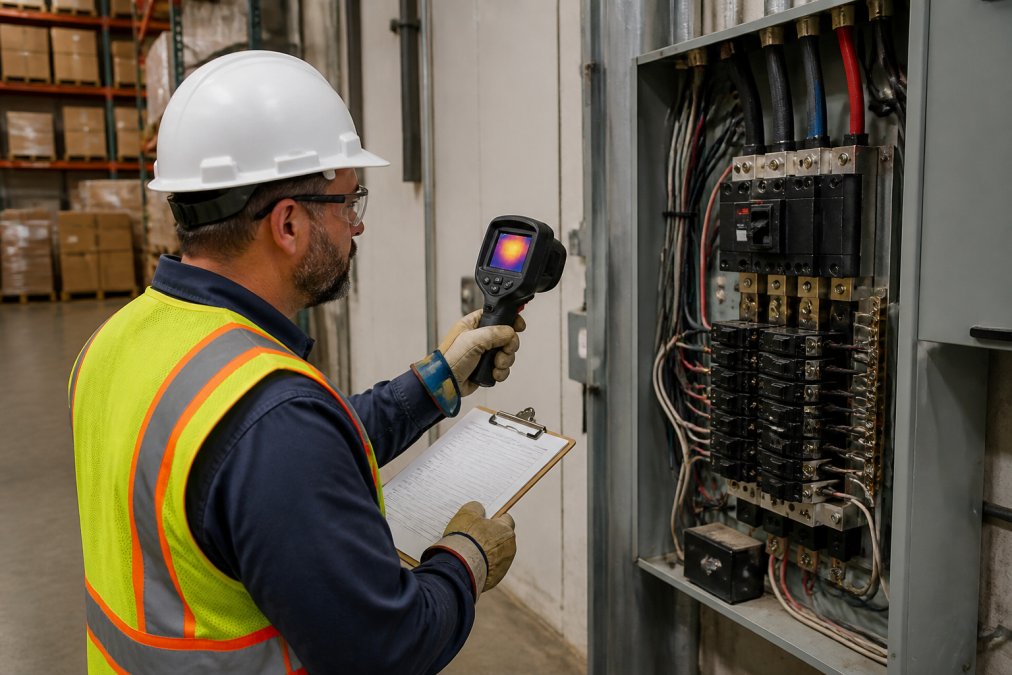
| Thermal imaging scan | Quarterly | Hot spots, loose connections |
| Load testing | Semi-annually | Overloaded circuits |
| Emergency lighting test | Monthly | Dead batteries, dim units |
| Surge protection check | Quarterly | Failed modules |
| Outlet and GFCI testing | Quarterly | No trip on test |
Panels, Breakers, and Wiring: The Core Inspection Points
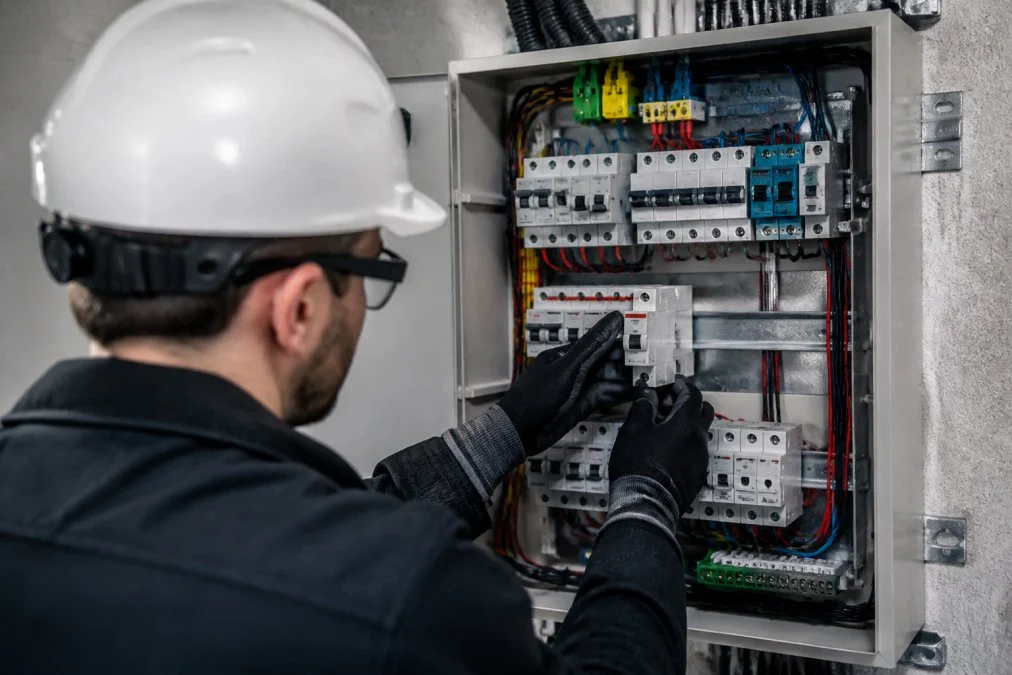
Start at the panel. It’s the heart of your power distribution, and it tells you more about system health than any other single point.
An electrician should check for discoloration, scorch marks, and signs of moisture. Breakers get exercised and tested, not just glanced at. Wiring integrity matters too: aluminum wiring, rodent damage, and degraded insulation all show up here first.
Never let anyone open a live panel without proper personal protective equipment and lockout procedures. Arc flash incidents in commercial panels can be fatal, and they usually happen during routine work, not emergencies (osha.gov).
Thermal Imaging and Load Testing: When Visual Checks Are Not Enough
Visual inspection misses what you can’t see. Thermal imaging reveals hot spots behind covers, and load testing shows how circuits behave under real demand.
These two tools separate a thorough inspection from a superficial one. A panel can look perfect and still run dangerously hot at 80% load. Thermal cameras catch that. Load testing confirms whether your capacity matches your actual operations, which matters before you add equipment.
OSHA Electrical Safety Requirements for Businesses: What You Must Document
OSHA electrical safety requirements for businesses center on one principle: a safe workplace includes a safe electrical system, and you must be able to prove your compliance.
The OSHA electrical safety standards for general industry outline requirements covering wiring design, guarding of live parts, and safe work practices. Documentation is where many businesses fall short. Inspectors want records, not assurances.
Keep these on file:
- Inspection and testing logs with dates and findings
- Correction records showing how issues were resolved
- Training documentation for employees who work near electrical systems
- Lockout/tagout procedures and equipment records
Photograph every completed repair and file it with the work order. When a compliance audit arrives, dated photos with notes resolve questions faster than a log entry alone.
Hiring a Commercial Electrical Contractor: Licensing, Insurance, and Red Flags
Hiring a commercial electrical contractor comes down to verification, and the verification steps differ depending on the scope of work. A contractor who is perfectly qualified to swap a ballast may not be the right choice for a service upgrade or a panel replacement.
Start with licensing. Electrical licensing in the United States is handled at the state and local level, so the specific license a contractor needs depends on where your facility sits. Some states issue a single statewide electrical contractor license; others license at the county or municipal level. The National Electrical Contractors Association (NECA) and the Independent Electrical Contractors (IEC) both maintain member directories that can help you find licensed contractors in your area, but the authoritative source is always the licensing authority that issued the license. Ask for the license number, then verify it directly with that authority rather than trusting a photocopy.
Insurance is the second gate. Ask for a certificate of insurance and confirm two coverages specifically:
Matching Contractor Qualifications to the Scope of Work
| Scope of work | Minimum qualification to verify |
|---|---|
| Lighting retrofit, outlet replacement | Licensed journeyman electrician on staff |
| Panel replacement, service upgrade | Licensed electrical contractor with permit history |
| Emergency generator or UPS installation | Contractor with documented standby power experience |
| Arc flash study or coordination study | Licensed engineer or contractor with power systems credentials |
Red Flags That Should End the Conversation
Before you sign, ask the contractor for two references from facilities similar to yours, same industry, similar square footage, similar load profile. A contractor who has worked in your building type will already know the common failure points.
Maintenance Checklists by Industry: Retail, Restaurant, Warehouse, and Office
The ROI of Preventative Maintenance: Calculating Cost Avoidance for Your Facility
Step 1: Establish Your Baseline Cost of Failure
Step 2: Estimate Your Failure Rate Without Maintenance
Step 3: Estimate the Reduction From Maintenance
Step 4: Compare Program Cost to Avoided Cost
| Line item | How to estimate |
|---|---|
| Annual program cost | Quoted inspection and testing fees, plus an allowance for minor repairs found during inspections |
| Avoided emergency events | Baseline failure rate × reduction assumption |
| Avoided cost | Avoided events × average cost per failure |
| Net position | Avoided cost minus program cost |
The break-even point is usually the first emergency you prevent. In facilities with high revenue per operating hour or perishable inventory, that first prevented event often covers a full year of scheduled maintenance. In lower-stakes facilities, the break-even may take two or three prevented events, still a favorable ratio.
What the Model Does Not Capture
Smart Building Integration and Green Energy Compliance in Electrical Maintenance
Conclusion: Building a Maintenance Plan That Protects Your Business
Frequently Asked Questions
How often should a business perform commercial electrical maintenance?
Most commercial facilities benefit from quarterly visual inspections and annual comprehensive testing, including thermal imaging and load testing. High-demand environments like restaurants or warehouses may need monthly checks on high-load circuits. The frequency depends on your equipment age, load demands, and industry requirements. A licensed electrician can build a schedule matched to your building’s specific risks and operational hours.
What are the three main types of electrical maintenance?
The three main types are preventative maintenance (scheduled inspections and testing to catch issues early), predictive maintenance (using thermal imaging and load testing to forecast failures before they happen), and corrective maintenance (repairing or replacing failed components). A balanced commercial electrical maintenance program uses all three, with preventative and predictive work reducing the need for expensive emergency repairs.
How much does a commercial electrical inspection cost?
Pricing for a commercial electrical inspection depends on your facility size, the number of panels and circuits, and the scope of testing required. Costs vary by region and building complexity. Accurate Electric LLC provides quotes based on your specific property. Contact us directly for current pricing and to schedule an assessment tailored to your business needs.
What are the four rules of electrical maintenance?
The four foundational rules are: de-energize and lock out equipment before servicing, inspect all connections and components for wear or heat damage, test protective devices like circuit breakers and surge protection regularly, and document every inspection and repair. Following these rules supports code compliance, reduces electrical hazards, and keeps your facility running safely between scheduled service visits.
How much does a commercial electrician cost per hour?
Commercial electrician rates vary based on location, job complexity, and whether the work is emergency or scheduled. After-hours and emergency calls typically cost more. Accurate Electric LLC evaluates each project individually. Reach out for a quote specific to your facility’s needs rather than relying on generic hourly estimates that may not reflect the actual scope of work.
What should I look for when hiring a commercial electrical contractor?
Verify the contractor holds a current state electrical license and carries general liability and workers’ compensation insurance. Ask about experience with your building type, whether they provide written documentation of inspections, and if they offer scheduled maintenance programs. A qualified contractor will walk you through code compliance requirements and provide a clear scope of work before starting.
Can electrical maintenance reduce my energy costs?
Yes. Loose connections, aging breakers, and unbalanced loads force your system to work harder, increasing energy consumption. Scheduled maintenance identifies these inefficiencies. Thermal imaging can reveal hot spots that waste power. Correcting voltage fluctuations and upgrading outdated components improves energy efficiency across your facility, which lowers utility bills over time while also reducing the risk of unexpected downtime.












continue reading
Related Posts
Commercial electrical alternatives: Compare commercial electrical contractors in the Tampa Bay area. Find licensed alternatives for panel upgrades.
Find top residential electrical safety inspection services. Compare licensed contractors, learn what inspections cover, and discover red flags. Get expert.
Preventing electrical surges: Learn how to prevent electrical surges in commercial buildings with layered protection strategies, NEC compliance.
Get Social