


Table of Contents
- Why Your EV Charger Keeps Tripping the Breaker
- Step 1: Check for Loose Electrical Connections
- Step 2: Verify Circuit Breaker Sizing and Capacity
- Step 3: Understand EV Charger GFCI Breaker Compatibility
- Step 4: Assess Shared Circuit Overload and Continuous Load Requirements
- Signs of an Overloaded Electrical Panel and What They Mean
- When to Call an Electrician for EV Charger Issues
- Preventative Maintenance to Avoid Future Breaker Trips
- Frequently Asked Questions
Last Updated: September 23, 2026
Why Your EV Charger Keeps Tripping the Breaker
An EV charger tripping breaker repeatedly is your electrical system’s way of saying something is wrong. It’s a safety feature, not a nuisance. When a breaker trips, it cuts power to prevent fires, shocks, or equipment damage.
The most common culprits are loose connections, undersized circuits, and incompatible breaker types. Sometimes it’s overload, too many devices running at once. Other times, the charger itself has an issue.
Most homeowners don’t realize that an EV charger demands serious electrical capacity. A Level 2 charger pulls 30-50 amps continuously. That’s not a small load. If your panel, wiring, or breaker isn’t sized correctly, the breaker will trip to protect your home.
The good news: most cases are fixable without a full panel replacement. But some do require professional help. Below, we’ll walk you through the troubleshooting steps and help you know when to call an electrician.
Step 1: Check for Loose Electrical Connections
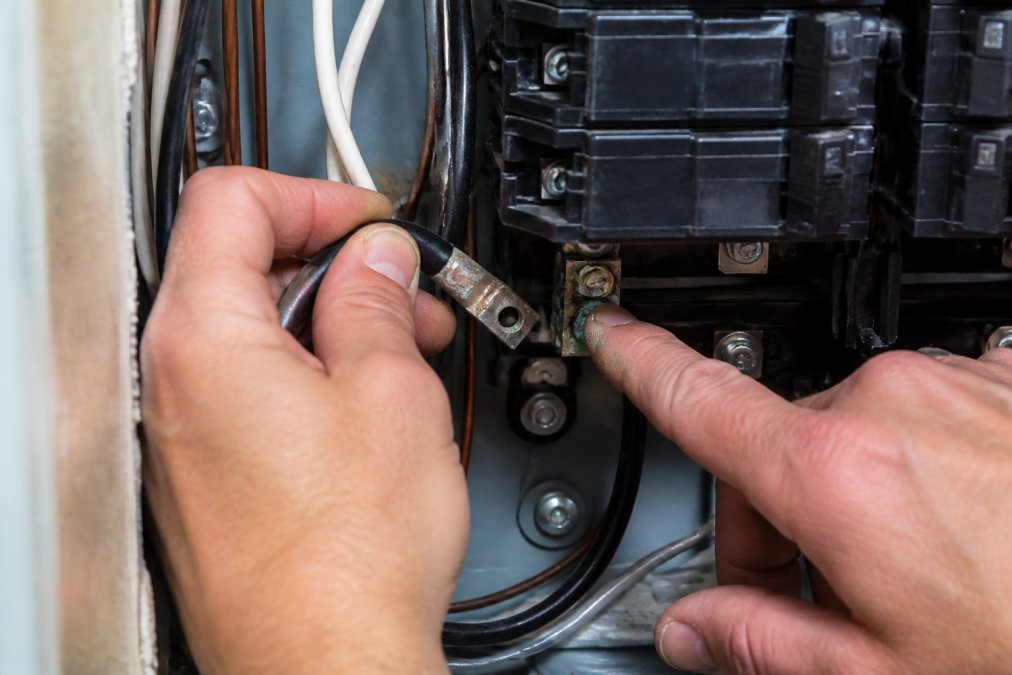
Loose electrical connections are the #1 reason for EV charger tripping breaker issues. A connection that looks tight might have just enough resistance to cause heat and trigger the breaker.
Start by turning off power at the main breaker. Never work on a live panel. Once power is off, visually inspect every connection related to your charger circuit. Look for these signs:
- Discoloration or burn marks around terminals
- Corrosion on copper or aluminum contacts
- Wires that wiggle when you gently tug them
- Scorch marks or charred insulation
Tighten any loose connections using the correct-sized wrench. Don’t over-tighten, that damages the terminal. If you see corrosion, the connection may need replacement. Corroded terminals don’t conduct electricity well and generate heat instead.
A loose connection at the breaker itself is especially dangerous. The breaker terminal can loosen over time from thermal cycling (heating and cooling). This causes resistance, heat buildup, and repeated tripping. If you find a loose breaker terminal, this is a job for a licensed electrician. Breaker terminals require proper torque specs and safety procedures.
Check the connection between the breaker and the wire first. This is the most common failure point. A loose breaker terminal can cause intermittent tripping that seems random but actually follows a pattern tied to charger use.
Step 2: Verify Circuit Breaker Sizing and Capacity
Your circuit breaker must be properly sized for the charger’s amperage draw. An undersized breaker will trip when the charger runs at full power.
EV chargers come in different sizes. A typical Level 2 charger pulls between 30 and 50 amps. Some pull up to 60 amps. Your breaker must be rated for that current or higher. If you have a 30-amp breaker protecting a 50-amp charger, it will trip.
Check your charger’s manual for its rated amperage. Then look at the breaker in your panel. The amp rating is printed on the breaker handle. Common sizes are 20, 30, 40, 50, and 60 amps.
The rule is simple: breaker amperage must match or exceed the charger’s continuous load requirement. If it doesn’t, you need a larger breaker. Larger breakers also require larger wire gauge to carry the current safely.
Wire gauge and breaker size work together. A 50-amp circuit needs 6 AWG copper wire or 8 AWG aluminum wire. A 30-amp circuit needs 10 AWG copper or 8 AWG aluminum. Using undersized wire with a large breaker creates fire risk. Using an undersized breaker with proper wire causes unnecessary tripping.
Your EV charger tripping breaker could mean the breaker is too small for the charger’s load. Upsizing requires new wire, a new breaker, and possibly panel upgrades. This is not a DIY fix.
Step 3: Understand EV Charger GFCI Breaker Compatibility
GFCI breakers (Ground Fault Circuit Interrupter) are designed to protect against ground faults and electrical shocks. They’re common in kitchens, bathrooms, and outdoor circuits. But they don’t always play well with EV chargers.
Some GFCI breakers trip more easily than standard breakers. This is by design, they’re more sensitive to detect ground faults. However, EV chargers generate small harmonic currents and transients that can fool a GFCI breaker into thinking there’s a fault when there isn’t.
If your charger is on a GFCI-protected circuit and trips frequently, test this theory. Temporarily move the charger to a non-GFCI circuit if possible. If it stops tripping, your GFCI breaker and charger are incompatible.
The fix depends on your charger type. Some chargers are GFCI-compatible. Others aren’t. Check your charger’s manual. If your charger is incompatible with GFCI breakers, you have two options:
- Replace the breaker with a standard breaker (if code allows)
- Install a GFCI outlet or GFCI-compatible charger instead
This is where electrical code matters. The National Electrical Code (NEC) has specific rules about GFCI protection for EV chargers. Requirements vary by installation year and charger type. A licensed electrician knows the current code requirements and can ensure your setup is compliant.
| Issue | Symptom | Solution |
|---|---|---|
| GFCI breaker too sensitive | Frequent random tripping | Replace with standard breaker or GFCI-compatible charger |
| Charger incompatible with GFCI | Tripping when charger runs | Check charger manual, upgrade if needed |
| Ground fault present | Tripping + tingling sensation | Call electrician immediately |
Step 4: Assess Shared Circuit Overload and Continuous Load Requirements
An EV charger tripping breaker often means the circuit is overloaded. If your charger shares a circuit with other appliances, they compete for the same power budget.
Never put an EV charger on a shared circuit with major appliances. Shared circuits cause problems because breakers are designed for continuous loads (appliances running for 3+ hours). An EV charger running for hours while a dishwasher or dryer also runs will exceed the circuit’s capacity.
Here’s the math: a 50-amp breaker can safely handle 40 amps continuously (80% rule per electrical code). If your charger pulls 40 amps and you run the kitchen microwave on the same circuit, the total exceeds safe limits. The breaker trips to prevent overheating.
Check what else is on your charger’s circuit. Walk through your home and note which outlets and appliances share the same breaker. Look at your panel label or use a circuit tracer tool. If you find shared loads, that’s likely your problem.
The solution is a dedicated circuit. Your EV charger needs its own breaker and its own wire run from the panel to the charger. No other devices on that circuit. This is not optional, it’s electrical code. A dedicated circuit ensures the charger gets all the power it needs without interference.
If your panel is full and you can‘t add a dedicated breaker, you need a panel upgrade.
Running an EV charger on a shared circuit is a fire hazard. The breaker trips to protect your home. Don’t ignore it, upgrade to a dedicated circuit. Continued use of a shared circuit risks electrical fires and equipment damage.
Signs of an Overloaded Electrical Panel and What They Mean
An overloaded electrical panel shows several warning signs. These indicate your home’s electrical capacity is maxed out.
When to Call an Electrician for EV Charger Issues
Some EV charger problems you can diagnose yourself. Others require a licensed electrician. Know the difference.
Call an electrician immediately if you notice:
- Burning smells or visible scorch marks on the panel
- A breaker that’s hot to the touch
- Charred or melted insulation on wires
- Frequent tripping across multiple circuits
- Flickering lights when the charger runs
- Tingling sensations near the charger or panel
Also call an electrician if:
- You need to upsize the breaker or wire
- You need a dedicated circuit installed
- Your panel doesn’t have space for a new breaker
- You need a panel upgrade
- You’re unsure about code compliance
- The charger trips but you can’t find loose connections
Homeowners who’ve tried basic troubleshooting and still have problems. Electricians can test components you can’t and know code requirements you may not. One professional visit often saves time and prevents costly mistakes.
Preventative Maintenance to Avoid Future Breaker Trips
Once you’ve fixed the tripping issue, keep it from happening again.
| Maintenance Task | Frequency | Why It Matters |
|---|---|---|
| Visual inspection of connections | Annually | Catches loose or corroded terminals early |
| Breaker function test | Monthly | Ensures breaker will trip if needed |
| Charger performance review | After each use | Detects patterns that signal problems |
| Panel area cleaning | Quarterly | Maintains airflow and prevents heat buildup |
| Professional inspection | Every 2-3 years | Catches issues before they cause damage |
Frequently Asked Questions
Why does my EV charger keep tripping the circuit breaker?
An EV charger tripping the breaker typically signals one of three issues: a loose electrical connection causing arcing, undersized circuit breaker capacity for the charger’s amperage demand, or a shared circuit handling too much load. Ground faults and GFCI incompatibility can also trigger nuisance trips. Start by checking connections and verifying your breaker amperage matches your charger’s specifications.
Should an EV charger be on a GFCI breaker?
EV chargers should not be on standard GFCI breakers. Most modern Level 2 chargers include built-in ground fault protection, making a GFCI breaker redundant and often causing incompatibility issues that trigger false trips. Check your charger’s manual and electrical code requirements. If your charger requires GFCI protection, use a breaker specifically rated for EV charging rather than a standard GFCI.
Can a loose electrical connection cause a breaker to trip during EV charging?
Yes. Loose terminals create resistance and heat, which can trigger thermal overload protection in your breaker. Corrosion, vibration, and age all loosen connections over time. During EV charging, the sustained high amperage demand makes loose connections more likely to arc and trip the breaker. Inspect all connections at the panel, outlet, and charger terminals regularly.
How do I know if my electrical panel needs an upgrade for EV charging?
Your panel needs an upgrade if your main service is undersized (less than 200 amps for modern homes), your dedicated EV circuit breaker is smaller than your charger requires (typically 40-60 amps for Level 2), or you lack available breaker slots. Signs include dimming lights when the charger runs, frequent breaker trips on other circuits, or a panel built before 2000 with limited capacity. A licensed electrician can calculate your actual load requirements.












continue reading
Related Posts
Commercial electrical alternatives: Compare commercial electrical contractors in the Tampa Bay area. Find licensed alternatives for panel upgrades.
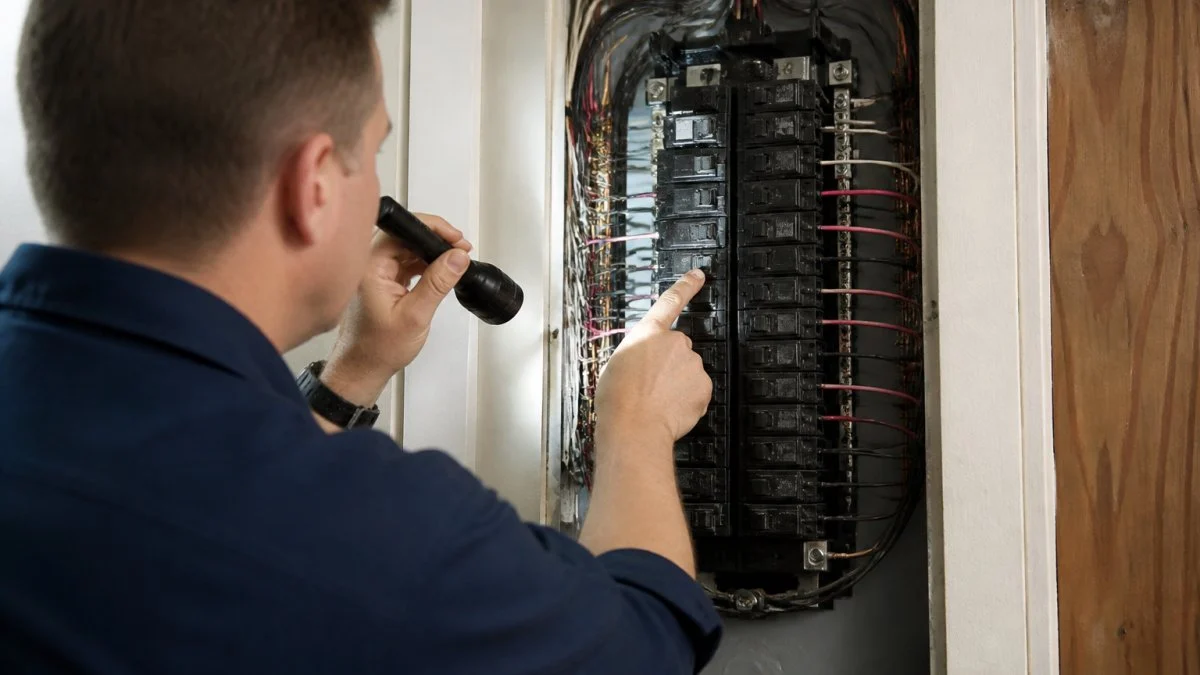
Find top residential electrical safety inspection services. Compare licensed contractors, learn what inspections cover, and discover red flags. Get expert.
Preventing electrical surges: Learn how to prevent electrical surges in commercial buildings with layered protection strategies, NEC compliance.
Get Social