


Table of Contents
- What You’ll Need Before Starting
- Step 1: Inspect the Wire Jacket for Visual Signs
- Step 2: Check Your Electrical Panel for Aluminum Wiring Markings
- Aluminum vs Copper Wiring Identification
- Dangers of Aluminum Wiring in Your Home
- Aluminum Wiring Repair Methods and Solutions
- When to Call a Professional Electrician
- Common Mistakes to Avoid During Inspection
- Frequently Asked Questions
Last Updated: September 25, 2026
What You’ll Need Before Starting
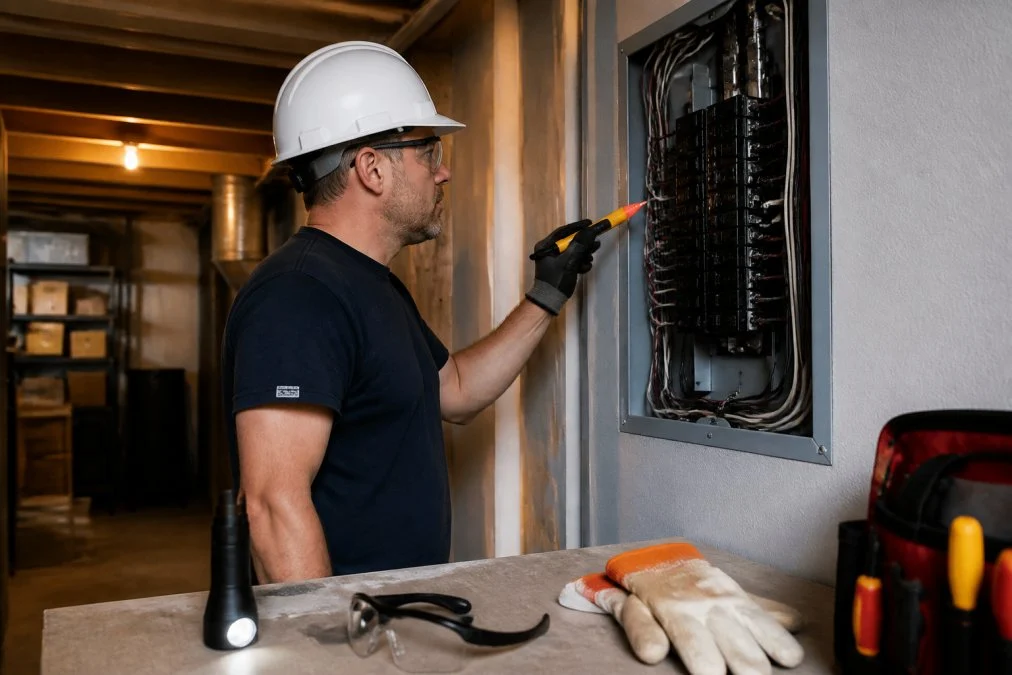
Before you inspect your home’s electrical wiring, gather the right tools and take safety precautions. You’ll need a flashlight, a non-contact voltage tester, a wire gauge tool, and a notepad to document what you find. Never work on live electrical circuits. If you’re unsure about any wiring or feel uncomfortable inspecting your panel, stop and call a professional electrician.
The most important tool is knowledge. Understanding how to identify aluminum wiring prevents mistakes and keeps you safe. This guide covers the exact steps to safely identify aluminum wiring in your home.
Safety equipment to have ready:
- Flashlight with extra batteries
- Non-contact voltage tester
- Wire gauge measurement tool
- Notepad or phone to record findings
- Work gloves (optional but helpful)
Turn off power to the circuit you’re inspecting at the breaker panel. Use your non-contact voltage tester to confirm the power is off before touching any wiring. Never skip this step. Your safety depends on it.
Step 1: Inspect the Wire Jacket for Visual Signs
The wire jacket is the outer covering that insulates the conductor inside. Look for markings stamped or printed directly on the jacket. These markings tell you what material the wire contains.
Start in your electrical panel or junction boxes where wires are visible. Shine your flashlight on the wire jacket and look for text. The letters “AL” or the word “Aluminum” stamped into the jacket means aluminum wiring. Some older installations show “THHN” or similar codes without aluminum markings, which indicates copper.
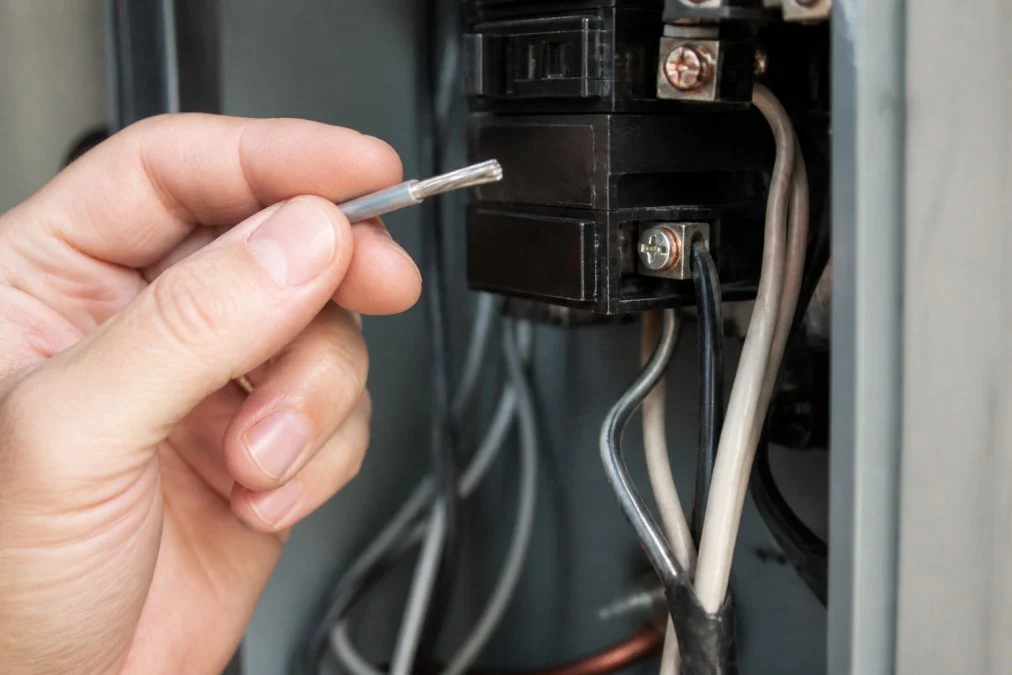
Aluminum wire has a distinctive shiny silver appearance when exposed. If the jacket is damaged or stripped, you may see the bare conductor underneath. Aluminum conductors look bright and reflective. Copper conductors appear reddish or brownish in color.
What to look for on the wire jacket:
- “AL” stamped in the insulation
- “Aluminum” printed on the covering
- Absence of “CU” (which means copper)
- Shiny silver exposed conductor if jacket is damaged
- Wire gauge numbers (like 12 AWG or 10 AWG)
Don’t rely on color alone. The jacket color varies by manufacturer and doesn’t always indicate the conductor material. The stamped markings are your most reliable identifier. Take photos of any markings you find. These photos help a professional electrician assess your situation.
Step 2: Check Your Electrical Panel for Aluminum Wiring Markings
Your electrical panel is the main hub where all circuits connect. It’s also a common location for aluminum wiring in homes built before the 1990s. Open your panel carefully and look at the breaker connections where wires attach.
The wires entering your electrical panel from the service entrance often show their material type. Look at the main service conductors first. These are the largest wires connected to the main breaker. Check the insulation for “AL” or “Aluminum” markings. If you see these markings, your home has aluminum wiring in the service entrance.
Branch circuits running from individual breakers may also use aluminum wire. Inspect the wires connected to each breaker. Look for the same stamped markings. Pay special attention to circuits in older sections of your home. Aluminum wiring was more common in certain decades.
Key areas to inspect in your panel:
- Main service entrance conductors
- Individual circuit breaker connections
- Wire insulation markings and labels
- Terminal connections at the breaker
- Wiring running to different areas of your home
Document everything you find. Write down which breakers have aluminum wiring. Note the wire gauge if visible. This information helps you and a professional electrician prioritize repairs. Never touch live wires or remove panel covers without proper training. If you’re uncomfortable opening your panel, have a licensed electrician do this inspection.
Aluminum vs Copper Wiring Identification
Aluminum wire is a conductor made from aluminum metal. It was used in residential wiring during the 1960s through 1980s when copper prices rose. Aluminum costs less and weighs less than copper, which made it attractive to builders and electricians.
Copper wire is made from copper metal. It conducts electricity more efficiently than aluminum and resists corrosion better. Copper has been the standard for residential wiring since the 1990s.
The practical differences matter for safety and performance. Aluminum wire expands and contracts more than copper when it heats up. This thermal expansion can loosen connections at terminals. Loose connections create heat and fire hazards. Copper wire doesn’t expand as much, so connections stay tighter over time.
Aluminum oxidizes when exposed to air. Oxidation creates a white or gray coating on the wire surface. This oxide layer is an insulator, which means it blocks electrical current flow. Copper oxidizes too, but the oxide layer doesn’t block current as effectively. The oxide on copper appears as a green or blue patina, not a white coating.
Comparing the two materials:
| Characteristic | Aluminum Wire | Copper Wire |
|---|---|---|
| Color | Shiny silver when clean | Reddish or brownish |
| Oxidation | White/gray coating blocks current | Green/blue patina allows current |
| Thermal expansion | High (creates loose connections) | Low (connections stay tight) |
| Conductivity | Lower efficiency | Higher efficiency |
| Cost | Lower | Higher |
| Common era | 1960s-1980s | 1990s-present |
| Fire risk | Higher (especially at terminals) | Lower |
Wire gauge is measured in AWG (American Wire Gauge). The same gauge aluminum wire carries less current safely than copper wire. For example, 12 AWG aluminum can handle less current than 12 AWG copper. This is why aluminum wiring in older homes sometimes causes overheating in circuits.
Dangers of Aluminum Wiring in Your Home
Aluminum wiring creates real safety hazards in residential homes. The primary danger is overheating at terminal connections. When aluminum wire connects to a breaker or outlet terminal, the connection can loosen over time. Loose connections generate heat. Heat can ignite the wire insulation and surrounding materials.
Oxidation accelerates this problem. When aluminum oxide forms on the wire surface, it acts as an insulator. Current has to push through this oxide layer to flow through the connection. The resistance causes more heat generation. Over months and years, oxidation builds up and makes the problem worse.
Thermal expansion makes connections even looser. Aluminum expands more than copper when heated by electrical current. Each time current flows and stops, the wire expands and contracts slightly. This movement loosens the terminal screw bit by bit. Eventually, the connection is so loose that arcing occurs. Arcing creates sparks and extreme heat that can start fires.
Real hazards from aluminum wiring:
- Terminal connections overheat and loosen
- Oxidation blocks current flow and creates resistance
- Resistance generates dangerous heat
- Arcing can ignite insulation and surrounding materials
- Fire risk increases significantly over time
- Risk is highest at outlets and light switches
The risk is not immediate. Many homes with aluminum wiring don’t experience problems for years. But the danger grows over time. Insurance companies recognize this risk. Some insurers charge higher premiums for homes with aluminum wiring. Some refuse to insure homes with aluminum wiring at all.
Federal Pacific Electric (FPE) panels are especially problematic when paired with aluminum wiring. These older panels already have a higher failure rate. Add aluminum wiring to an FPE panel, and the fire risk becomes serious.
Aluminum Wiring Repair Methods and Solutions
Several repair methods can address aluminum wiring safety issues. The safest approach is complete replacement with copper wire. This removes all risks associated with aluminum. However, replacement is expensive and time-consuming.
Common repair approaches:
When to Call a Professional Electrician
Call a professional electrician if you find aluminum wiring anywhere in your home. Even if you’ve identified it safely, the repair and assessment should be done by someone with proper training and licensing. A licensed electrician can evaluate your entire electrical system and prioritize which circuits need attention first.
Common Mistakes to Avoid During Inspection
The biggest mistake is assuming your home doesn’t have aluminum wiring just because it looks modern. Homes built in the 1970s and 1980s often have aluminum wiring. Age and appearance aren’t reliable indicators. You must physically inspect the wiring and check for markings.
Frequently Asked Questions
What are the visual signs of aluminum wiring in my home?
Aluminum wiring appears as shiny silver-colored conductors inside the wire jacket. Look for stamped labels reading ‘AL’ or ‘Aluminum’ on the insulation. Aluminum conductors are typically solid rather than stranded, and they have a distinct metallic sheen compared to the duller orange-red appearance of copper. Check your electrical panel, branch circuits, and terminal connections for these markings. If you’re unsure, a professional electrician can confirm identification quickly.
Is it safe to live in a house with aluminum wiring?
Aluminum wiring itself isn’t inherently unsafe, but it requires proper installation and maintenance. The main concern is oxidation and corrosion at terminal connections, which can cause overheating and fire hazards. Homes built in the 1960s and 1970s, when aluminum wiring was common, often have connections that haven’t been properly maintained. Many insurance companies require remediation or special inspections before coverage. Have a licensed electrician assess your specific situation and recommend repairs if needed.
What years were homes built with aluminum wiring?
Aluminum wiring was most commonly used in residential homes during the 1960s and 1970s, particularly between 1965 and 1975, when copper prices were high. Some homes built in the early 1980s may still have aluminum branch circuits. If your home was constructed during this period, there’s a higher likelihood of aluminum wiring in the electrical service entrance and branch circuits. Check your home inspection records or ask your electrician to verify the wiring composition during a safety assessment.
What should I do if I find aluminum wiring in my home?
First, do not attempt to repair or modify aluminum wiring yourself. Contact a licensed electrician for a professional safety assessment. Common repair methods include pigtailing (connecting aluminum to copper with special CO/ALR-rated connectors), replacing sections with copper conductors, or upgrading the entire panel. Your electrician will recommend the best solution based on the extent of aluminum wiring, your electrical code requirements, and your home’s electrical capacity needs. Document the inspection for insurance and resale purposes.
Aluminum wiring in your home is a safety issue that requires professional attention. Identifying it is the first step. Once you know where the aluminum wiring is located, you can work with a licensed electrician to address it properly. The dangers of aluminum wiring are real, but they’re manageable with the right approach. Accurate Electric LLC can help you assess your aluminum wiring situation and implement safe, code-compliant solutions that protect your home and family for years to come.












continue reading
Related Posts
Learn NEC Article 555 requirements for dock and marina electrical installations, GFCI/GFEP protection, shore power, and safety compliance standards.
Learn how to hire a qualified electrician for EV charger installation. Find credentials, costs, permits, and safety standards you need to know.
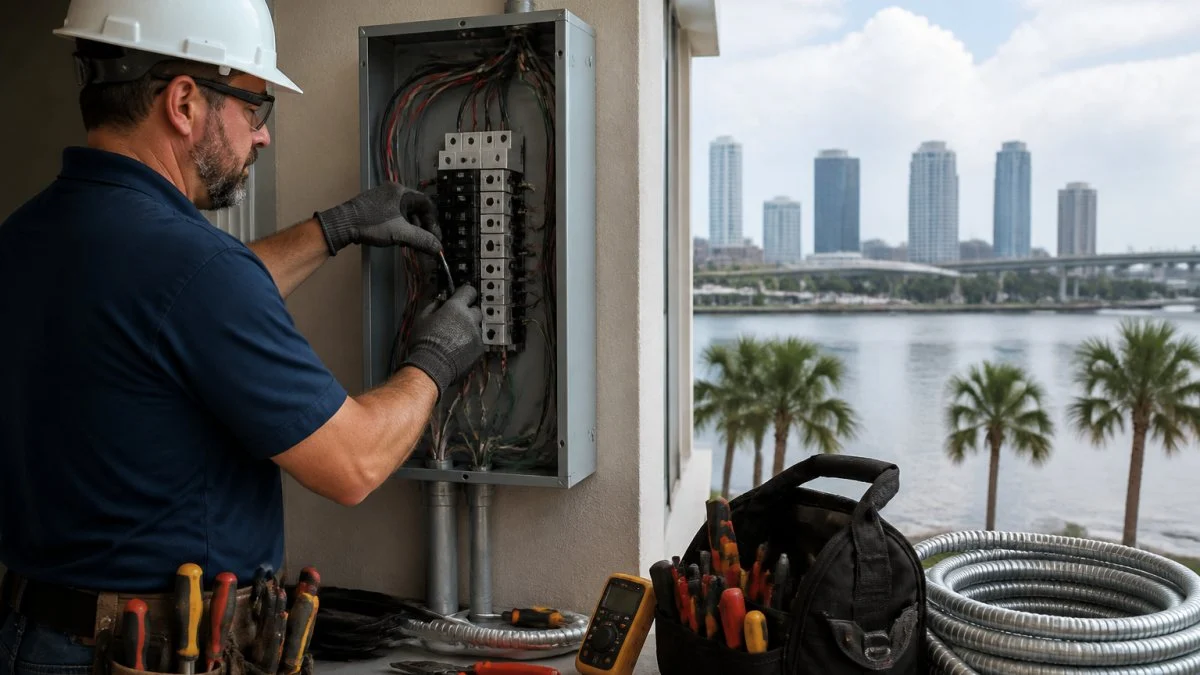
Licensed electrician tampa bay: Find licensed electricians in Tampa Bay with verified credentials, emergency services, and transparent pricing.
Get Social