


Last Updated: November 12, 2026
Quick Summary
To reduce EV home charging costs, shift charging into your utility’s off-peak window and compare total monthly bills, not headline rates, before switching plans. Charging at home at residential rates also beats public fast charging, and adding roughly 10 percent for charging losses keeps your estimate realistic.
- Your cost per charge equals battery size in kWh times your electricity rate, adjusted for charging losses.
- An efficient EV uses roughly 0.25 to 0.35 kWh per mile; a less efficient truck or SUV can use closer to 0.5.
- Add roughly 10 percent to your calculated kWh to account for charging losses.
- A plan with a low off-peak rate and high fixed monthly charge can cost more than a flat rate if you drive few miles.
- Set the car or charger to start after the off-peak window opens and stop before it closes.
Table of Contents
- How EV Home Charging Costs Are Calculated
- How Much to Charge an Electric Car at Home per Month
- Cost of Charging EV at Home vs Charging Station
- Off-Peak EV Charging Rates and How to Use Them
- Using an EV Charging Electricity Cost Calculator
- Smart Charging Setup, Solar, and Renters Without a Dedicated Charger
- Booking Your EV Charger Installation and Electrical Check
- Frequently Asked Questions
How EV Home Charging Costs Are Calculated
The cheapest way to cut EV home charging costs is to understand the three numbers behind every bill: your electricity rate, how much energy the car uses, and how much of that energy reaches the battery. This guide shows you how to work out each one, then how to lower all three.
Most drivers overpay because they charge whenever they park, at whatever rate applies at that moment.
Your cost per charge equals battery size in kilowatt-hours multiplied by your electricity rate, adjusted for charging losses. A 75 kWh battery charged from nearly empty at 15 cents costs about $11.25 in theory; charging losses push that higher.
The Three Numbers That Set Your Bill
Every home EV charging bill comes down to three inputs:
- Electricity rate: what your utility charges per kilowatt-hour, in cents
- Energy used: battery capacity times the share of charge you add
- Charging losses: energy lost as heat during the transfer
The third number is the one drivers forget. Level 1 charging from a standard outlet typically loses more energy to heat than Level 2, because it runs longer and works harder. Level 2 charging at 240-volt is generally more efficient than Level 1 charging.
Charging Losses and Real-World Efficiency
Charging loss is the gap between the electricity that leaves your panel and the electricity stored in the battery. Cold weather widens that gap, and charging a very hot battery right after a long drive can as well.
You cannot eliminate losses. You can reduce them by charging at moderate speeds, keeping the battery in a comfortable temperature range, and avoiding long stretches on a Level 1 cord when a 240-volt circuit is available.
How Much to Charge an Electric Car at Home per Month
Monthly home charging costs vary widely with miles driven and local rates. Multiply your monthly miles by the car’s efficiency in kWh per mile, then by your rate.
An efficient EV uses roughly 0.25 to 0.35 kWh per mile; a less efficient truck or SUV can use closer to 0.5.
Working Out Your Own Monthly Figure
Use this simple formula:
- Note your monthly miles driven
- Divide by the car’s miles per kWh to get total kWh used
- Multiply by your electricity rate per kWh
- Add roughly 10 percent for charging losses
Example: 1,000 miles at 3 miles per kWh equals about 333 kWh. At 15 cents per kWh, that is about $50, plus losses.
Cost of Charging EV at Home vs Charging Station
Home charging almost always beats public charging on cost, by a wide margin. Public fast chargers price energy at a premium to cover equipment, demand charges, and real estate; home charging uses electricity you already buy at residential rates.
| Factor | Home Charging | Public Charging |
|---|---|---|
| Rate basis | Residential rate | Premium per-kWh pricing |
| Speed | Level 1 or Level 2 | Level 2 or DC fast |
| Convenience | Overnight, at your schedule | Depends on station availability |
| Best for | Daily commutes, routine top-ups | Road trips, urgent needs |
The trade-off is speed and flexibility. Public DC fast charging adds serious range in minutes, but for daily driving, home charging wins on cost and convenience every time.
Off-Peak EV Charging Rates and How to Use Them
Off-peak EV charging rates are discounted electricity prices utilities offer during low-demand windows, usually late night and early morning.
Peak hours are when demand spikes, often late afternoon into evening, and rates climb. The trap is that most time-of-use plans pair a cheap overnight rate with a peak rate higher than your current flat rate, plus a monthly fixed charge.
The Three Plan Structures You Will See
Utility EV and time-of-use offerings generally fall into a few shapes:
- Flat rate: one price per kWh all day. Simple, predictable, and often the baseline you compare against.
- Two-period time-of-use: a cheap off-peak window (commonly overnight) and an expensive peak window (commonly late afternoon to evening), sometimes with a mid-tier shoulder period.
- EV-specific rider or submeter: a separate rate applied only to the circuit your charger uses, sometimes requiring a second meter or a charger the utility can read remotely. Often cheapest for heavy drivers because household electricity stays on its normal rate.
Each structure carries fixed monthly charges, minimum bills, or enrollment fees that do not show up in the per-kWh number, and those fixed costs break the simple “off-peak is cheaper” logic.
How to Run the Break-Even Math
The goal is to find how many off-peak kWh you need to shift before the plan beats your current rate. Work it in four steps.
- Get your current effective rate. Take a recent bill and divide the total amount charged by the total kWh used. This captures every fee, not just the energy line.
- Get the new plan’s full rate sheet. Note the off-peak rate, the peak rate, the shoulder rate if any, and every fixed monthly charge or enrollment fee.
- Split your usage. Estimate how many kWh go to EV charging and how many go to the rest of the house, and roughly when each happens. Your charger app or a home energy monitor gives you the EV number; the rest is your normal evening load.
- Compare total monthly bills, not rates. Multiply your EV kWh by the off-peak rate, your evening household kWh by the peak rate, add fixed charges, and compare that total against what you pay now.
A common pattern is that a household driving about 1,000 miles a month that can move nearly all charging overnight often comes out ahead on a two-period plan.
Watch out: a plan with a low off-peak rate and a high fixed monthly charge can cost more than a flat rate if you drive few miles.
Shifting Load Without Losing Comfort
Once you pick a plan, the savings only appear if the charging actually lands in the cheap window. Practical moves:
- Set the car or charger to start after the off-peak window opens and stop before it closes.
- Move other flexible loads, such as dishwashing, laundry, or water heating, out of the peak window where appliances allow.
- Precondition the cabin while still plugged in during off-peak hours rather than drawing from the battery on a cold morning.
Before you switch, pull your utility’s official rate sheet and confirm the current off-peak window, peak window, and fixed charges. Rates and windows change, and last year’s winning plan may not win this year.
Using an EV Charging Electricity Cost Calculator
An EV charging electricity cost calculator turns your inputs into a clear per-charge and per-month figure.
The catch: calculators assume perfect efficiency. Real charging losses, temperature, and rate changes shift the result. Treat the output as a starting estimate, not a guarantee.
For the most accurate number, use your charger’s own energy reporting. A smart home charger logs exactly how many kWh it delivered; multiply that by your rate for your true charging expense.
Smart Charging Setup, Solar, and Renters Without a Dedicated Charger
The real savings often come from automating the schedule, deciding whether solar should charge the car or sell to the grid, and finding a workable path when you do not control a dedicated charger.
Smart Charging Setup, Step by Step
Smart charging means the car or charger decides when to draw power, so you capture off-peak rates without remembering to plug in at the right time.
- Pick the control point. You can schedule in the vehicle’s own charging menu, in a smart charger’s app, or in your utility’s managed-charging program. Use one primary control point to avoid schedules fighting each other.
- Set the window. Enter the start and stop times that match your utility’s off-peak period, and set a departure time so the car finishes just before you leave.
- Set a charge limit. Most daily driving needs far less than a full battery. A lower daily limit reduces time at high state of charge and keeps the car in its most efficient range.
- Enable preconditioning on schedule. Warming or cooling the cabin while still plugged in, during off-peak hours, uses grid power instead of battery capacity.
- Check the utility program. Some utilities offer managed-charging or demand-response programs; check your utility’s current terms. Read the terms, because some allow the utility to pause charging briefly during grid events.

Watch out: if both the car and the charger run their own schedules, one can override the other and push charging into peak hours. Confirm which device is actually in control before you trust the savings.
Solar, Home Batteries, and Export-Rate Trade-Offs
Solar changes the math because the question is no longer “grid rate versus grid rate” but “what is the solar kWh worth if I use it versus if I sell it.” Three paths compete for the same electrons:
- Direct solar charging: send daytime solar straight into the car. Best when you are home during the day and your export compensation is low.
- Home battery then car: store daytime solar in a battery and release it to the charger overnight. Adds equipment cost and round-trip losses, so it only pays when export rates are poor and peak rates are high.
- Sell solar, charge from the grid: export daytime production and charge overnight at the off-peak rate. This wins when your utility pays a competitive export rate and your overnight rate is low.
The deciding number is your export compensation versus your overnight rate. If the utility pays you less for exported solar than you would pay for overnight grid power, self-consumption wins. If export compensation is close to or above the overnight rate, selling and charging at night can come out ahead, and you avoid battery wear. Check your utility’s current net-metering or export tariff before deciding, because these rates have been changing across many service territories.
Renters, Shared Parking, and No Dedicated Charger
A large share of drivers cannot install a charger at home. The cost-saving playbook is different, but it is not empty.
- Ask the landlord or property manager about a shared Level 2 charger. Frame it around tenant demand and resale value; some property owners will install one if asked directly, and some states and utilities offer incentives for multifamily charging.
- Look for a right-to-charge provision. Some states and localities may have rules on tenant charger installation. Check your state’s current rules before assuming the answer is no.
- Use workplace charging. Workplace Level 2 charging is often free or heavily subsidized and lands during daytime hours, which pairs well with solar-heavy grids.
If a tripped breaker keeps interrupting your charging, our guide to an EV charger tripping breaker walks through the troubleshooting steps.
Booking Your EV Charger Installation and Electrical Check
A licensed electrician should confirm your panel can handle a Level 2 charger before you buy one. Many older homes need an electrical panel upgrade first. Accurate Electric LLC is a licensed and insured electrical contractor that can assess whether your panel supports a charger before installation.
Before you book, know what a panel upgrade may cost and how long it takes. Read our breakdown of the cost of an electrical panel upgrade and our guide to the panel upgrade timeline and process so there are no surprises.
When you are ready, you can book EV charger installation with Accurate Electric LLC. Not sure how to vet a contractor? Learn how to hire an electrical contractor you can trust before you sign anything.
Cutting your EV home charging costs comes down to knowing your rate, shifting charging to off-peak hours, and making sure your electrical setup is safe and efficient.
Frequently Asked Questions
What is the cheapest way to charge my EV at home?
Charging overnight on a time-of-use plan is usually the cheapest route. Shift as much charging as possible into the off-peak window your utility sets, use a Level 2 charger so the car finishes within that window, and schedule charging in the vehicle or charger app so you are not drawing peak-rate power. If your utility offers a separate EV rate plan, compare it against your current plan using your actual monthly kilowatt-hour use before switching, because some EV plans raise the rate for the rest of the house.
How much will my electric bill go up if I charge my EV at home?
The increase depends on your electricity rate and how many miles you drive. Multiply your monthly miles by the car’s efficiency in kWh per mile, then multiply by your rate per kilowatt-hour. A driver covering 1,000 miles a month in a car that uses about 0.3 kWh per mile consumes roughly 300 kWh, so at 15 cents per kWh that is about $45 before charging losses. Add roughly 10 percent for losses through the charger and cable.
Does charging to 80% reduce EV charging costs?
It can, indirectly. Lithium-ion batteries charge fastest and most efficiently in the middle of their range, and the last stretch to 100% takes longer and can waste more energy as heat. Charging to 80% for daily driving also limits the energy you buy, which lowers your monthly EV home charging spend. Save a full charge for trips where you need the range, and check your owner’s manual for the manufacturer’s guidance.
Can a smart EV charger help lower my electric bill?
A smart charger lets you set a charging schedule, so the car only draws power during off-peak EV charging rates. Some models can be tied to your utility’s demand-response program, which may credit you for charging outside peak hours. The savings come from timing, not from the hardware itself, so confirm the charger is compatible with your utility’s program and your vehicle before buying. A licensed electrician can confirm your panel can support the circuit.













continue reading
Related Posts
Lightning strikes nearby can fry appliances without ever hitting your home.
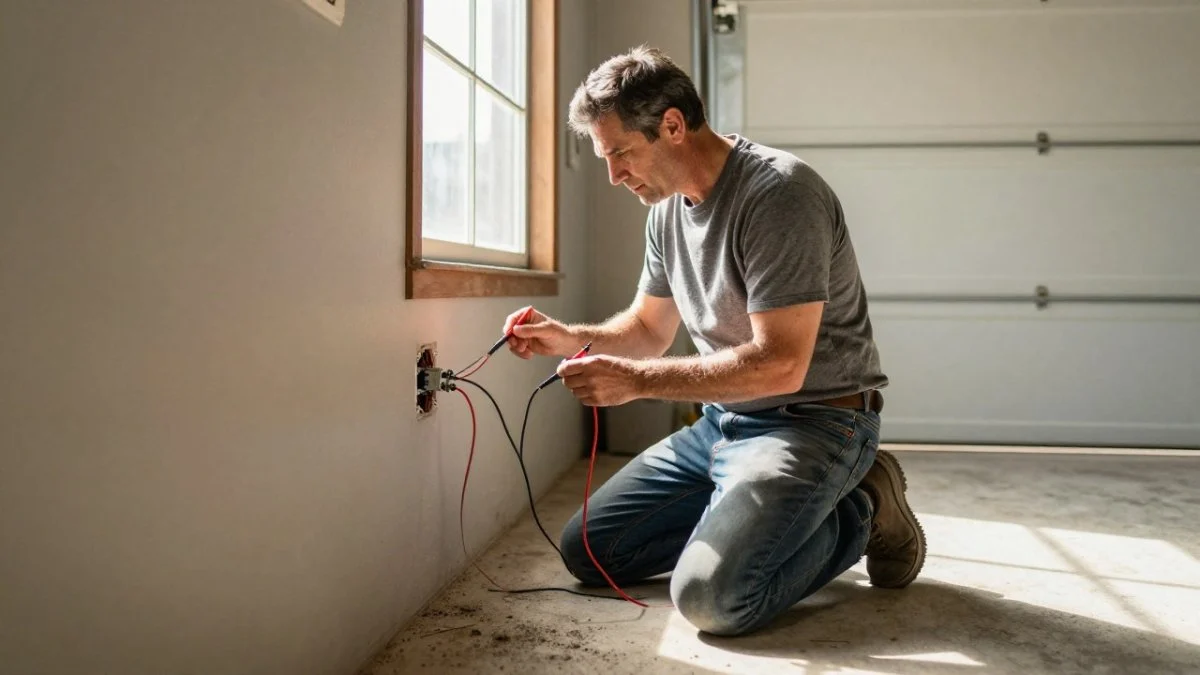
Learn how to test voltage drop at home with a digital multimeter. Follow safe, step-by-step checks for outlets, long wire runs, and flickering lights.
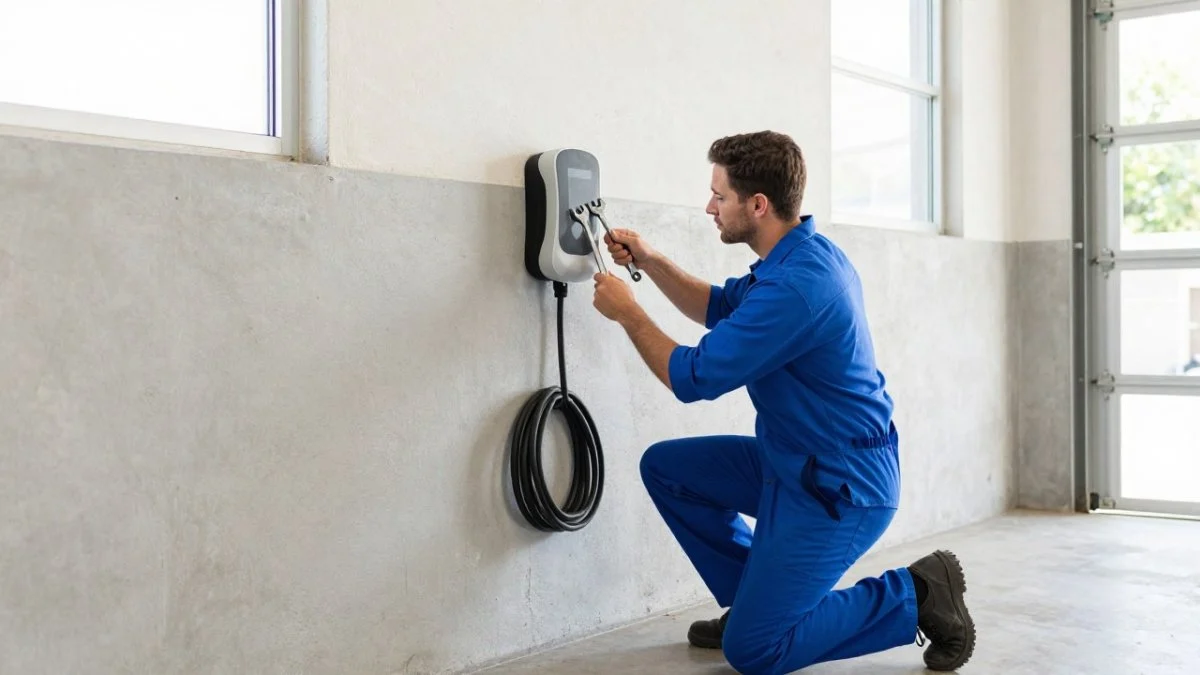
Learn what a home EV charger install really costs, from panel upgrades to wiring distance, and how to compare quotes before you commit.
Get Social